Can you ever imagine a pool leak? Yes and it happens more often than people think. Any structure that continuously holds water is under constant hydrostatic pressure. Over time, even strong areas like concrete and tiled pools can develop micro-cracks, shrinkage gaps or surface porosity. Without concrete waterproofing, these tiny pathways allow water to escape or allow groundwater to seep in.
Swimming pools are not naturally waterproof. Without a permanent waterproofing solution, they are vulnerable to leakage, structural weakening, and even seepage on wall surfaces surrounding the pool area. This is why pools fall under serious building waterproofing requirements.
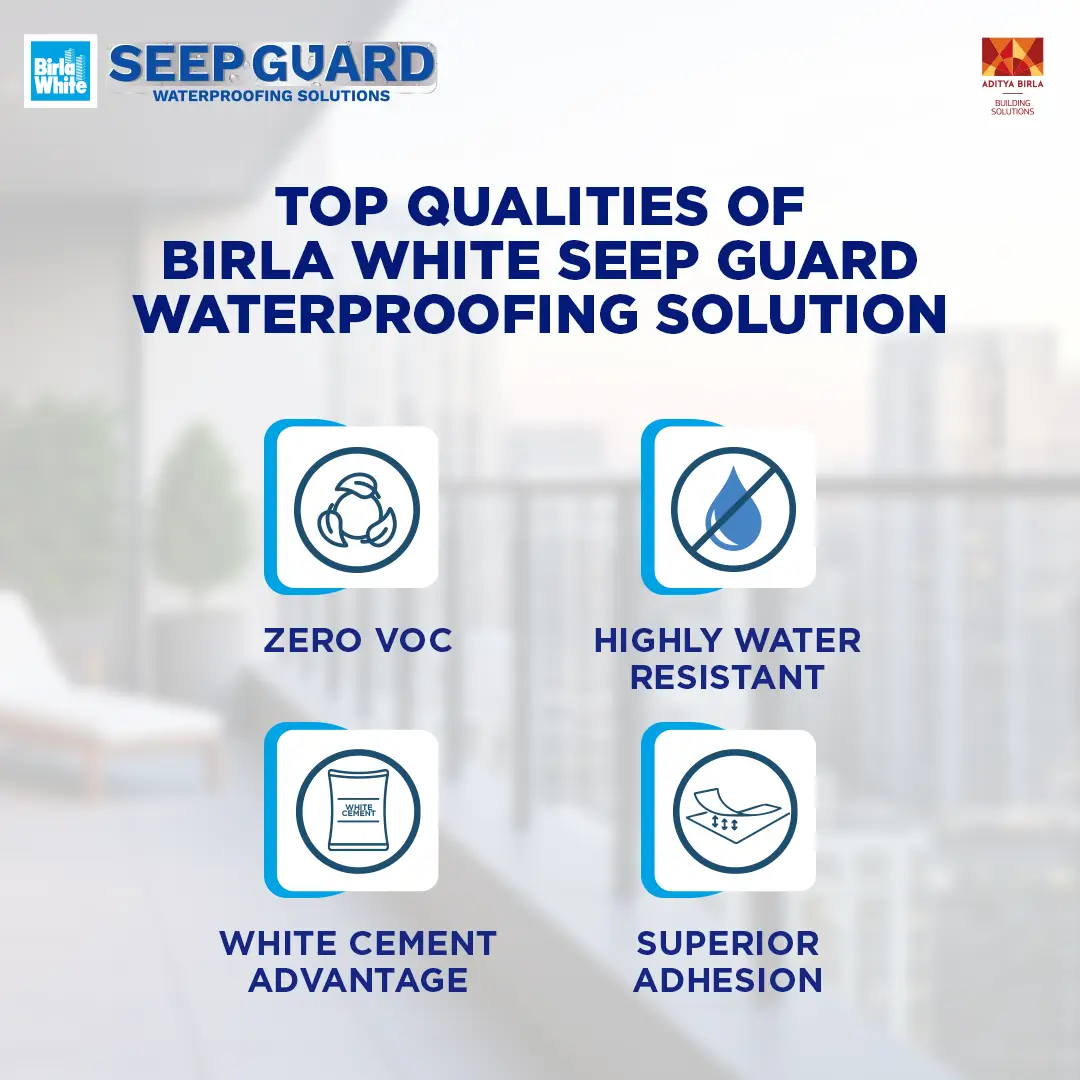
Yes, swimming pools require dedicated waterproofing to prevent leakage and structural damage. Concrete is porous by nature. Even well-constructed pools can develop hairline cracks due to curing stress, temperature variation or ground movement. White cement-based waterproofing solutions creates a continuous barrier that prevents water loss and protects the overall structure. Without it, long-term durability is compromised.
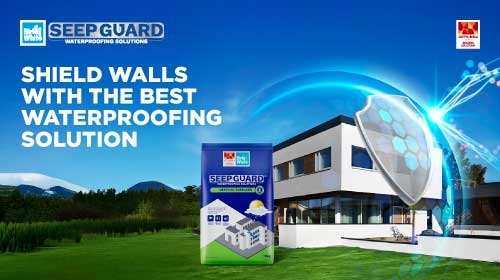
The best way to water proof wall of a swimming pool is by applying a high-performance white cement waterproofing solution that bonds permanently with concrete. For water-retaining structures like pools, a two-component cement-based waterproofing coating is typically recommended. One such solution is Birla White Seep Guard Seep Blocker Pro 2K, a high-performance, acrylic polymer-modified and white cement-based waterproofing system. It is designed for pools, water tanks and heavy-duty surfaces.
As a two-component (2K) system, it combines a powder component (white cement-based) with a liquid polymer component. When mixed and applied, it forms a flexible and durable waterproof membrane that adheres strongly to concrete surfaces. This makes it suitable for structures that hold water continuously.
Concrete waterproofing requires surface preparation, crack treatment and application of waterproof coating. Unlike temporary sealants, permanent waterproofing materials like white cement-based solutions offer added benefits:
In pool construction and large-scale building waterproofing or waterproofing basement projects, cementitious coatings are preferred because they become part of the structure instead of forming a thin layer on top.
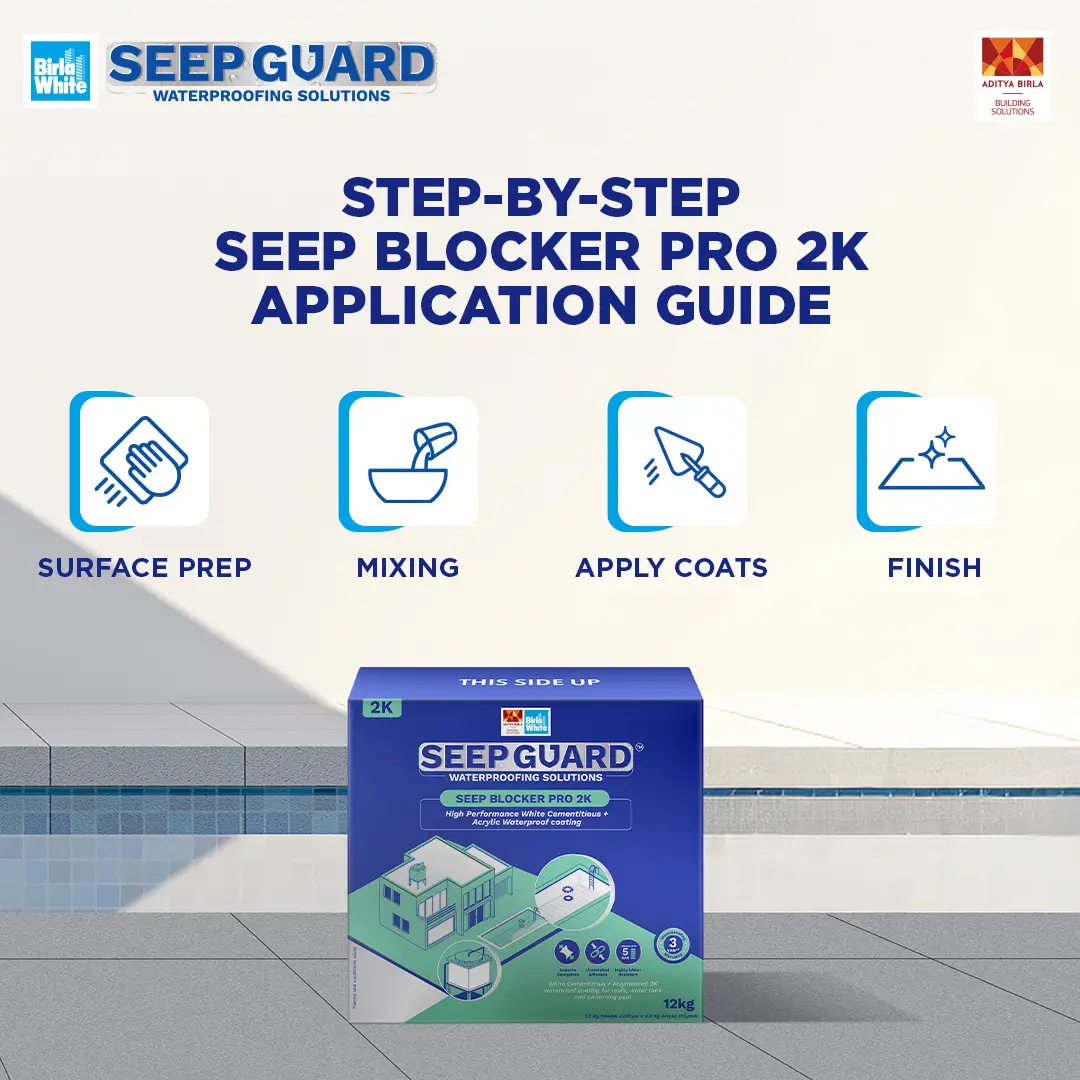
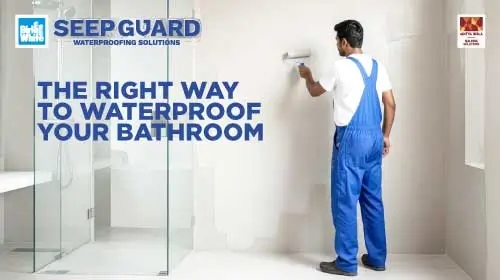
The four essential steps are surface preparation, mixing, coating application and curing/protection.
1. Surface Preparation
Ensure the plumbing is leak-free. Clean the surface thoroughly by removing dust, oil, loose particles and efflorescence. Repair cracks and damaged areas, then pre-wet the surface to achieve a saturated surface dry (SSD) condition.
2. Mix
Mix Powder and Liquid in a 3:2 ratio by slowly adding powder to liquid while stirring. Use a mechanical mixer to form a smooth and lump-free slurry and use it within its pot life.
3. Application
Apply the first coat evenly with a brush and allow it to dry. Apply subsequent coats in a crosswise direction and maintain proper drying intervals. For roofs and terraces, a fibre glass cloth layer can be added for reinforcement.
4. Curing and Testing
Allow proper curing before carrying out a ponding test to ensure there is no leakage. Protective screed or plaster may be applied where required.
Skipping any of these steps reduces effectiveness which is why professional-grade water proof wall solutions are crucial for water-retaining structures.
A permanent white cement-based waterproofing system, such as Seep Guard Seep Blocker Pro 2K from Birla White, provides the durable barrier needed for long-term performance. Whether it is large-scale building waterproofing or residential waterproofing basement, choosing the right system ensures safety and durability. To know more, visit www.birlawhite.com.
Fill out this form to talk to our experts.
Our team typically replies in 24 hours.