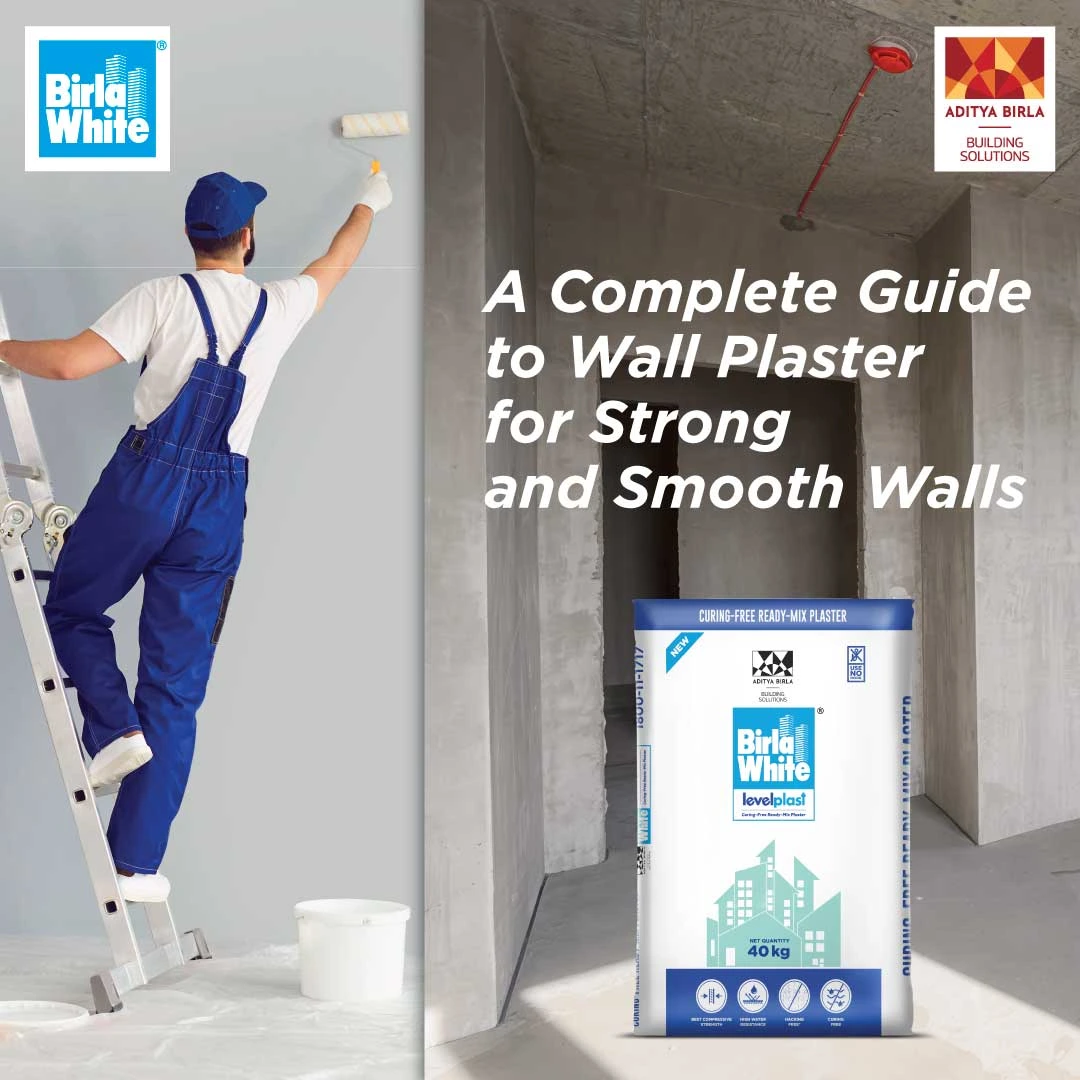
Wall plaster is a fundamental construction material used to create smooth, strong, and durable surfaces on walls and ceilings. Plaster forms the base layer that protects the structure and prepares it for putty applications. It is applied over brick, block, or concrete surfaces. Without proper plastering, walls remain uneven, weak, and vulnerable to moisture and wear.
In residential construction, home plaster is used across both plaster wall and ceiling plaster applications to improve surface strength. Cement-based plasters are especially valued for their durability and are widely used in waterproof plastering where protection against moisture is essential.
Overall, wall plaster is not just about achieving a smooth finish. It forms the structural foundation of the wall, helping strengthen the surface and improve resistance to weather and moisture. A well-applied plaster layer creates an even base for the wall putty application. This allows putty to bond properly and ensures that all subsequent layers last longer, adhere better, and deliver a more durable wall finish.
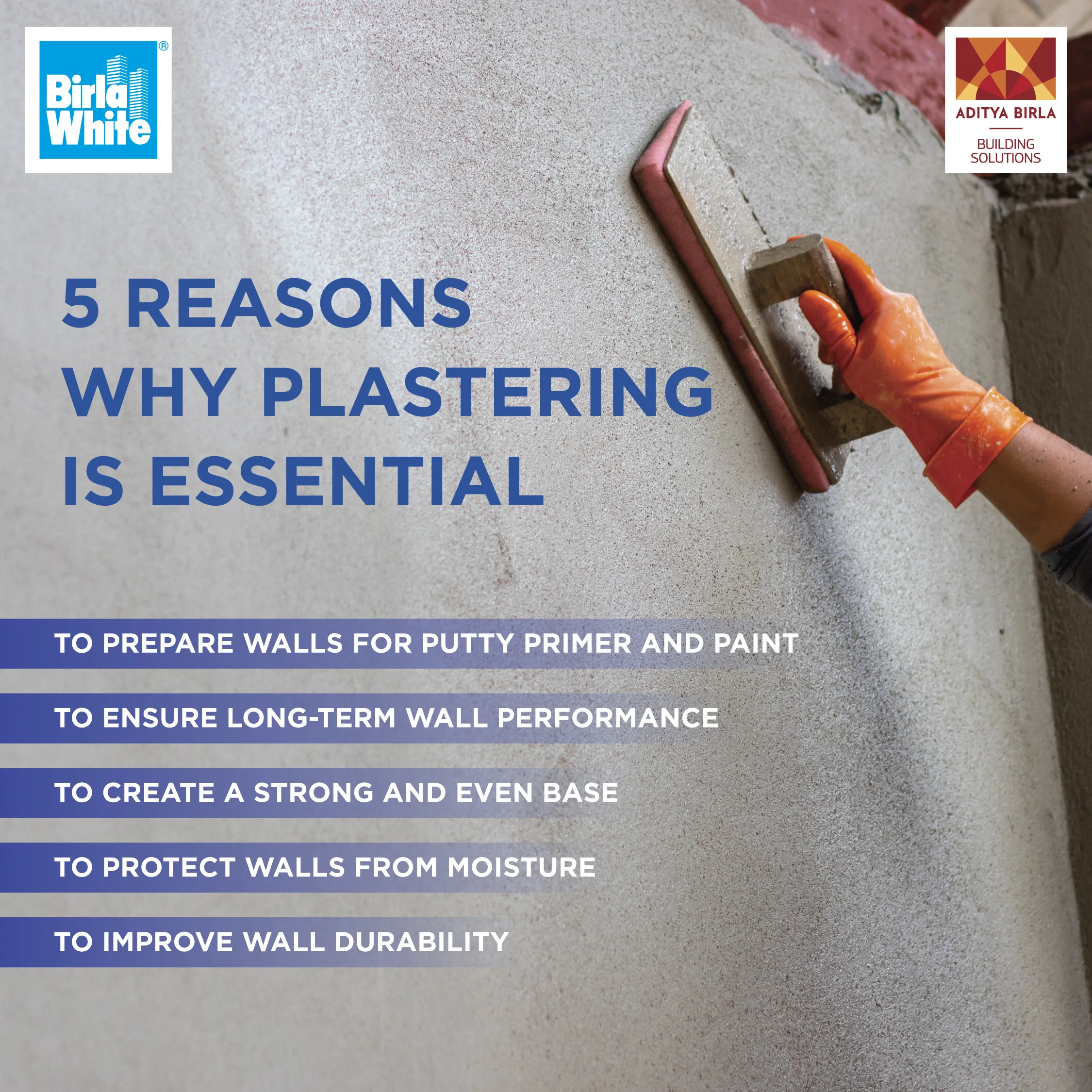
Walls need plaster to create a smooth and even surface to prepare them for putty and paint finishes. It improves durability, prevents cracks, and enhances the overall life and appearance of the wall. Let’s deep dive into each point and understand why plaster plays such a critical role in wall performance and longevity.
1. To Create a Strong and Even Base
Raw brick and concrete surfaces are uneven and unsuitable for finishing. Wall plaster helps level out joints, gaps, and surface irregularities to create a uniform foundation. This even base is essential for proper plastering and allows layers like wall putty to bond correctly.
2. To Protect Walls from Moisture
Masonry surfaces are porous and can easily absorb water. Without cement plaster, moisture can penetrate the wall. This can lead to dampness, paint failure, and surface damage. Using cementitious plaster helps reduce water absorption and protects walls from weather-related issues.
3. To Improve Wall Durability
Plaster adds strength to the surface of walls and ceilings. A well-applied plaster increases resistance to wear, impact, and minor structural movement. This makes the wall more stable and reduces the chances of cracks forming over time.
4. To Prepare Walls for Putty, Primer and Paint
A properly plastered surface ensures that wall putty spreads evenly and adheres well. This creates a smooth base for primer application, allowing the primer to bond effectively and seal the surface. As a result, the final paint finish performs better and lasts longer.
5. To Ensure Long-Term Wall Performance
Walls that are properly plastered are easier to maintain and last longer. Unlike decorative materials such as plaster of Paris (POP plaster) or plaster of Paris ceiling finishes, cement-based plaster provides structural support and long-term protection. This holds true for both internal and external walls.
Common wall plaster types available in the market include cement plaster, gypsum plaster, lime plaster, and white cement-based plaster such as Birla White Levelplast. It is widely used for its superior finish and long-lasting durability.
1. Traditional Cement Plaster
Cement plaster is made by mixing cement, sand, and water on-site. It provides a strong, durable surface for walls and ceilings. This plaster is commonly used for both interior and exterior home plaster applications. Skilled labour is required to ensure uniformity and consistency, as mistakes in mixing or application can lead to uneven surfaces, cracks, or reduced waterproof plaster performance.
2. Lime Plaster
Lime plaster is made using lime, sand, and water. It offers good workability; however, lime plaster has lower compressive strength than cement plaster and takes longer to cure. For areas requiring high durability, cement plaster or ready mixed plaster solutions are generally preferred.
3. Plaster of Paris (POP)
Plaster of Paris (POP plaster) is a fine, quick-setting material commonly used for ceilings, decorative features, and false ceilings. While plasters like POP or textured plaster, provide smooth surfaces and can create intricate designs, it is not suitable as a structural plaster wall. It lacks the water resistance and strength required for long-lasting protection. POP should be used only as a finishing layer over cement-based plaster.
4. Ready-Mixed Plaster
Ready mixed plaster, sometimes called pre-mixed cementitious plaster, comes in a bag or container and only requires water for use. It offers consistent quality and a smoother finish. Ready-mixed plaster is increasingly preferred in floor plastering, modern construction for both interiors and exteriors, particularly for ceiling plaster, wall plaster, and waterproof plastering applications.
| Feature | Lime Plaster | Plaster of Paris (POP) | White Cement–Based Plaster (Birla White Levelplast) |
|---|---|---|---|
| Material Type | Lime-based | Gypsum-based | White cement–based ready-mix |
| Mixing and Application | On-site mixing | On-site mixing | Only water required |
| Strength and Durability | Low | Low | High (≥10 N/mm²) |
| Water Resistance | Low | Very low | High (low capillary absorption) |
| Suitable Thickness | Limited | Not suitable for walls | Up to 25 mm in layers |
| Primary Usage | Interior walls | Decorative ceilings | Interior and exterior walls and ceilings |
| Surface for Paint and Putty | Needs correction | Not suitable | Excellent base |
| Overall Suitability for Homes | Limited | Decor only | Ideal for modern homes |
Birla White Levelplast is an ideal choice for home walls and ceilings due to its consistent finish, strength, and long-lasting performance. With multiple plaster with cement options available, choosing the right one for your home can be confusing. For long-term durability, moisture resistance, and surface strength, cementitious plaster remains the most reliable choice for walls and ceilings.
Today, homeowners and professionals increasingly prefer ready mixed plaster made using white cement, as it offers superior adhesion, high water resistance, consistent quality, and ease of application compared to on-site mixed plaster. Modern solutions like Birla White Levelplast, a ready-mix white cement plaster, provide a clear advantage over conventional methods.
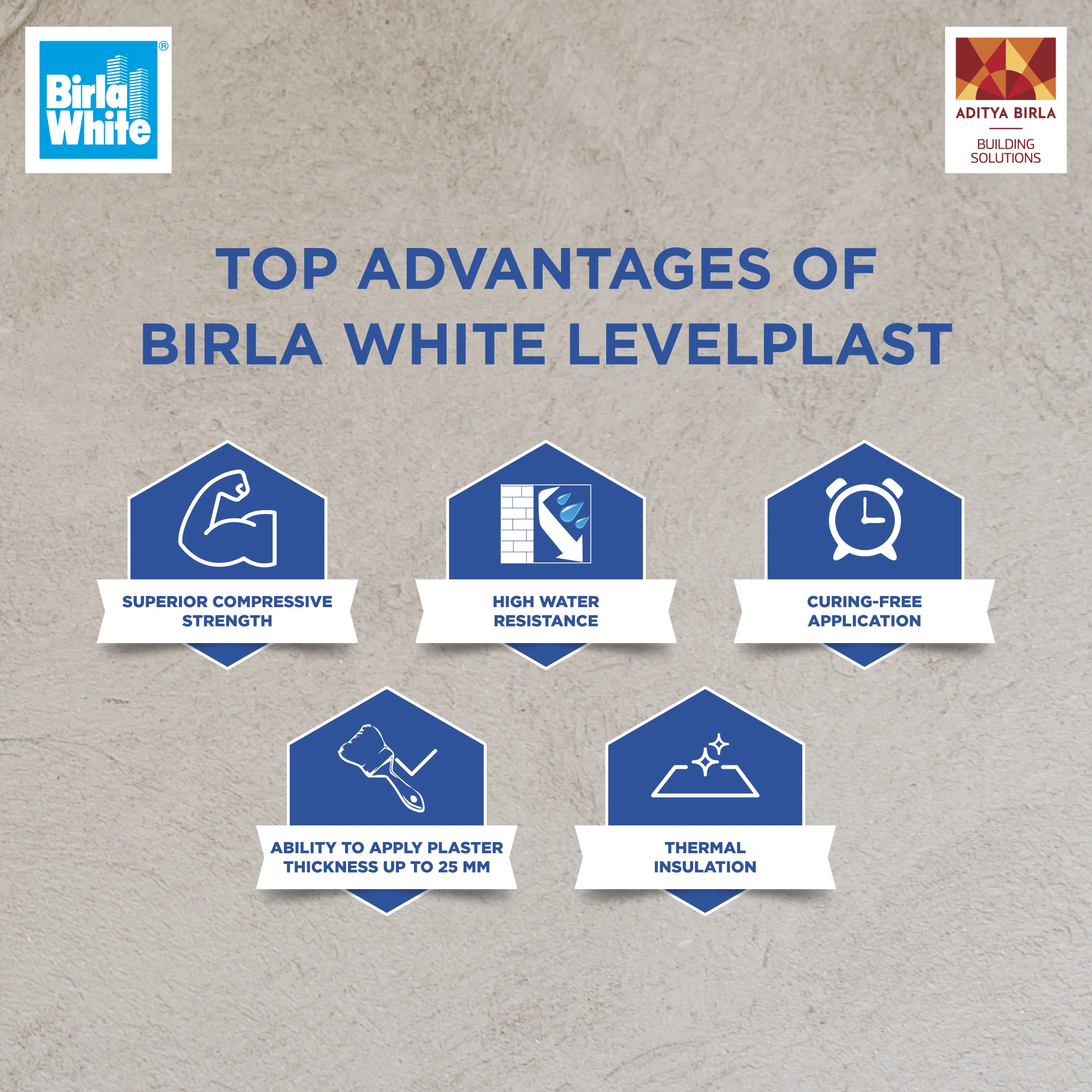
Among all plaster options, Birla White Levelplast is a white cement-based ready-mix plaster that combines convenience with performance. It delivers:
Superior Compressive Strength
Birla White Levelplast is a white cement-based ready-mix plaster with a superior compressive strength of 10 N/mm² and above. It delivers strong resistance to everyday stress and impact. Walls finished with Levelplast stay durable for years. It gives a stable base for wall finishes like putty and paint. Plastering in construction helps reduce cracks and surface flaws over time.
High Water Resistance
Levelplast has low capillary water absorption of 0.80 ml per 30 minutes. This means it absorbs very little water on contact. The result of waterproof plaster on walls is better protection against moisture and dampness. This way, walls are less prone to paint blistering and surface degradation. Due to its 2x water resistance benefit, Levelplast is suitable for interior and exterior conditions.
Curing Free Application
Unlike conventional cement plaster, Levelplast does not require water curing. This cuts down on water use and labour effort on site. The plaster dries faster and allows earlier application of putty or paint. This helps shorten overall project timelines. It simplifies the workflow for masons and applicators.
Plaster Thickness up to 25 Millimetres
Birla White Levelplast can be applied in total thickness of up to 25 mm in layers. This makes it versatile for correcting uneven or undulating wall surfaces. It works well on bricks, concrete, and existing plaster substrates. Each layer bonds strongly without sagging or cracking. The result is a level surface ready for finishing.
Thermal Insulation
Levelplast’s composition helps moderate heat transfer through wall surfaces. This contributes to better thermal comfort inside the building. Cement and plaster helps reduce the effect of harsh external temperatures and adds a protective layer. Overall, this improves wall performance against weather changes.
Levelplast removes the challenges of traditional cement plaster. It provides the durability and stability needed for both wall plaster and ceiling plaster applications. Its ready-mixed formulation ensures uniform consistency, better bonding with putty, and a reliable foundation for primers and paint. These features make it the best cement for plaster in modern homes.
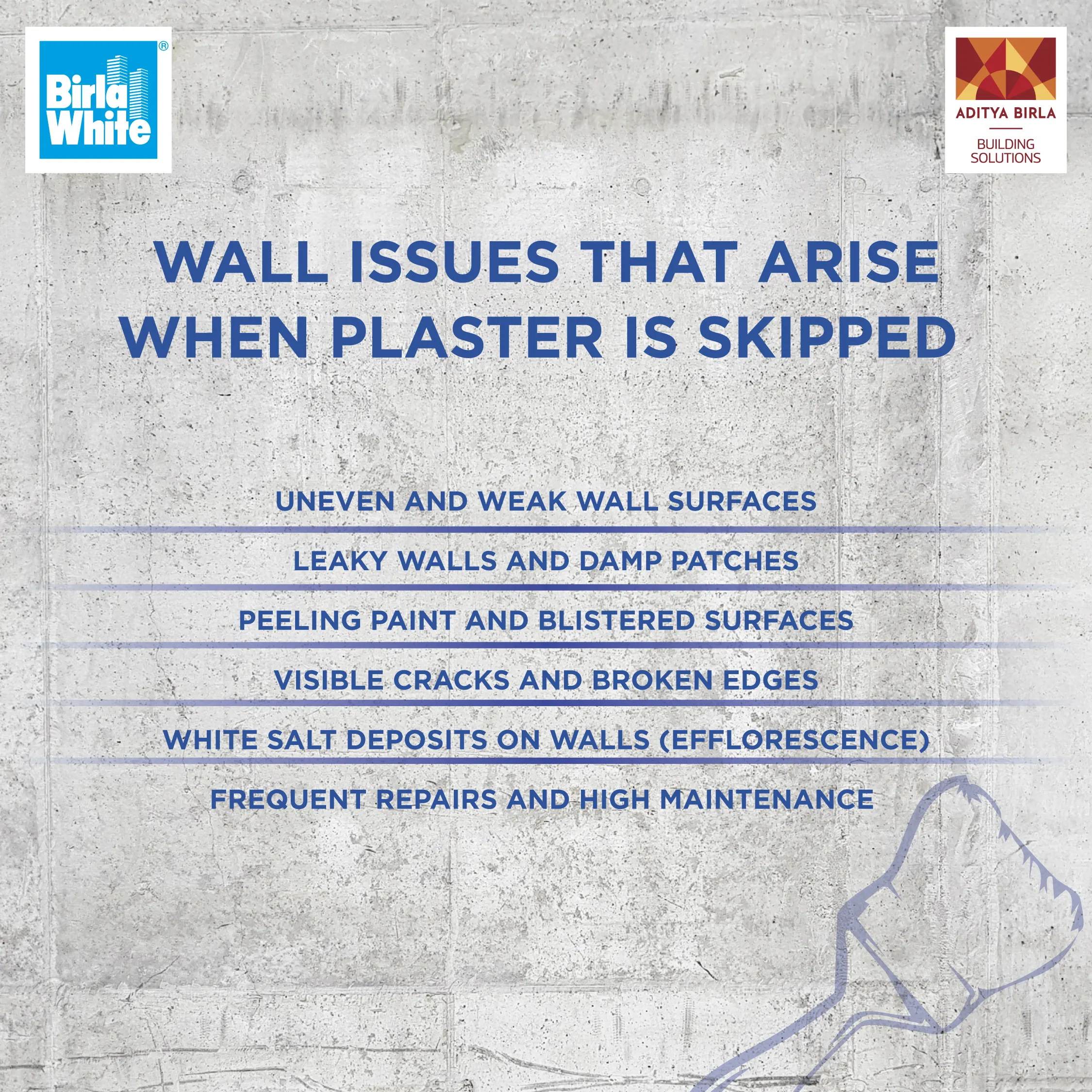
Skipping wall plaster can lead to uneven surfaces, paint failure, damp patches, cracks, and reduced wall durability over time. Let’s take a deeper look at these common issues:
1. Uneven and Weak Wall Surfaces
Without proper wall plaster, brick and concrete surfaces remain uneven and rough. Such surfaces lack surface strength and make it difficult to apply wall putty evenly. Over time, this can lead to poor finishing quality and an unstable wall structure.
2. Leaky Walls and Damp Patches
When walls are not properly plastered, moisture finds its way through joints and pores. This often shows up as leaky walls, dark damp patches, peeling paint, or water marks spreading across the surface. Without white plaster with cement, walls lack a protective barrier, especially during monsoons. This is why a waterproof plaster is critical for preventing leakage-related damage inside homes.
3. Peeling Paint and Blistered Surfaces
Walls without waterproof plaster for walls fail to hold paint properly. Moisture trapped beneath the surface causes paint to bubble, peel, or flake off within months. Even high-quality paint cannot perform well if the base plaster is missing or weak.
4. Visible Cracks and Broken Edges
If you have skipped the plaster, your home walls are more prone to visible cracks and chipped corners. Over time, small cracks widen due to weather changes and structural movement. These changes may cause walls to look damaged and poorly maintained.
5. White Salt Deposits on Walls (Efflorescence)
In the absence of proper wall plaster, moisture brings soluble salt to the surface. These salts leave behind white powdery stains. The deposits not only spoil the appearance of walls but also indicate ongoing moisture penetration inside the structure.
6. Frequent Repairs and High Maintenance
Leaky walls, peeling paint, cracks, and damp patches lead to repeated repairs. Without a durable white cement plaster layer, homeowners end up spending more on maintenance instead of investing once in long-lasting wall protection.
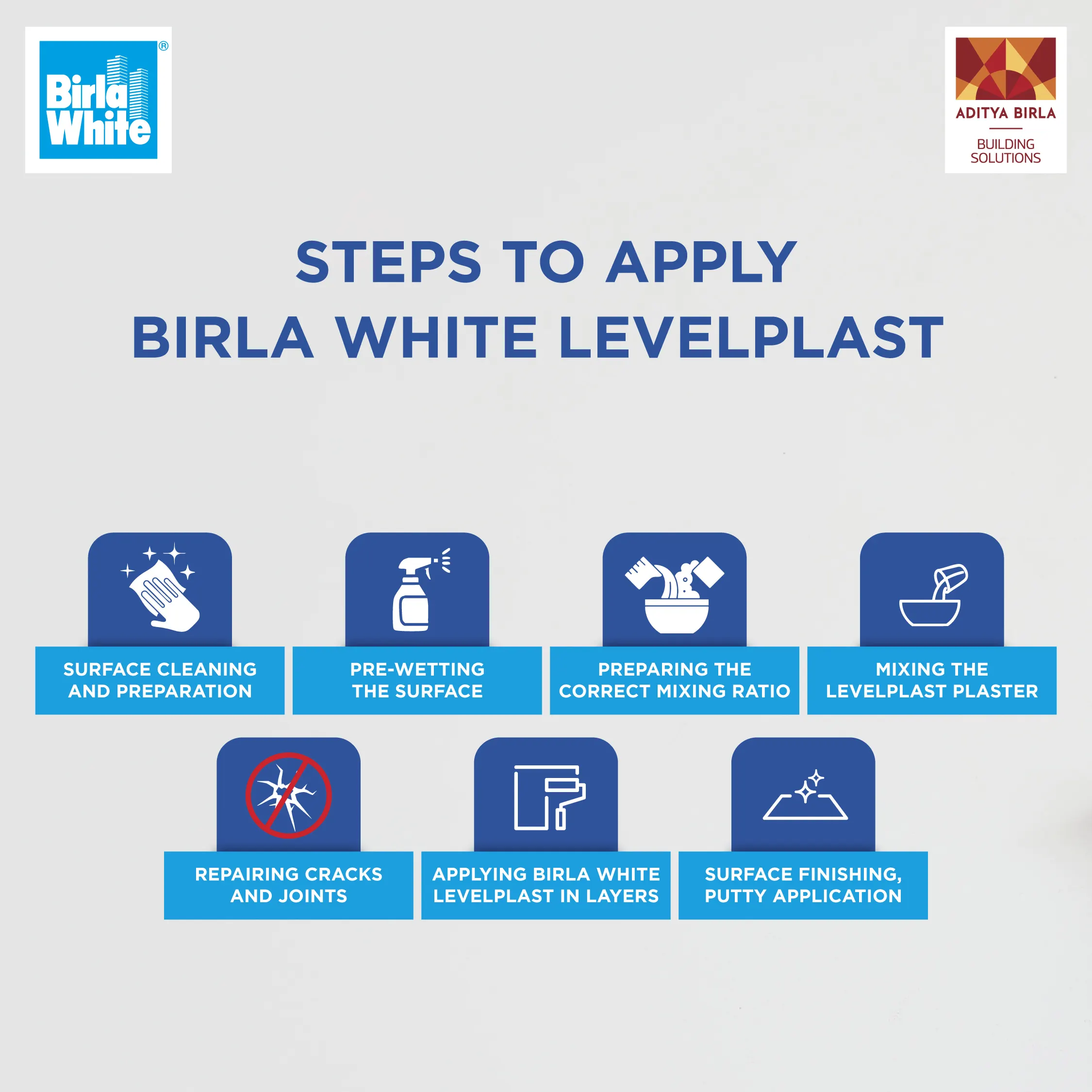
Birla White Levelplast is applied by surface cleaning, pre-wetting, mixing to a smooth consistency, and spreading evenly in controlled thickness for a smooth finish.
Applying wall plaster correctly is essential to achieve strong and smooth walls. Each step plays a role in ensuring proper bonding, uniform thickness, and a stable base for putty and paint. Follow this process carefully for the best results.
STEP 1: Surface Cleaning and Preparation
Before plastering in construction begins, the wall surface must be thoroughly cleaned. Remove all dirt, dust, grease, oil, curing compounds, and loose particles. You can use tools such as a chisel, wire brush, or emery stone. Once the surface is cleaned, wash it with clean water. A contaminant-free surface ensures proper adhesion of the cement and plaster and prevents future peeling.
STEP 2: Pre-Wetting the Surface
Pre-wet or moisten the wall surface with clean water before applying Birla White Levelplast mix. This step is crucial because dry masonry surfaces absorb water rapidly, which can weaken bonding. Proper pre-wetting ensures even spreading of plaster coat and helps achieve a stronger bond with the surface.
STEP 3: Preparing the Correct Mixing Ratio
The amount of water added depends on the coat thickness being applied:
Using the correct water ratio is essential to achieve the right consistency and finish quality for each layer.
STEP 4: Mixing the Levelplast Plaster
Mix Birla White Levelplast thoroughly using a mechanical stirrer for 5–7 minutes. This ensures a lump-free paste with consistent performance. Prepare only the quantity of plaster that can be used within 1–2 hours. Partially set material can affect strength and finish.
STEP 5: Repairing Cracks and Joints
Before full plaster application, repair all visible cracks, holes, and masonry joints using the Levelplast mix. Apply the material with a trowel or putty knife to ensure the surface is properly filled and even. This step prevents future crack visibility and ensures uniform plaster thickness across the wall.
STEP 6: Applying Birla White Levelplast in Layers
Levelplast is applied in multiple coats depending on the total plaster thickness required.
For 10 mm total plaster thickness:
For 25 mm total plaster thickness:
Apply each coat using a trowel to ensure uniform thickness and proper levelling before moving to the next layer.
STEP 7: Surface Finishing
After the final coat has dried, rub the surface lightly using No. 320 emery paper. This helps remove minor surface irregularities and creates a smooth layer.
STEP 8: Putty Application
Once plastering is complete, apply one or two coats of wall putty over the Levelplast surface. This prepares the wall for primer and paint application.
Do’s and Don’ts for Applying Levelplast
Do’s
Don’ts
“Poor quality occurred in more than 80% of the building projects completed… The size and frequency of poor quality are higher in concrete, plaster, brick, foundations and roof trusses.”
According to a peer-reviewed construction quality study by the Directory of Open Access Journals (DOAJ): The research highlights that plaster on cement is among the most defect-prone building elements. This reinforces how material quality directly influences wall strength, durability, and long-term performance in residential construction. DOAJ
“Studies have shown… 40 to 50% of defects arise in the construction phase.”
According to the Examining Building Defects Research Report by Voltín Consulting: A significant proportion of building defects originate during construction. This underscores the importance of foundational processes like plastering, where material quality and application accuracy play a critical role in preventing long-term wall issues. Voltin Consulting
“Following masonry structures… the next prevalent defects related to… plastering and rendering (11.4%).”
According to the Examining Building Defects Research Report by Voltín Consulting: Plastering and rendering emerge as one of the most common defect categories in residential buildings. This ranks higher than many other finishing procedures and highlights plaster’s critical role in wall performance and finish quality. Voltin Consulting
Research consistently shows that a significant share of construction defects originates during the building phase. Plastering emerged as one of the most critical and defect-prone processes when quality is compromised. Cracks, undulations, and surface failures often trace back to the strength and consistency of the plaster beneath.
Therefore, it is recommended to use a high-performance white plaster like Birla White Levelplast. It is designed to deliver superior adhesion, 2x water resistance, reduced surface undulations, and a reliable base for putty. Levelplast helps address common plastering challenges at the source. By ensuring a strong, even, and durable substrate, it sets the foundation for floor plastering and other finishes to perform better and last longer.
In construction, the quality of the final outcome is only as good as the layers beneath it. Choosing the right plaster with cement is not just a technical decision; it is a long-term investment in the overall building structure.
“Watch how the best cement for plastering, Birla White Levelplast creates a smooth and strong base for walls and ceilings. Learn the correct mixing ratios, application techniques, and layering methods that ensure durability and long-lasting surface performance.”
Keep these guides handy on your phone or print them out to ensure every plaster application follows expert-recommended best practices for uniform surfaces, reduced undulations, and a perfect base for putty and paint.
Download brochure here
Levelplast - Ready Mix Plaster
FAQs on Wall Plaster for Home Construction
Fill out this form to talk to our experts.
Our team typically replies in 24 hours.