Bathrooms are one of the most used and most exposed areas in any home. Daily water usage, steam and constant moisture make them highly vulnerable to seepage. You might not notice it immediately; however, over time, small damp patches, peeling paint or a musty smell starts appearing. This is your first sign that you need a proper bathroom waterproofing solution.
Unlike other rooms, bathrooms face constant water exposure. Without proper waterproofing of wall and floor surfaces, water seeps into the structure. This leads to:
This is why investing in a strong water leaking solution early on is always smarter than fixing damage later.
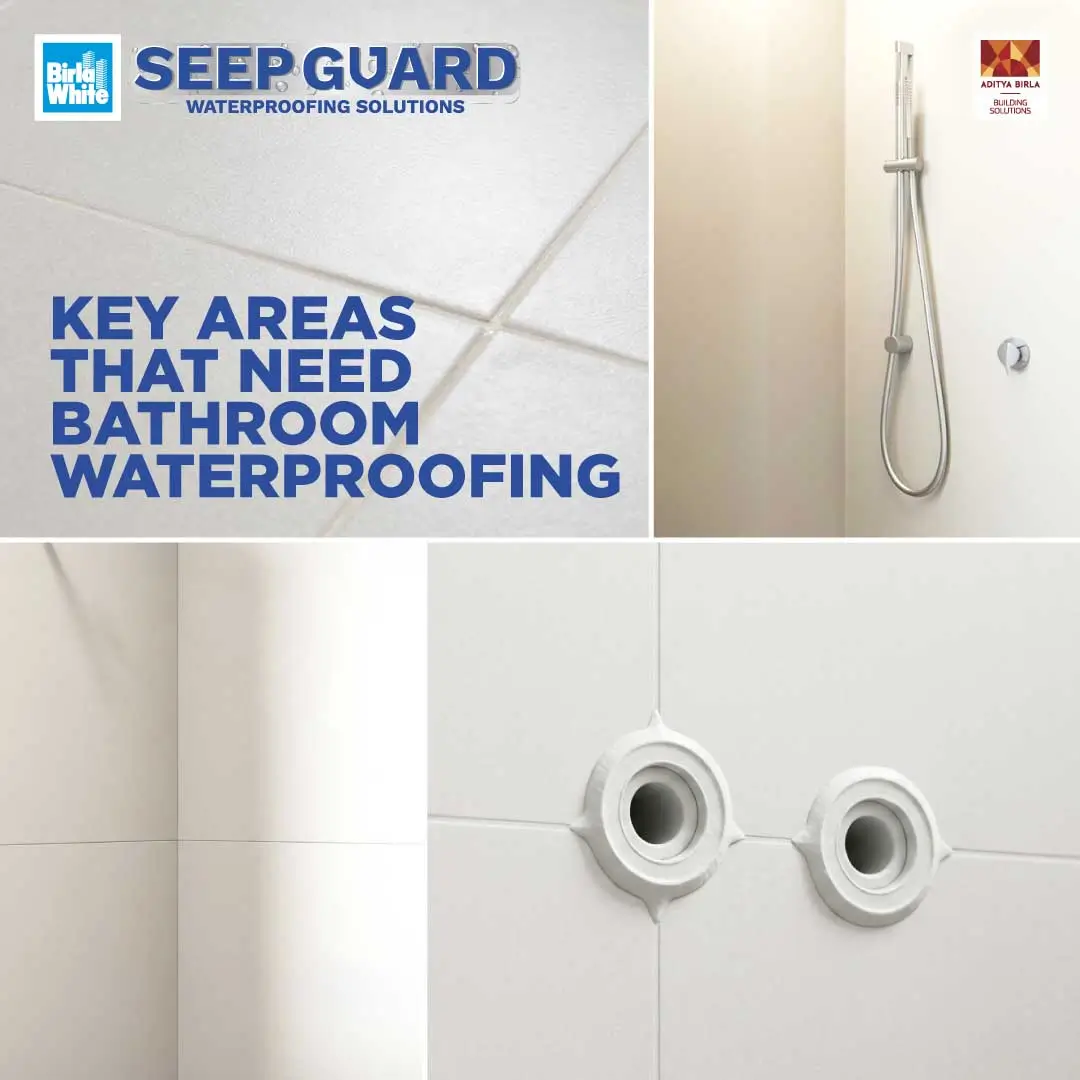 Not every part of the bathroom is equally exposed. Bathroom waterproofing should focus on high-risk areas like the floor, wall-floor joints and shower walls where water exposure is maximum. Some areas are highly critical:
Focusing on these areas ensures your bathroom waterproofing is effective and long-lasting.
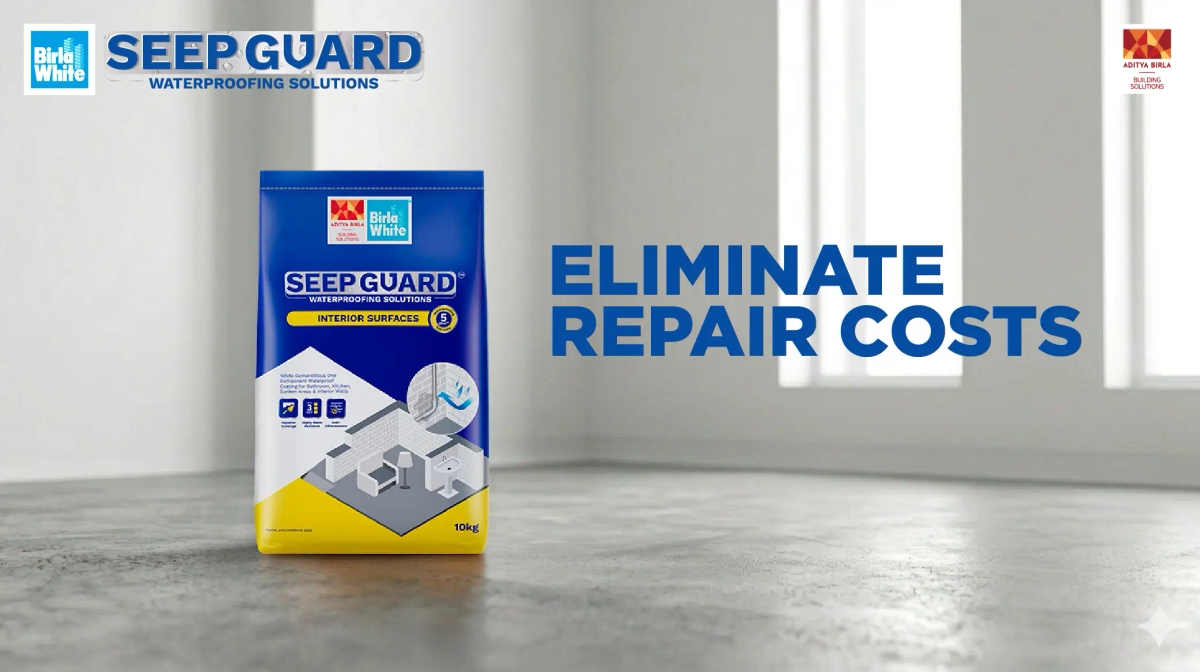
The most reliable method today is using a 2-component waterproofing system based on waterproof white cement technology, like Birla White Seep Guard Seep Blocker 2K. It offers:
This type of solution works both as a preventive layer and a repair solution, making it ideal for Indian homes.
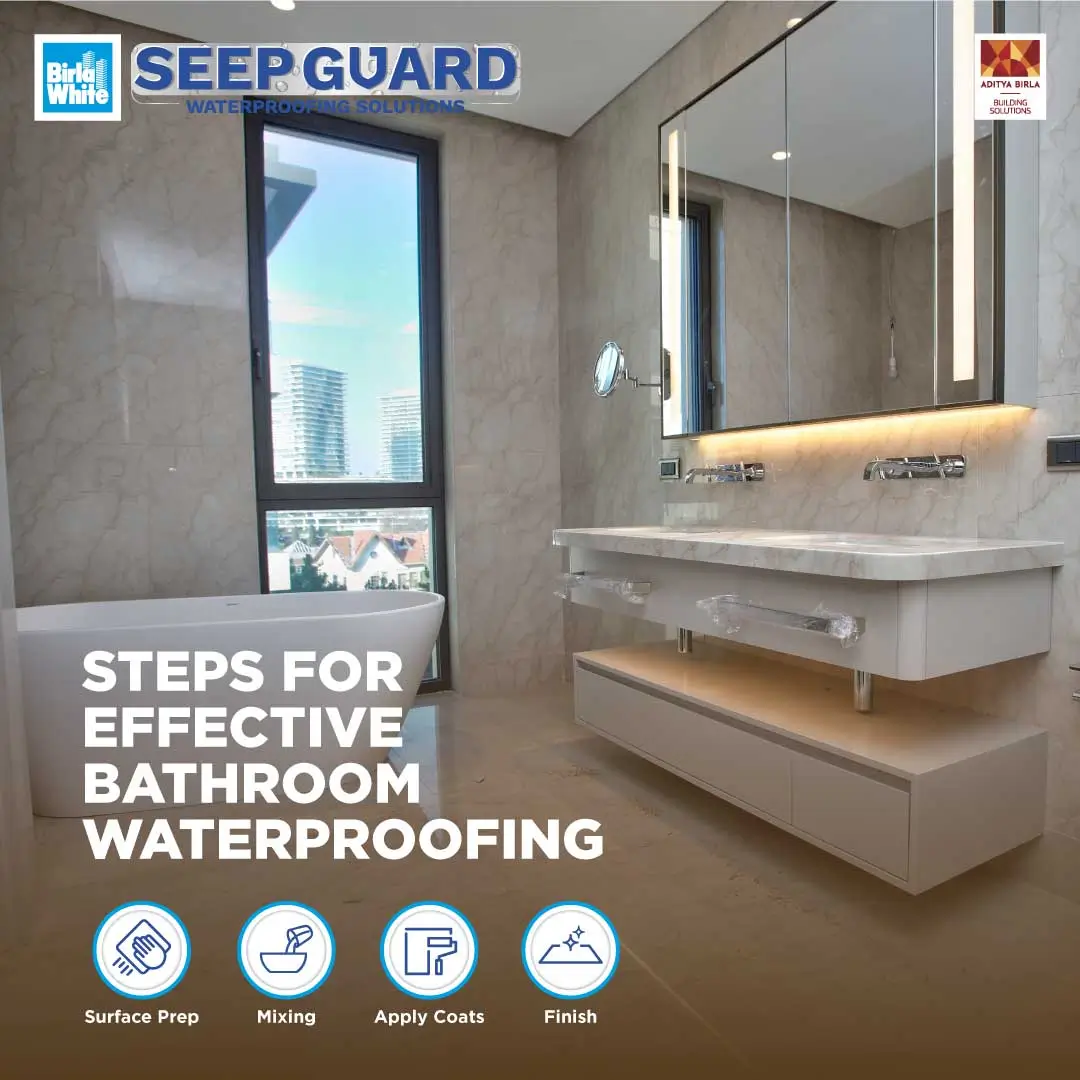
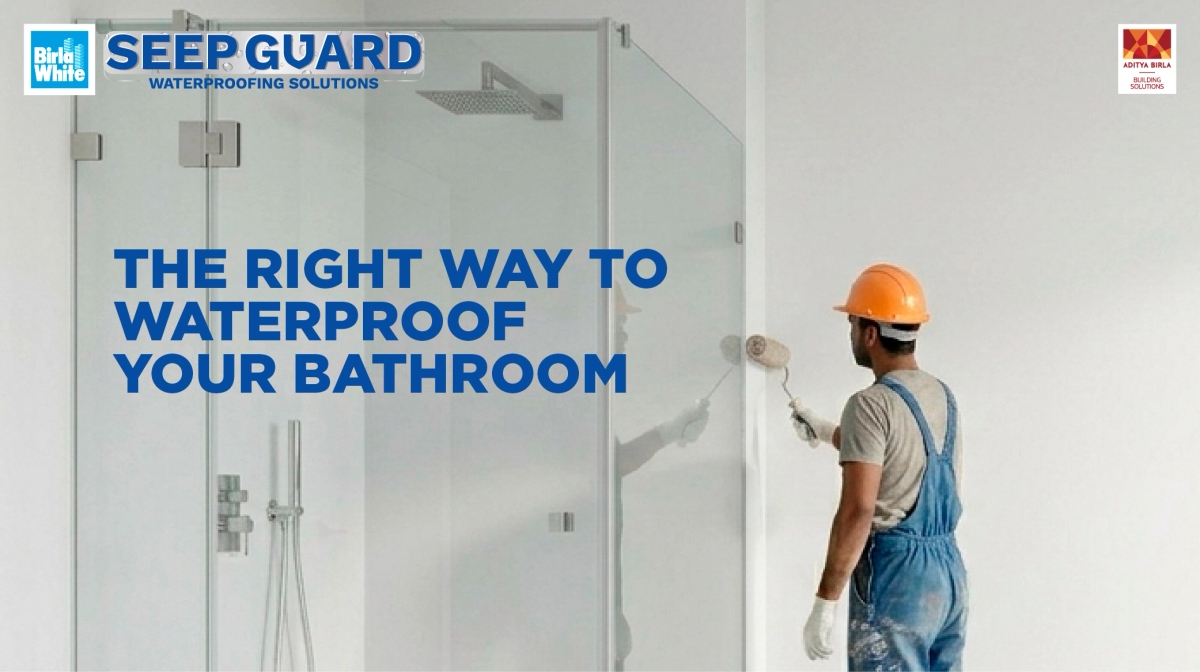
Birla White Seep Guard Seep Blocker 2K can be applied by preparing a clean and leak-free surface. This must be followed by two coats of waterproofing mix with proper drying time in between. Ensure uniform thickness and extend application to waterproofing of wall surfaces for complete protection. Follow the steps given below for easy application:
1. Surface Preparation
Ensure the plumbing system is leak-free with a water test. Clean the surface thoroughly. Remove dust, grease and loose particles. Do not forget to repair cracks or damaged areas before application, using Seep Guard Crack End
2. First Coat Application
Prepare the waterproofing mix as per instructions. Apply the first coat evenly across the surface using a brush or roller. Ensure proper coverage, especially at joints and corners.
3. Drying Time
Allow the surface to dry for at least 5–6 hours.
4. Second Coat Application
Apply the second coat in a crosswise direction for better results. This ensures uniform coverage and stronger water leakage solution.
5. Thickness Control
Maintain total thickness of both coats between 1 to 1.2 mm.
6. Vertical Surface Coverage
Apply waterproofing up to at least 300 mm on vertical walls above floor level. In shower areas, extend coverage higher for complete protection.
Many homeowners try quick fixes. However, a durable solution using waterproof white cement-based systems like Birla White Seep Guard Seep Blocker 2K ensures better value by reducing maintenance and extending lifespan.
Bathroom waterproofing is not just a construction step. It is a long-term investment in your home’s durability. Choosing the right method, focusing on critical areas and following the correct application process ensures that your bathroom stays leak-free for years.
To explore more waterproofing solutions, visit www.birlawhite.com
Fill out this form to talk to our experts.
Our team typically replies in 24 hours.