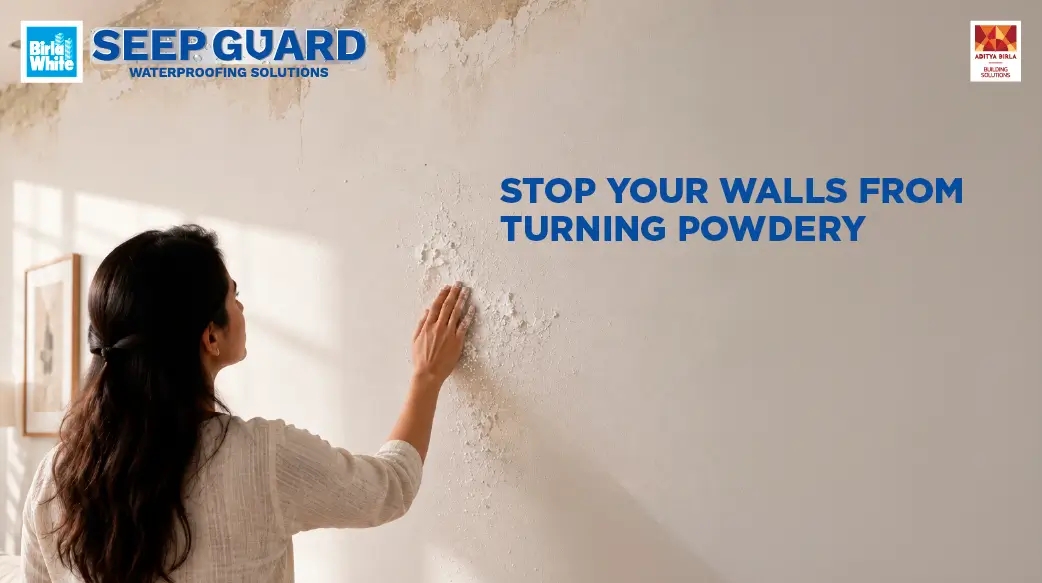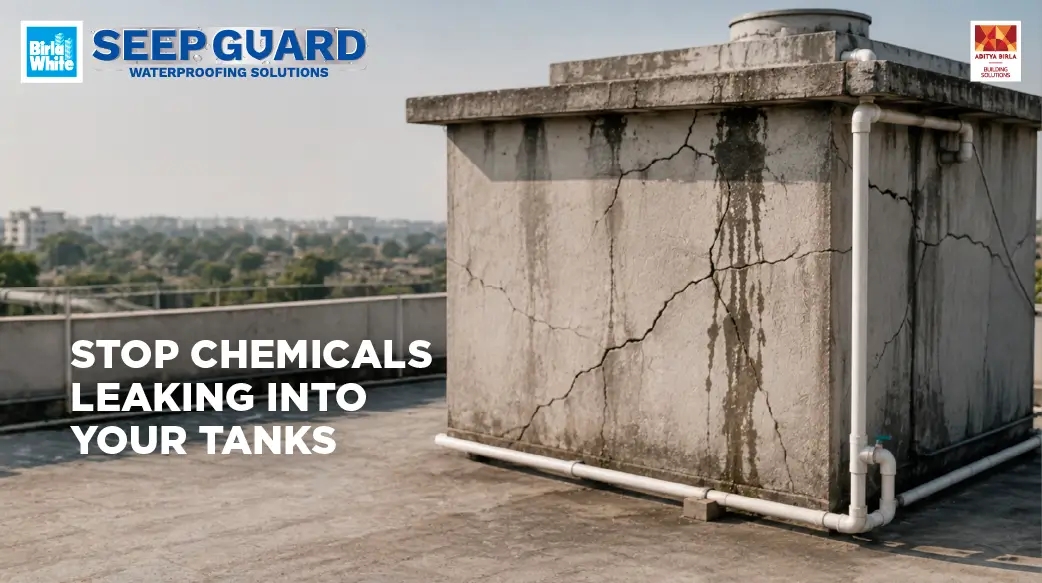
Waterproofing and sealing are often used interchangeably but they are not the same thing. Waterproofing in house is a comprehensive barrier that stops water from passing through a surface entirely. Meanwhile, sealing is usually a surface layer that prevents water from soaking into small pores or cracks. However, this layer does not always stop water under pressure.
In this blog, we will understand the key difference between waterpoofing and sealing for lasting protection against damp walls, ceilings, or roofs.
A waterproof seal is a coating or layer that prevents water from entering a surface like a raincoat for your walls. It is designed to block moisture at the surface and stop seepage before it starts. A good waterproof seal must stop moisture from penetrating through the wall under normal and wet conditions.
| Factors | Sealing | Waterproofing |
|---|---|---|
| Purpose | Reduces surface water absorption | Completely prevents water penetration |
| Protection Level | Basic protection against light moisture | Strong protection against seepage, leakage and dampness |
| Where It Works Best | Small pores, minor cracks, low-moisture areas | Walls, terraces, bathrooms, basements and exposed surfaces |
| Durability | Short-term or temporary solution | Long-lasting and durable protection |
| Water Pressure Resistance | Cannot withstand water pressure | Designed to resist water pressure and heavy exposure |
| Depth of Action | Works mainly on the surface | Forms a thick, protective layer within the structure |
| When to Choose | Preventive maintenance in dry areas | Dealing with seepage, leakage or damp walls |
The best waterproofing solutions are those that create a durable and protective layer. White cement-based solutions, such as Birla White waterproofing solutions, form a dense coating that bonds strongly with the surface. This layer, thus, helps walls resist moisture and weather damage over time.
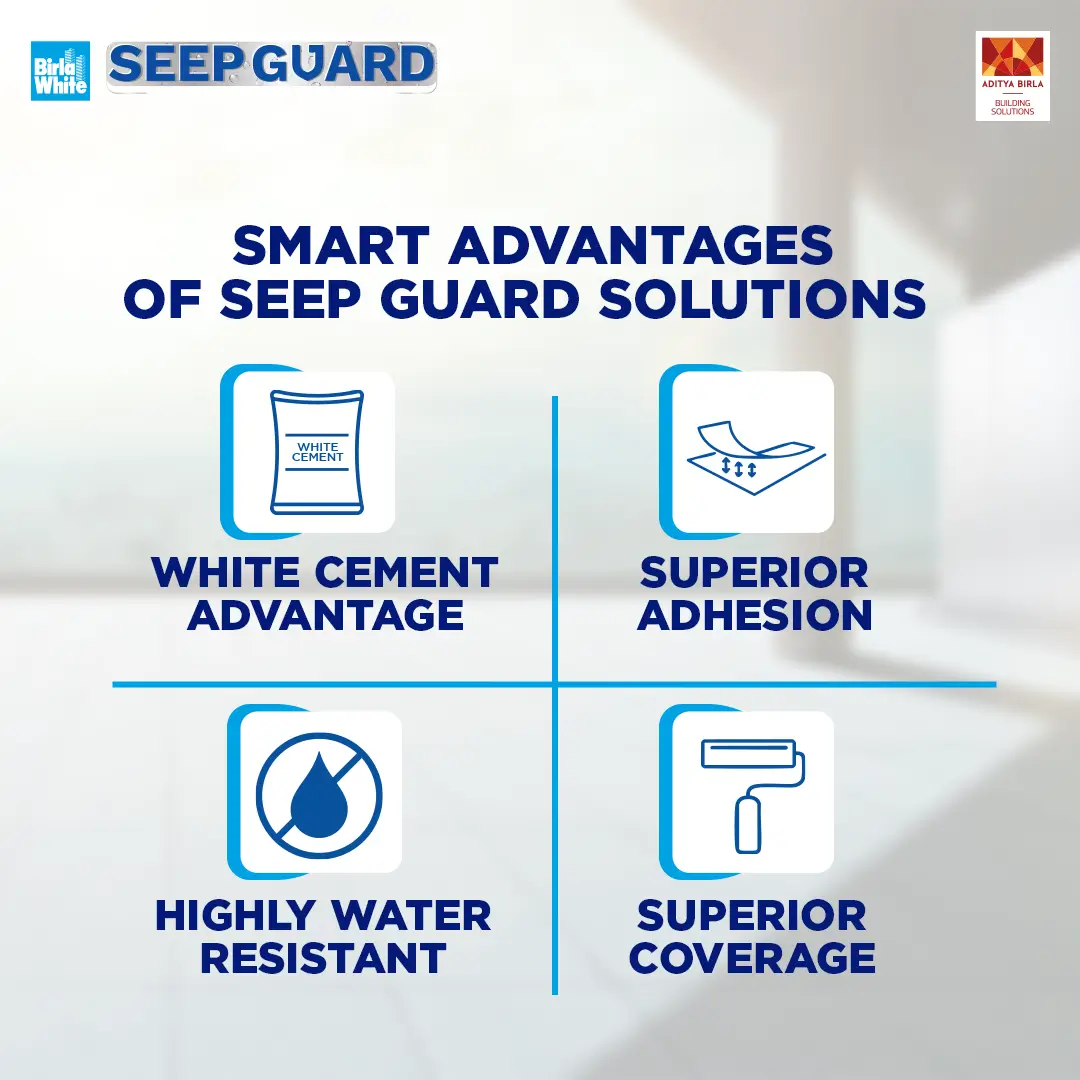
While sealants are useful for filling small cracks and joints, larger areas prone to seepage require a complete waterproofing solution. White cement–based solutions from Birla White form a dense layer that protects walls, terraces, and other surfaces from long-term moisture damage.
Water can cause plaster to crumble, paint to blister and mold to grow. Simple sealants might delay moisture but would not protect against heavy rain, rising damp or hydrostatic pressure. True waterproofing penetrates deeper and protects longer. This is why choosing the right solutions for waterproofing in house projects matters. Birla White Seep Guard Waterproofing range is a smart choice if you are dealing with issues like cement sheet water leakage solutions, wall cracks or long-term moisture control.
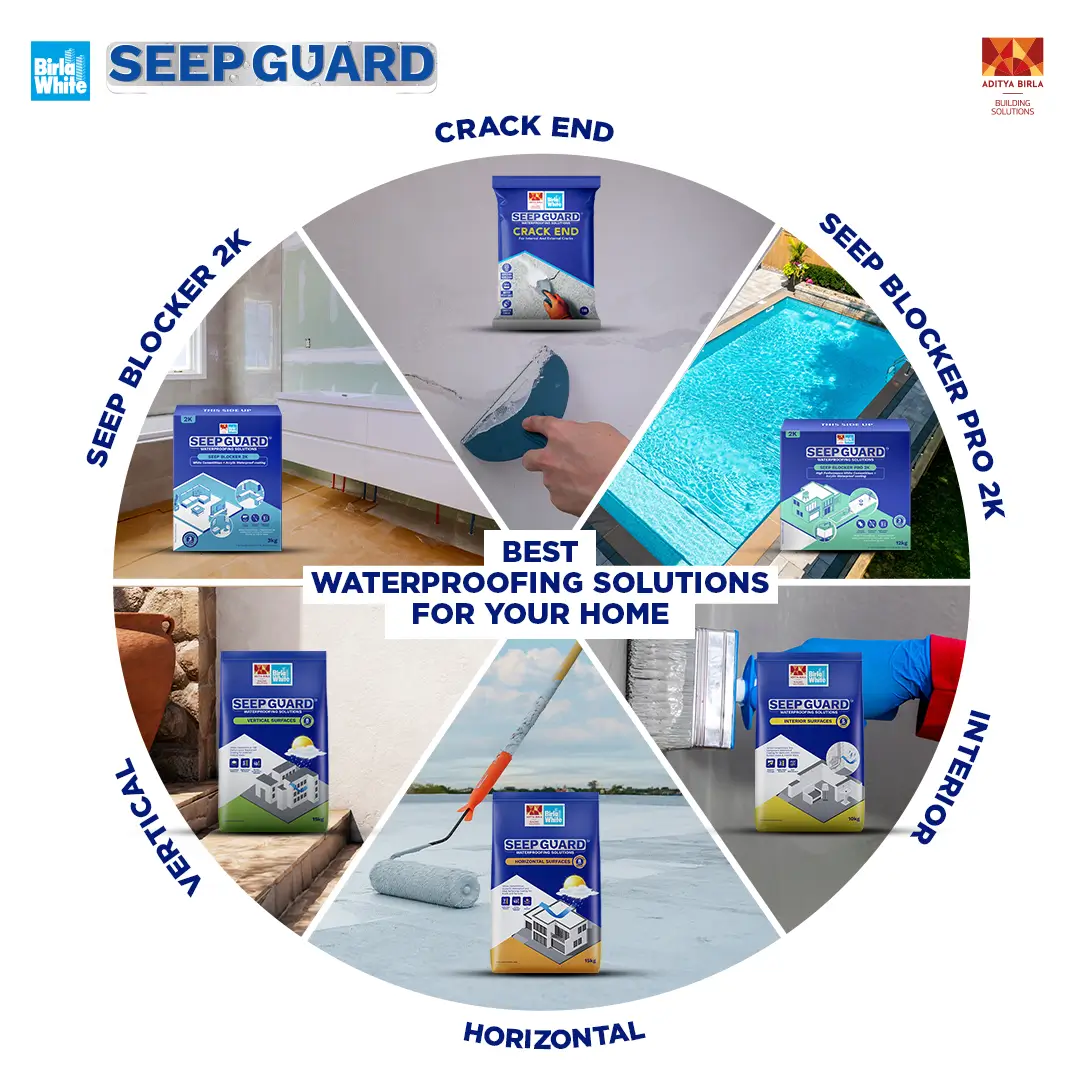
Here’s a quick look at Birla White Seep Guard products, each engineered to tackle different types of water ingress using the white cement advantage. These products are a combination of white cement and German elastomeric polymers that creates a superior adhesive waterproof layer:
For durable and long-lasting protection, especially in critical areas like basements, terraces and exterior walls, effective waterproofing beats simple sealing every time. Go for a complete waterproofing range like cementitious waterproofing materials with white cement technology to help your walls stand strong against water leakage issues. To explore the complete waterproofing range, visit www.birlawhite.com.
Fill out this form to talk to our experts.
Our team typically replies in 24 hours.