The first sign of roof problems may not be on the roof itself.
It could be a damp patch growing out from your ceiling, paint blistering after a heavy shower or water trickling down an interior wall. By the time these signs appear, moisture may have already got into cracks, joints or porous areas of the roof.
This is when roof waterproofing can be important.
A proper waterproofing system can help reduce water penetration, protect the roof surface and help prevent moisture-related problems in the home.
But with a variety of roof waterproofing solutions, it can be challenging to know which is the best option for your home.
Should you go for cement-based solutions, polymer-modified coatings, liquid-applied membranes or something else? And how much does roof waterproofing cost in 2026?
This guide provides an overview of different solutions for roof waterproofing with their benefits, factors affecting cost and how to choose the right option for your home
Roof waterproofing is the process of protecting a roof or terrace with an appropriate waterproofing system, so it resists water penetration.
Since the roof is subjected to continuous wetting during the rainy season, especially if it has cracks, holes, poorly sealed joints, or inadequate drainage, water may start penetrating through these openings
Proper waterproofing will protect the roof surface and prolong its life.
However, waterproofing is a complex procedure; it implies not only the right choice of paint but also a set of quality works: preparation of the surface, sealing cracks, and appropriate drainage.
Your roof is one of the most exposed parts of your home. It receives direct sunlight, rain and changing temperatures throughout the year.
Without adequate protection, prolonged moisture exposure can contribute to:
Roof waterproofing can help reduce these risks by creating a suitable barrier against water penetration.
In simple terms, waterproofing helps stop a roof from becoming an entry point for unwanted moisture.
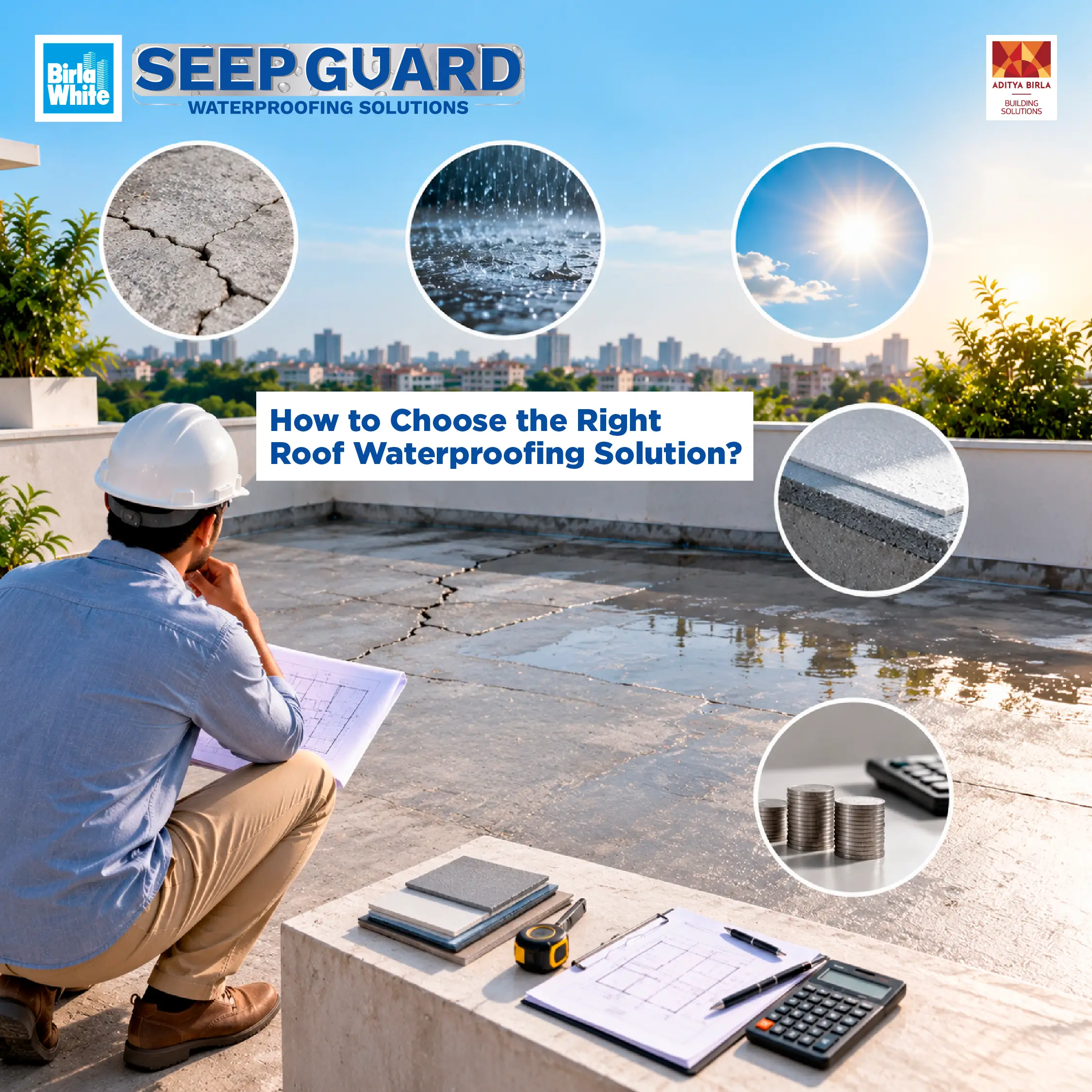
There is no universal waterproofing method that is applicable to all types of roofs. The decision is based on specific criteria such as the nature of the substrate, the level of exposure to water, surface characteristics and project requirements.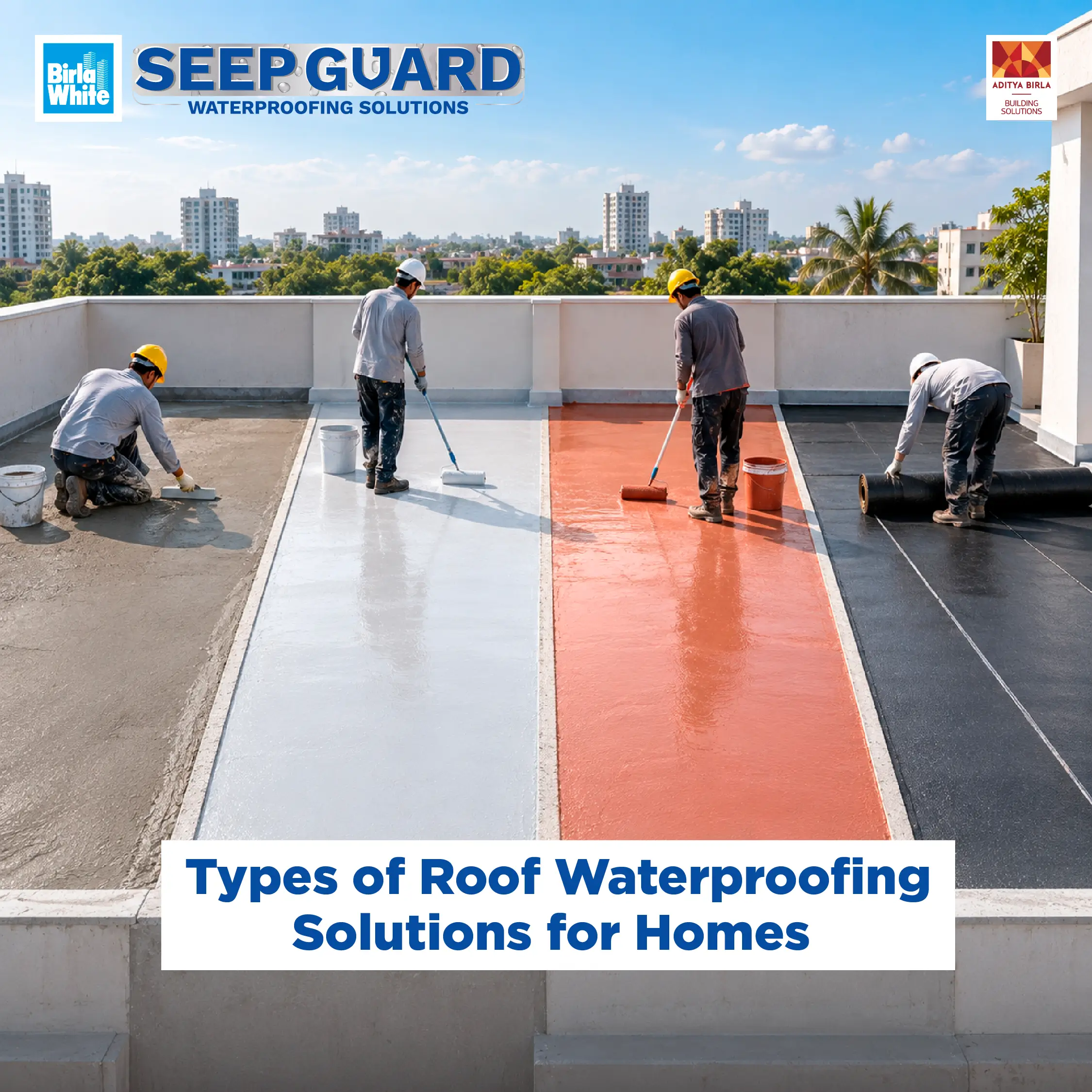
Cementitious waterproofing is a type of waterproofing that utilizes cement-based products to form a water-repellent layer on the required surface.
It is often used:
Among the benefits associated with cementitious waterproofing is its suitability to most mineral substrates in accordance with the appropriate system selection and proper application process.
Polymer-modified waterproofing systems are based on cementitious technology and polymers and offer additional performance such as enhanced adhesion, flexibility and hydrophobicity.
They may be considered for surfaces that require additional flexibility or protection against recurring water exposure in accordance with the product specifications.
Such systems can be used for:
Liquid-applied waterproofing systems are typically applied on the required surface and cured to form a protective layer.
They can be suitable for a variety of roof structures, including those featuring a complex surface profile, because the ability of the liquid to cover the surface areas and specific detailing avoids the need for multiple sheet joints.
The effectiveness of this type of waterproofing is highly dependent on:
Membrane waterproofing refers to the process of creating a dedicated membrane to ensure total waterproofing of the roof.
Depending on the technology selected, waterproofing membranes can be sheet or liquid applied.
Such membranes are typically considered for large roofing areas and projects that require a dedicated waterproofing system.
Prior to selecting such a system, it is important to consider the roof structure, movement, drainage, joints, penetrations and other relevant criteria.
| Waterproofing Type | Common Application | Important Consideration |
|---|---|---|
| Cementitious waterproofing | Concrete roofs and terraces | Surface compatibility |
| Polymer-modified systems | Roof slabs and exterior surfaces | Flexibility and adhesion |
| Liquid-applied systems | Flat roofs and detailed surfaces | Uniform application |
| Membrane systems | Terraces and larger roof areas | Installation and detailing |
The best roof waterproofing solution is not necessarily the most expensive one. It is the one that matches the roof's specific requirements.
One of the most common queries homeowners ask is; what is the roof waterproofing cost per square foot?
There is no set price because it depends on various factors.
Some of the elements that may affect the pricing are:
| Cost Factor | How It Can Affect Cost |
|---|---|
| Roof area | Larger areas require more material and labour |
| Surface condition | Damaged surfaces may need additional preparation |
| Waterproofing system | Different systems have different material and installation costs |
| Crack repairs | Extensive cracks may require additional treatment |
| Drainage | Poor drainage may require corrective work |
| Labour | Application complexity can affect installation charges |
Therefore, homeowners should obtain a site-specific assessment rather than relying only on a generic roof waterproofing price per sq ft.
Follow Product Specifications
Application method, coverage, drying time and number of coats can vary between products. Always follow the manufacturer's recommended application procedure.
Birla White has several products within the Seep Guard range that offer a waterproofing solution for different areas in the home, including the roof, walls, bathrooms, kitchens and swimming pools. The Seep Guard range includes Seep Guard Interior Surfaces, Vertical Surfaces, Horizontal Surfaces and Seep Blocker 2K, Seep Blocker Pro 2K and Crack End.
Looking at roof and terrace waterproofing, the product of interest is Seep Guard Horizontal Surfaces.
This is a white cementitious polymer high-performance coating system, formulated with German Elastomeric Polymer and white cement, for application on horizontal RCC, concrete and cementitious surfaces. Birla White claims to offer a strong adhesion and water resistance.
As stated by Birla White, the product has:
The product is listed for terrace application and is suitable for use on horizontal RCC, concrete and cementitious surfaces.
Planning to waterproof your terrace? Look into Birla White Seep Guard Horizontal Surfaces to see if it will be a suitable solution for your roof and your project.
Think of your roof as the first line of defence between your home and the weather.
A waterproofing system that is correctly selected, properly applied and maintained can help protect the roof from water penetration and reduce moisture-related problems.
For homeowners, the goal should not simply be to “stop today's leak.”
It should be to identify the cause, select an appropriate waterproofing system and protect the roof for the long term.
Birla White offers solutions designed to address different construction and waterproofing requirements. Explore Birla White's waterproofing solutions to find an option suited to your project.
The most suitable waterproofing depends on the roof's substrate, condition, water exposure, cracks, drainage and application requirements. Cementitious, polymer-modified, liquid-applied and membrane systems can be considered for different roofing situations.
Roof waterproofing cost varies based on roof area, material, surface preparation, repairs, labour and the waterproofing system selected. A site assessment is the best way to determine the actual project cost.
The service life depends on the waterproofing system, application quality, roof condition, weather exposure, maintenance and other site-specific factors.
Fill out this form to talk to our experts.
Our team typically replies in 24 hours.