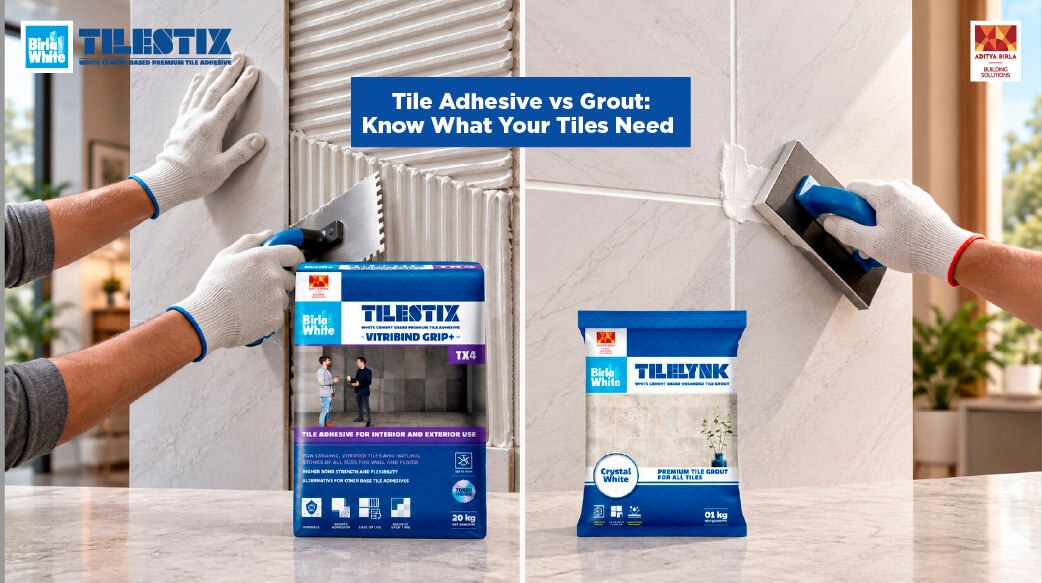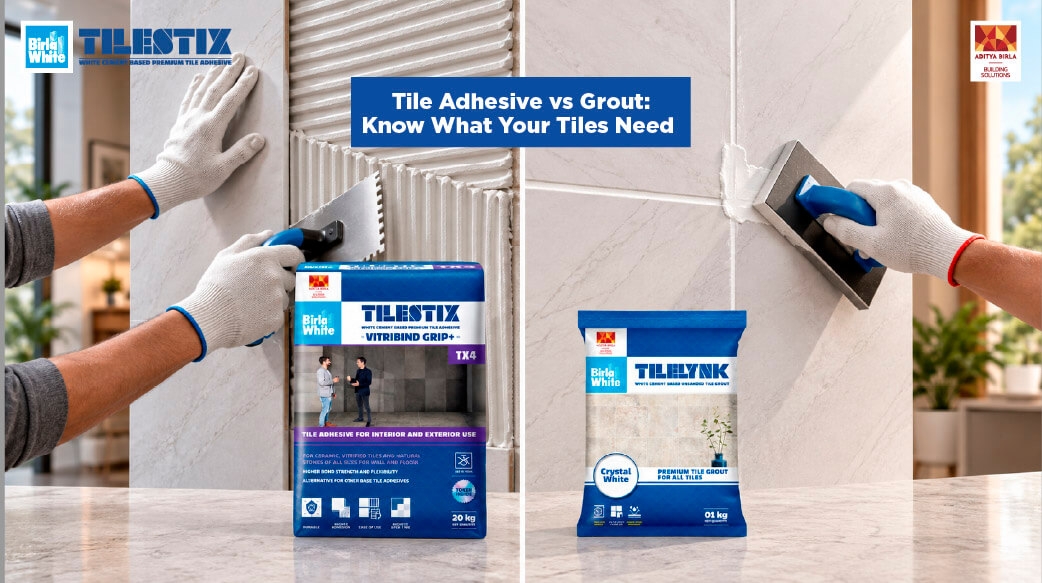
A beautiful tiled wall or floor is not only the result of the tiles that are used. What holds the tiles firmly in place and creates a neat, seamless appearance is just as important. This is where tile adhesive and grout come into play.
While the two products are often used together, they serve completely different functions. Tile adhesive is the product that bonds the tiles to the surface, while grout fills joint gaps and prevents water penetration. Understanding these differences will aid you in choosing the best products for your project as well as getting a clean, longer-lasting tiled surface.
Whether you are planning a bathroom renovation, new kitchen backsplash or tile flooring, understanding when to use adhesive, grout, or both can make all the difference.
Tile Adhesive vs Grout: What Is the Difference?
The simplest way to understand the difference is to look at where each product is used and what it does.
| Feature | Tile Adhesive | Tile Grout |
|---|---|---|
| Primary purpose | Bonds tiles to the surface | Fills gaps between tiles |
| Application | Underneath the tile | Between tiles |
| Main function | Provides adhesion and support | Finishes and protects tile joints |
| Used before or after tiling? | During tile installation | After tiles are fixed |
| Helps prevent tile movement? | Yes | Not its primary function |
| Provides finished joints? | No | Yes |
| Suitable for floors and walls? | Depending on product | Depending on grout type and application |
In simple terms, adhesive holds the tile, while grout finishes the tiled surface.
What Is Tile Adhesive?
Tile adhesive is a bonding material used to fix tiles onto substrates such as cement-based surfaces, concrete, plastered walls and other suitable backgrounds, depending on the product specification.
Unlike traditional tile cement methods, a suitable tile adhesive is designed to provide controlled bonding and support during installation.
The right adhesive can help create a stronger connection between the tile and substrate while supporting a neat and stable installation.
Where Can Tile Adhesive Be Used?
Depending on the product, tile adhesive can be used for:
- Wall tiles
- Floor tiles
- Kitchen areas
- Bathroom surfaces
- Interior applications
- Exterior applications
- Different tile sizes and types
However, the adhesive should always be selected according to the tile type, tile size, substrate, location and moisture exposure.
For example, an area exposed to regular moisture may require an adhesive specifically suitable for that environment.
What Is Tile Grout?
Tile grout is a material used to fill the joints or spaces between installed tiles. Once the tiles have been fixed and the appropriate setting time has been achieved, grout is applied into these gaps.
Besides creating a more uniform appearance, grout helps fill open joints and provides a finished surface between individual tiles.
Grout can also make tiled surfaces easier to maintain by reducing exposed gaps where dust, dirt and other particles can accumulate.
Why Do You Need Tile Grout?
Tile grout serves several purposes:
- Fills gaps between tiles
- Creates a neat and finished appearance
- Further helps to protect tile joints
- Makes the tiled surface easier to maintain
- Completes the overall tile installation
The correct grout should be selected according to factors such as joint width, tile type, location, moisture exposure and manufacturer recommendations.
Can Grout Be Used Instead of Tile Adhesive?
Generally, no. Grout is designed primarily for filling tile joints, not for bonding tiles to a substrate.
Similarly, using an adhesive to fill tile joints may not provide the intended joint finish or performance of a suitable grout.
This is why understanding the difference between tile adhesive and grout is essential before starting a tiling project.
How to Choose the Right Tile Adhesive and Grout?
There is no one adhesive that is suitable for every tile and every surface. Here are a few things to consider when buying:
1. Consider The Tile Type
Start by considering the type of tile that you are going to install.
Ceramic, vitrified, porcelain, glass mosaic and natural stone tiles can have different requirements for installation. Some adhesives are made for specific categories of tiles, while some can accommodate a variety.
2. Check The Tile Size And Format
The size of the tile matters, since larger and heavier tiles can place different demands on the bonding system.
For large-format tiles, look for an adhesive with suitable flexibility, adhesion and open time. Our TileStix Extero Grip+ is formulated for large-format tiles, natural stones and slim tiles and is designed for indoor and outdoor horizontal and vertical applications. For very large-format installations, specialised products may be required. TileStix Curvefit is specially designed as a highly deformable adhesive for very large-format tiles and can accommodate substrate movement.
3. Think About Where the Tiles Will Be Installed
Your installation location should also be an important consideration.
A tile flooring adhesive for a dry indoor room can have different requirements than that of an adhesive used on a bathroom wall, balcony or exterior surface.
Ask:
- Is it for a floor or wall?
- Is the area indoors or outdoors?
- Is it exposed to water?
- Will it experience heavy foot traffic?
- Is the substrate likely to experience movement?
- Is it a tile-on-tile renovation?
Choosing according to the application helps to ensure that the adhesive is appropriate for the conditions that it will be exposed to.
4. For Wet Areas, Consider A Waterproof Tile Adhesive
Bathrooms, kitchens, balconies and other moisture-prone areas need special consideration.
A waterproof tile adhesive or water-resistant adhesive suitable for the intended application can help to assist tile installation in wet areas. However, adhesive selection should be considered along with the complete waterproofing and tiling system rather than being a substitute for waterproofing.
Our TileStix Extero is described as water resistant and suitable for wet areas, while TileStix Intero is also designed for water-resistant performance in indoor wet areas.
5. Check The Substrate
The surface beneath the tile is also important to take into account.
Before installation, the substrate should be appropriately prepared, clean and suitable for the chosen adhesive. Uneven, contaminated or unsuitable surfaces can affect the quality of the finished installation.
For tile-on-tile renovation projects, consider an adhesive that is specifically recommended for such an application. Several other products including TileStix are designed for tile-on-tile applications.
Tile Adhesive and Grout: The Right Combination for a Better Finish
Choosing attractive tiles is only one part of creating a durable tiled surface. The materials beneath and between the tiles also matter.
Tile adhesive provides the bond. Grout completes the joints. Together, they form an important part of a properly installed tiled surface.
So, whether you're installing tile flooring adhesive, wall tiles or tiles in a moisture-prone area, don't choose materials based only on price or appearance. Consider the tile, substrate, location, moisture exposure and installation requirements first.
The right tile deserves the right foundation and finish. Explore Birla White Tilestix for tile installation solutions and choose the right adhesive for your project.
FAQs About Tile Adhesive and Grout
Do I need grout if I use tile adhesive?
Yes, in a typical tiled installation. Tile adhesive fixes the tiles to the surface, while grout fills the spaces between them.
Which is better: tile cement or tile adhesive?
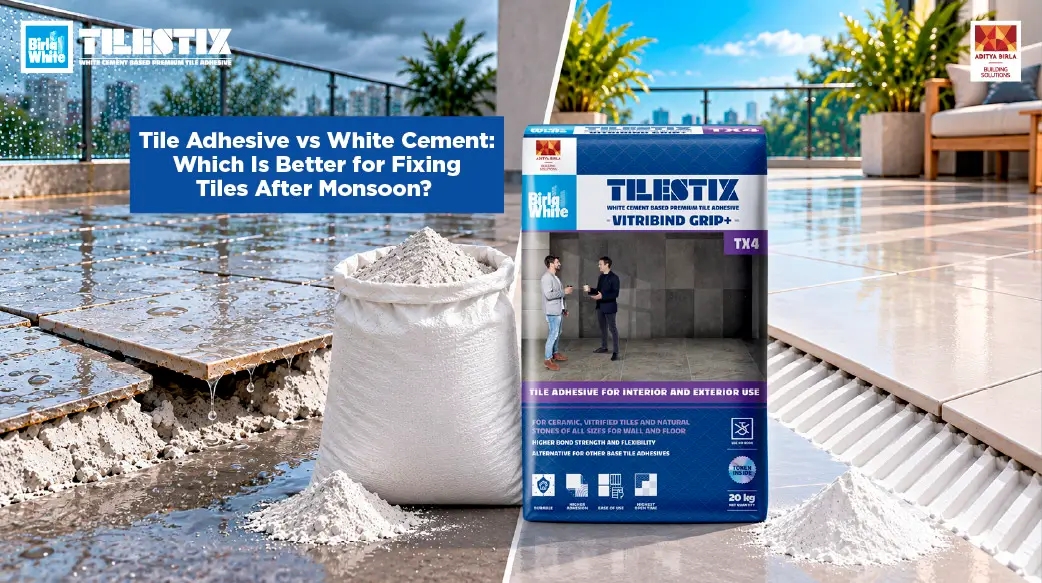
The appropriate choice depends on the tile, substrate, application and manufacturer's recommendations. A purpose-designed tile adhesive can be selected based on the specific requirements of the installation.
How long after using tile adhesive can I apply grout?
The waiting period depends on the adhesive, tile type, substrate and environmental conditions. Always follow the specific manufacturer's recommended setting or curing time before grouting.