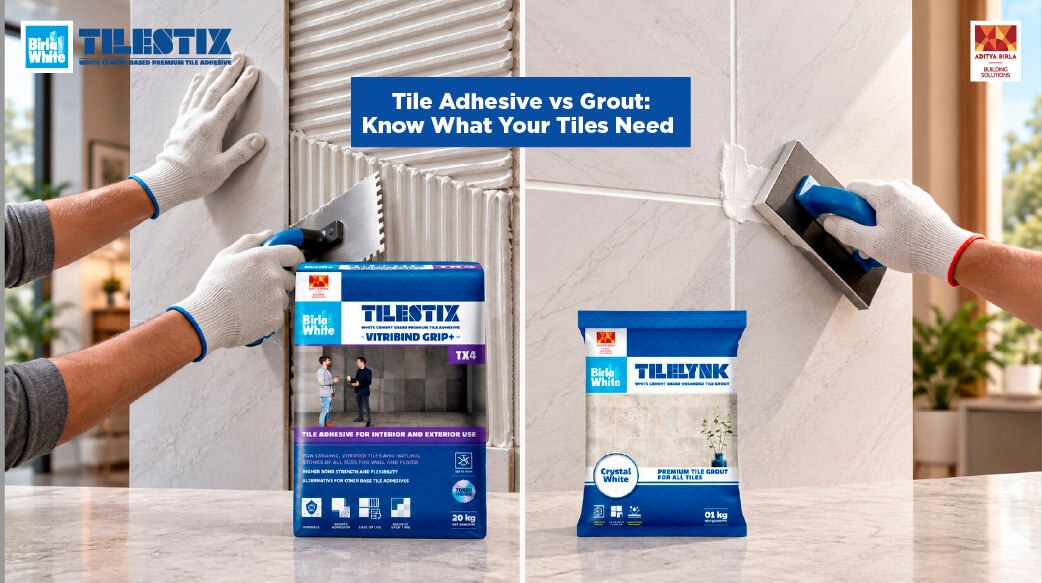
A beautiful tile requires more than a beautiful surface. The layer of material that holds it in place beneath can have a large effect on the durability, finish and performance of a tiled space.
Whether you are renovating a bathroom, installing a new kitchen floor, upgrading a balcony or choosing tiles for an outdoor area, the right tile adhesive can assist in creating a strong bond between the tile and the substrate. However, with different tile types, surfaces, sizes and conditions, the choice of the right adhesive can become complex.
Looking for a tile adhesive designed for different needs? Look through our TileStix to explore options for indoor, outdoor, wet-area, wall, floor and specialised tile applications.
What Is Tile Adhesive and Why Does It Matter?
Tile adhesive is a special bonding material formulated to fix tiles to surfaces such as cement-based screeds and mortars. Adhesives can be further applied to several substrates, which include cement screeds, concrete surfaces, plastered walls and existing tiled surfaces.
Besides choosing a product according to its name or price, the adhesive should match the tile type, tile size, substrate, location and exposure to moisture.
A suitable tile coupled with adhesive installation can help to give better bonding and positioning during installation. With the right product, features such as higher adhesion, water resistance, flexibility, open time and sag resistance can also support different tiling needs.
For instance, Birla White TileStix Extero is a polymer-modified, white cement-based adhesive suitable for ceramic, vitrified, glass mosaic and natural stone applications. It can be used on walls and floors in indoor and outdoor environments, including wet areas.
How to Choose the Best Tile Adhesive in India 2026
There is no single adhesive that is suitable for every tile and every surface. Consider these factors before buying.
1. Consider the Tile Type
Begin by identifying the tile that you are installing.
Ceramic, vitrified, porcelain, glass mosaic and natural stone tiles can have different requirements for installation. Some adhesives are formulated for specific tile categories, while others can accommodate various categories.
2. Check the Tile Size and Format
The size of the tile matters, as larger and heavier tiles can place different demands on the bonding system.
For large-format tiles, look for an adhesive with suitable flexibility, adhesion and open time. Our TileStix Extero Grip+ is formulated for large-format tiles, natural stones and slim tiles and is designed for indoor and outdoor horizontal and vertical applications.
For very large-format installations, specialised products may be required. TileStix Curvefit, for instance, is designed as a highly deformable adhesive for very large-format tiles and can accommodate substrate movement.
3. Think About Where the Tiles Will Be Installed
Your installation location should also be an important consideration.
A tile flooring adhesive for a dry indoor room can have different requirements than that of an adhesive used for a bathroom wall, balcony or exterior surface.
Ask:
- Is it for a floor or wall?
- Is the area indoors or outdoors?
- Is it exposed to water?
- Will it experience heavy foot traffic?
- Is the substrate likely to experience movement?
- Is it a tile-on-tile renovation?
Choosing according to the application helps to ensure that the adhesive is appropriate for the conditions that it will be exposed to.
4. For Wet Areas, Consider a Waterproof Tile Adhesive
Bathrooms, kitchens, balconies and other moisture-prone areas need special consideration.
A waterproof tile adhesive or water-resistant adhesive suitable for the intended application can help to assist tile installation in wet areas. However, adhesive selection should be considered along with the complete waterproofing and tiling system rather than being a substitute for waterproofing.
Our TileStix Extero is described as water resistant and suitable for wet areas, while TileStix Intero is also designed for water-resistant performance in indoor wet areas.
5. Check the Substrate
The surface beneath the tile is also important to take into account.
Before installation, the substrate should be appropriately prepared, clean and suitable for the chosen adhesive. Uneven, contaminated or unsuitable surfaces can affect the quality of the finished installation.
For tile-on-tile renovation projects, consider an adhesive that is specifically recommended for such an application. Several other products including TileStix are designed for tile-on-tile applications.
Tile Adhesive Price: What Determines the Cost?
Looking for tile adhesive price is natural when planning a renovation, but the lowest price may not always reflect the overall value of a product.
The final cost can depend on factors such as:
- Adhesive type and formulation
- Tile size and type
- Coverage requirements
- Application thickness
- Surface condition
- Project location
- Packaging size
- Installation requirements
Coverage can also vary depending on factors such as the trowel notch size, tile dimensions and substrate smoothness.
As such, instead of comparing only the price per bag, consider price in relation to coverage, application suitability, performance requirements and the type of tile being installed.
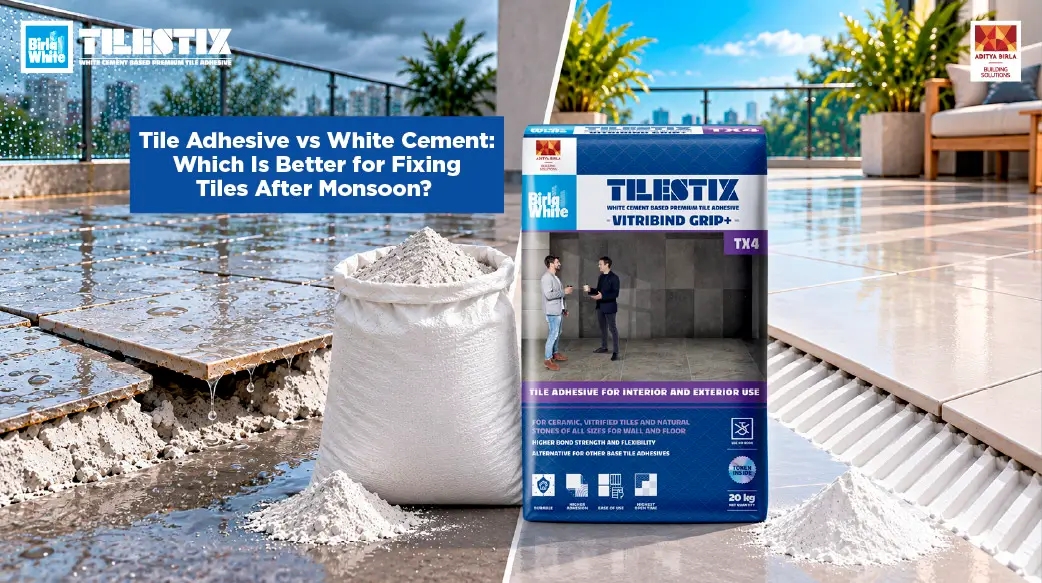
Tile Adhesive vs Traditional Cement: Which Should You Use?
Traditional cement-based methods have been used in tile installation before. Modern tile adhesives are specifically formulated for tile installation and may offer benefits such as polymer modification, improved workability, enhanced bonding strength and water resistance, depending on the product selected.
The appropriate adhesive is determined by the type of tile, substrate as well as installation conditions. It is important to always follow the manufacturer's guidelines when choosing products for installation instead of going with assumptions or simply picking the cheaper option.
Why Consider Birla White TileStix?
Choosing a tile adhesive is ultimately about matching the product to the project.
Our TileStix range includes solutions designed for different tile types, surfaces and installation conditions. Depending on the application, options include TileStix Intero for high-porosity tiles in indoor floor applications, TileStix Vitribind for ceramic, semi-vitreous and vitrified tiles, and TileStix Extero for broader indoor and outdoor applications.
For larger-format installations, TileStix Extero Grip+ offers high polymer modification, flexibility, slip resistance and extended open time.
Don’t let your tile selection be the end of the decision. Choose the bonding system that supports it. Explore the best TileStix range and find the adhesive suited to your tile, surface and installation requirements.
FAQs About the Best Tile Adhesive in 2026
Which tile adhesive is best for flooring?
The tile adhesive depends on the tile type, size, substrate, location and moisture conditions. Additionally, there is a product specialised for your flooring application.
What is the difference between tile adhesive and cement?
Tile adhesive is formulated specifically for fixing tiles and may contain polymers and other components designed to provide properties such as adhesion, workability and water resistance. Traditional cement mortar has different characteristics and application requirements.
Is waterproof tile adhesive suitable for bathrooms?
A suitable water-resistant or waterproof tile adhesive can be used for relevant bathroom tiling applications when the product is specified for wet areas. However, tile adhesive should not be considered a replacement for a complete waterproofing system.
How do I estimate tile adhesive quantity?
Quantity depends on factors including tile size, substrate condition, adhesive-bed thickness and trowel notch size. Always refer to the manufacturer's coverage information for the selected product.
Can tile adhesive be used for tile-on-tile installation?
Yes, some tile adhesives are specifically designed or recommended for tile-on-tile applications. Check the manufacturer's product specifications before installation.
What should I check before buying tile adhesive in India?
Check the tile type, size, substrate, indoor or outdoor location, moisture exposure, application area and manufacturer's recommendations. Comparing these factors along with tile adhesive price can help you select a product appropriate for your project.