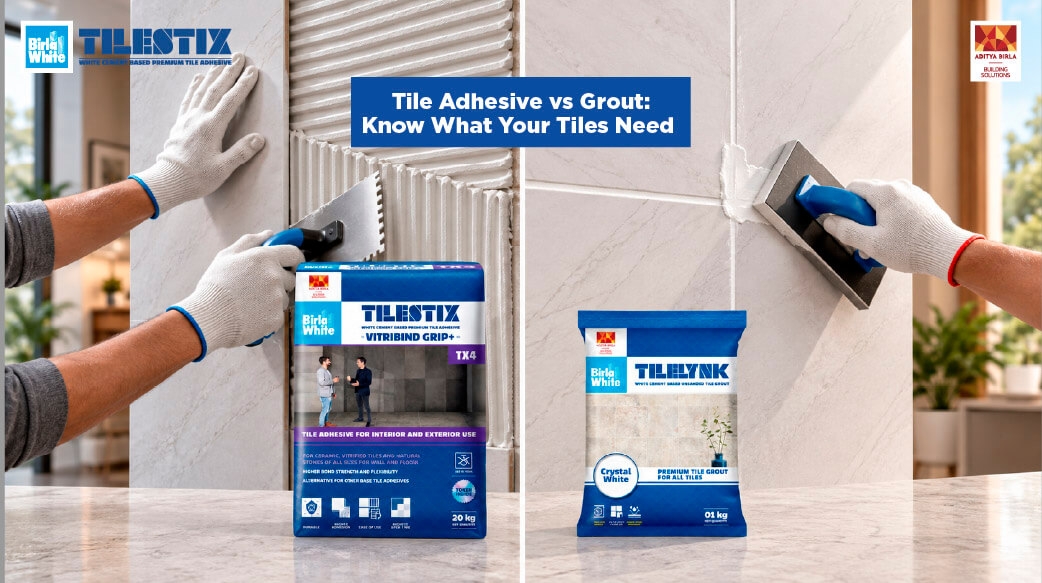
Choosing the right filler is essential for achieving a neat, durable, and easy-to-maintain tiled surface. Whether you are installing bathroom tiles, kitchen backsplashes, or living room flooring, tile material and installation conditions play an important role.
The best tile joint filler is one that is compatible with your tiles, fits the specified joint width, and meets the performance requirements of the area. Choosing the right tile joint filler for different tile joints involves more than selecting a colour. Joint width, tile material, moisture exposure, stain resistance, and installation conditions all influence the final choice. In this guide, discover how to choose the right type of grout for different tile joints and select suitable colours.
Tile grout is a specially designed material used to fill the joints between installed tiles. It helps create a uniform finish, reduces the accumulation of dirt and debris in the gaps, and supports the performance of the tiled installation when correctly selected and applied.
Furthermore, it is available in different formulations, including cement-based and epoxy-based products. The appropriate choice depends on the tile material, joint dimensions, exposure to moisture, and maintenance requirements.
The main benefits include:
Joint width is one of the most important considerations when choosing grout. The product must be capable of filling the gap correctly without compromising the finished joint.
| Tile Joint Requirement | Suitable Grout Selection | Important Consideration |
|---|---|---|
| Narrow joints | A product specifically approved for narrow joints | Confirm that the product can fill the joint completely. |
| Standard joints | Compatible cement-based or another suitable grout | Match the tile filler to the tile and installation. |
| Wider joints | A grout formulated for the required width | Check aggregate content and the specified width range. |
The best grout for a bathroom may not be the most suitable choice for a living room or balcony. Each area has different exposure conditions and maintenance requirements.
Bathroom tiles experience frequent water exposure, humidity, soap residue, and cleaning products.
Recommended approach: Choose a grout suitable for wet-area applications and compatible with the tile type and joint width. Ensure that the underlying waterproofing system is correctly installed.
Kitchen tile joints can accumulate grease, food residue, spills, and cleaning-product deposits.
Recommended approach: Choose a grout with suitable stain resistance and maintenance properties.
Indoor floor tiles experience foot traffic, dust, and everyday spills.
Recommended approach: A compatible cement-based product is often suitable for standard residential flooring. Choose the appropriate formulation according to joint width, tile material, and expected use.
Outdoor tile joints may be exposed to rain, sunlight, temperature changes, and movement in the underlying structure.
Recommended approach: Choose a grout specifically approved for exterior applications. Consider drainage, substrate preparation, waterproofing where required, and movement joints as part of the complete tile installation system.
Choosing the right tile joint filler for different tile joints involves more than selecting a colour. Joint width, tile material, moisture exposure, stain resistance, and installation conditions all influence the final choice.
By selecting the right tile grout, following application instructions, and using a suitable flexible sealant where required, you can achieve a neat and durable tiled finish.
Planning a tile installation? Explore Birla White's tile adhesives and grouts range to learn more about solutions for your tiling requirements.
Cement-based grout is commonly used for standard residential tile installations. Epoxy grout may be more suitable for areas requiring enhanced stain and chemical resistance. The final choice depends on tile type, joint width, and application conditions.
Choose a grout approved for the bathroom's specific conditions and compatible with the tile and joint width. Proper waterproofing beneath the tiled finish is also important.
Yes, tile grout is designed to fill suitable joints between tiles. However, movement joints, corners, and changes of plane may require a flexible sealant rather than conventional rigid grout.
Fill out this form to talk to our experts.
Our team typically replies in 24 hours.