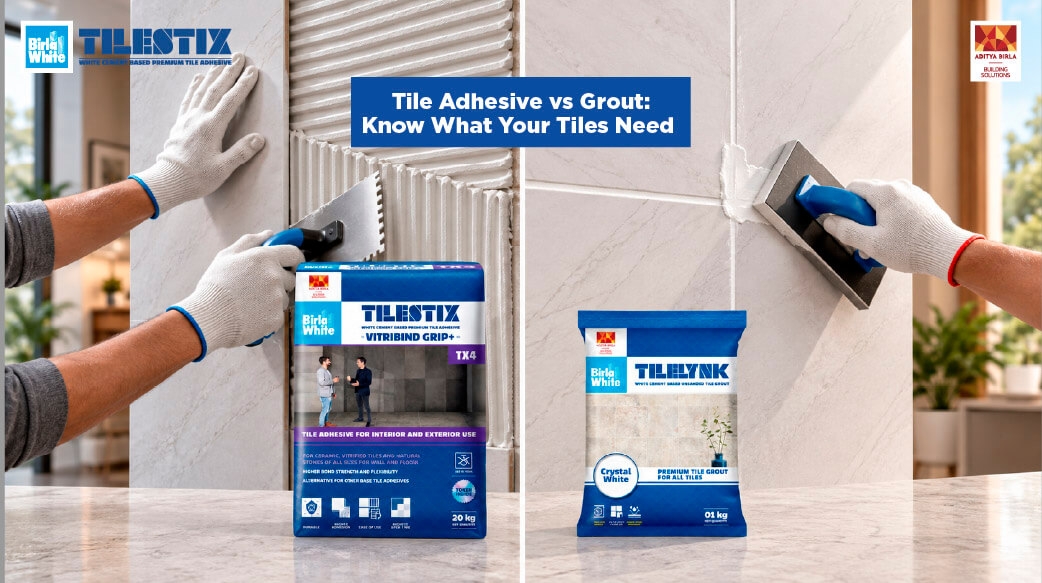
Choosing the best adhesive for tiles is essential for achieving a strong and durable tile installation. However, one common question homeowners, contractors, and installers ask is whether tile adhesive can be applied directly to cement, concrete, and plastered walls.
Yes, tile adhesive can be used on cement-based substrates, concrete, and plastered walls when the surface is properly prepared, and the selected adhesive is approved for that application. The suitability of the adhesive depends on factors such as tile material, tile dimensions, substrate condition, and whether the installation is indoors, outdoors, or in a wet area.
A purpose-designed tile adhesive offers specified bonding properties and application requirements. Selecting the right product helps support tile adhesion and reduces the risk of common installation problems.
Tile adhesive is a bonding material used to fix tiles to suitable floors and walls. Depending on its formulation, it may contain cement, graded aggregates, polymers, and other additives that help achieve the specified bonding and application properties.
Yes, tile adhesive can be used on suitable cement-based surfaces, including properly prepared cement screeds and cement-rendered substrates.
Before application, the surface must be sufficiently cured, stable, and free from loose material, dust, oil, and other contaminants. Any cracks, uneven areas, or weak patches should be assessed and addressed before tiling.
Tile adhesive is a suitable option when:
Although both materials may contain tile cement, they are not identical in formulation or performance.
| Feature | Tile Adhesive | Tile Cement-Sand Mortar |
|---|---|---|
| Composition | Formulated bonding material with specified properties | Mixture of cement, sand, and water |
| Application | Applied according to the product instructions | Prepared and applied using the specified mortar method |
| Bonding performance | Designed to meet stated tile-fixing requirements | Depends on the mix, substrate, tile, and installation method |
| Best use | Applications specified for the selected adhesive | Applications where a mortar-based method is appropriate |
For many modern tile installations, a suitable tile adhesive offers a convenient, specification-led option. Traditional cement mortar may still be appropriate for certain installation methods, but it should not automatically replace a specified adhesive system.
Yes, tile adhesive can be applied to concrete if the concrete is suitable for tiling and the adhesive is approved for the substrate.
Concrete provides a rigid base, but its condition is critical. Dust, curing compounds, oil, laitance, weak surface layers, and excessive moisture can interfere with bonding. Newly placed concrete also needs adequate curing before tiling.
For large-format tiles, exterior applications, or demanding installations, additional substrate preparation or a specialised adhesive may be necessary.
Yes, tile adhesive can be used on plastered walls when the plaster is sound, sufficiently cured, and compatible with the adhesive.
Cement-plastered walls are commonly used as tile substrates. However, plaster must not be weak, powdery, damp beyond permitted limits, or affected by loose patches.
Birla White tile adhesive can be used on cement-based surfaces, concrete, and plastered walls when the substrate is properly prepared, and the selected product is approved for the application. However, the right adhesive depends on tile size, material, substrate condition, moisture exposure, and installation location.
Explore Birla White's tile adhesives and grouts range to find suitable solutions for your tile installation requirements.
Yes, if the cement-based surface is stable, sufficiently cured, clean, and compatible with the selected adhesive. Check the manufacturer's substrate and application requirements before installation.
Yes, provided the concrete is sound, suitably prepared, and approved for use with the selected adhesive. Check the tile weight, wall application requirements, and surface condition.
Yes. Tile adhesive can be used on properly cured and stable cement-plastered walls when the product is suitable for the tile and substrate. Gypsum plaster may require a specifically approved system or additional preparation.
Tile adhesive is formulated for specified tile-fixing applications and can offer controlled bonding properties. Traditional cement-sand mortar may be suitable for certain installation methods. The right choice depends on the tile, substrate, installation design, and manufacturer's requirements.
Fill out this form to talk to our experts.
Our team typically replies in 24 hours.