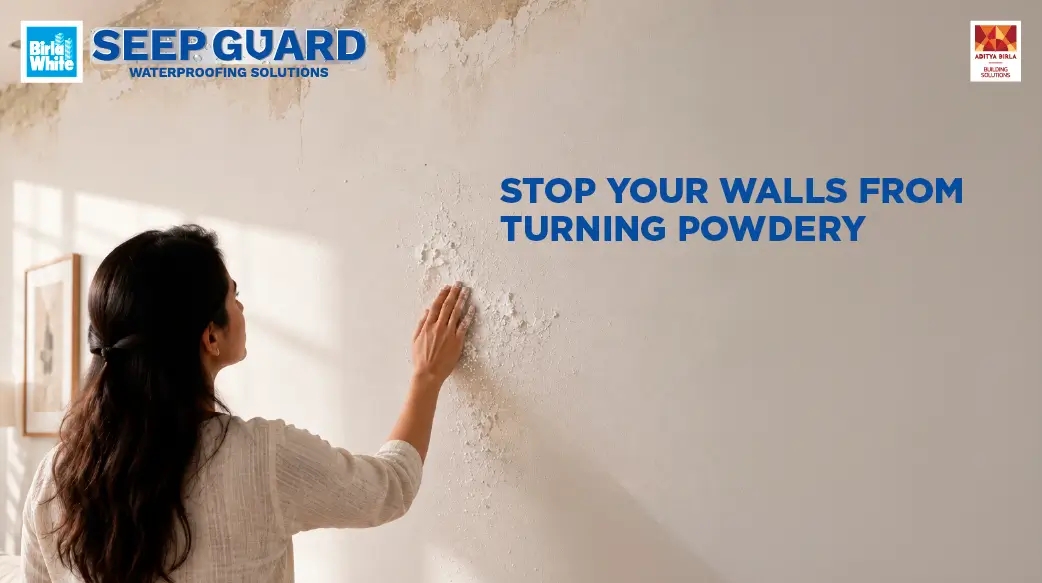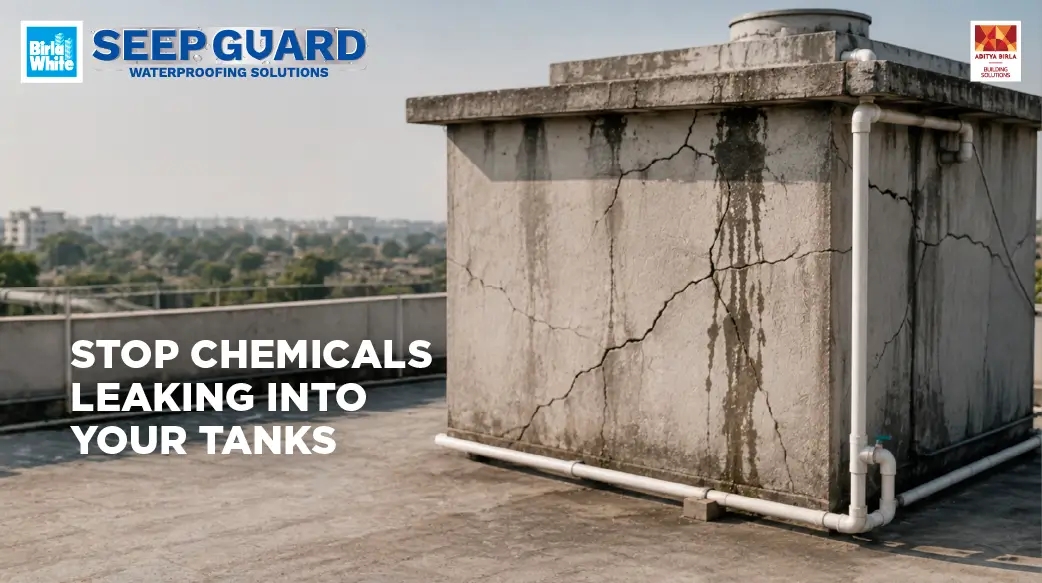
At first glance, a wall can seem perfectly normal. However, beneath the surface, moisture may already be building up quietly. Over time, this hidden dampness can damage paint, weaken plaster, encourage mold growth and even affect the strength of the structure. In many homes, the issue only becomes noticeable once stains, bubbling paint or cracks start showing up.
That is why waterproofing and dampproofing matter so much. Although both are used to manage moisture, they do not work in exactly the same way. Choosing the right water leaking solution at the right time can save you from costly repairs later and help keep your interiors healthier, cleaner and more durable.
In this blog, we will look at the difference between dampproofing and waterproofing, the early signs of hidden wall damage and how Birla White Seep Guard Interior Surfaces can offer an effective solution for water leakage from wall problems.
Rain, plumbing leaks, humidity, groundwater seepage and condensation can all allow water to enter tiny pores and cracks in concrete or masonry. Once that happens, the moisture begins to spread slowly inside the wall.
What makes hidden moisture especially troubling is that it develops gradually. Unlike obvious leakage, it often stays out of sight for a long time. This means the damage can become much more serious before anyone notices it. Common causes include:
Without proper wall waterproofing, that moisture keeps moving through the wall and gradually damages it layer by layer.
These two terms are often used as if they mean the same thing but they actually serve different purposes.
Dampproofing is meant to reduce moisture absorption and control dampness caused by humidity or light water exposure. In simple terms, it helps slow down the movement of moisture through walls and floors. It is usually suitable for:
1. Mild damp conditions
2. Interior moisture protection
3. Preventing humidity-related wall damage
Waterproofing offers a stronger level of protection. It creates a barrier that helps stop water seepage. It works well in spaces where moisture exposure is high or water pressure is a concern. It is ideal for:
• Bathrooms and kitchens
• Exterior walls
• Basements and terraces
• Areas exposed to continuous water contact
In simple terms, dampproofing and waterproofing work best when you understand what each one is meant to do. Dampproofing helps manage dampness and humidity, while waterproofing helps block active water entry.
Hidden moisture damage usually begins with small changes that are easy to miss. Spotting these signs early can help you choose the right water leakage from wall solution before the damage becomes more serious.
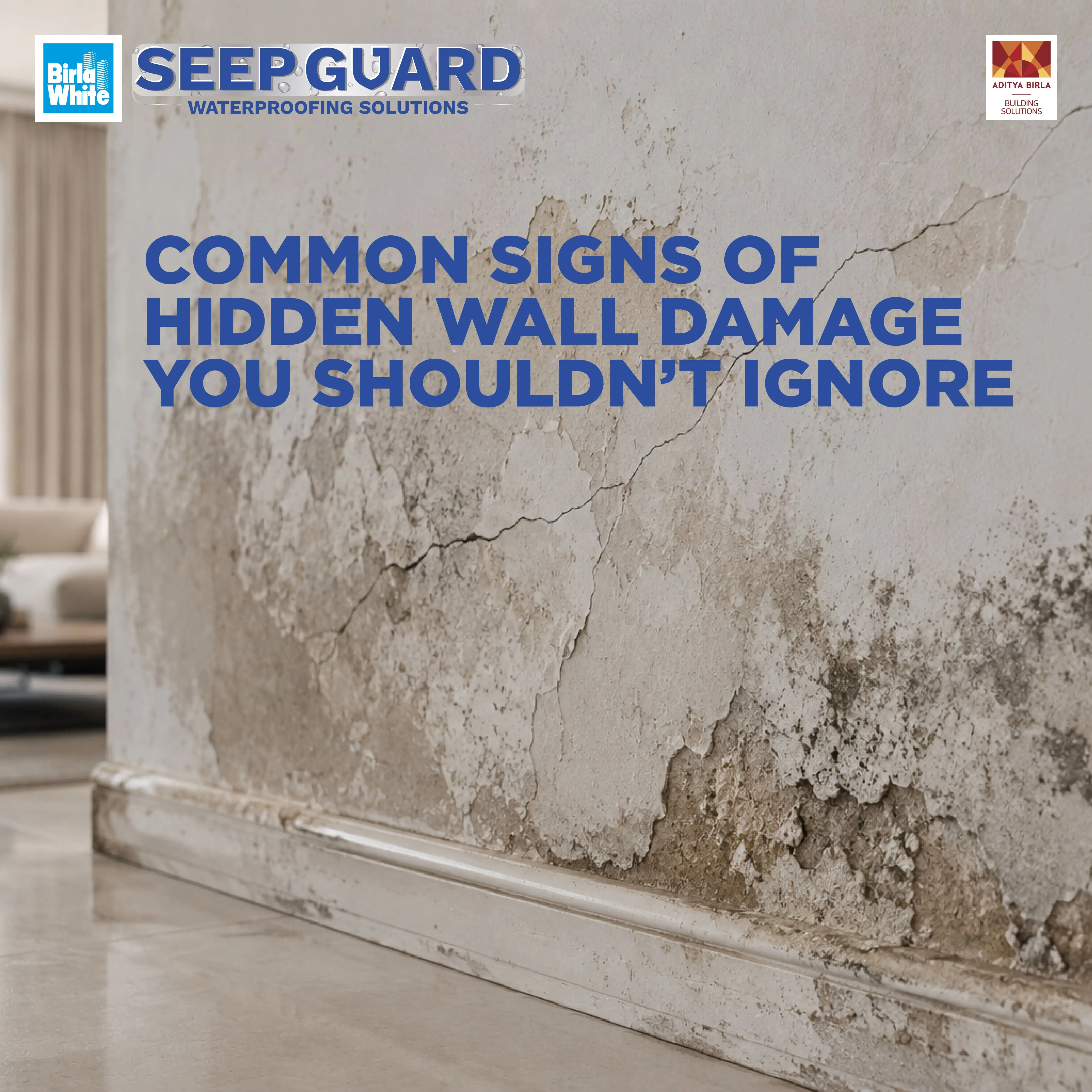
If these early warning signs are ignored, the repair work can become much more expensive over time.
Proper waterproofing the wall helps stop moisture before it has the chance to spread deeper into the structure.
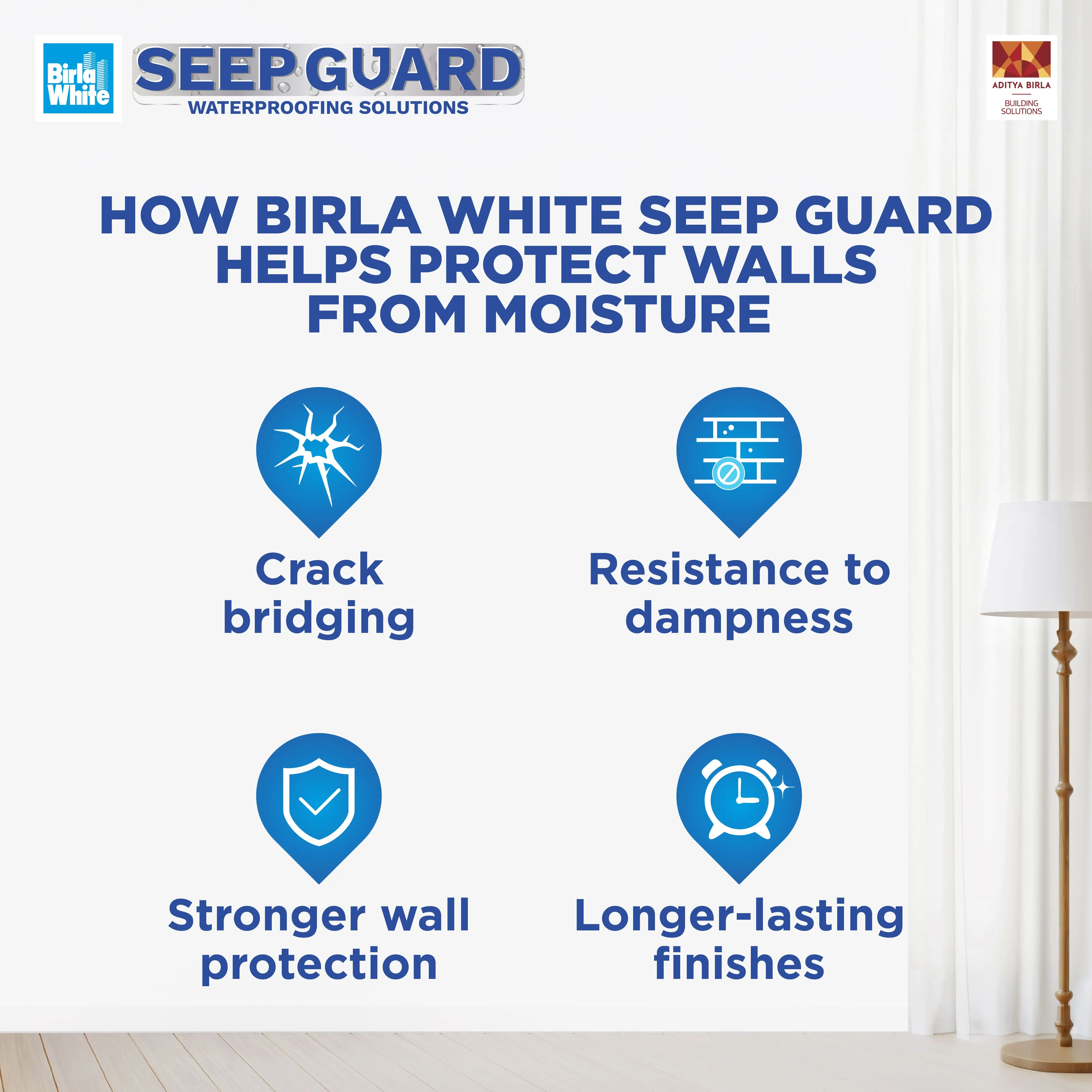
Both serve different purposes and the better option depends on the severity of moisture exposure. Damp proofing helps control minor moisture and humidity, while waterproofing provides stronger protection against water seepage and leakage. For areas exposed to continuous moisture or heavy water contact, waterproofing is generally the more effective long-term solution.
Using the right solution for water leakage from wall surfaces in these areas can go a long way in preventing repeated seepage problems. Birla White Seep Guard Interior Surfaces is designed to help protect interior walls against leakage, seepage and the kind of hidden moisture damage that often builds up over time.
It is a polymer-modified, white cementitious, elastomeric, high performance coating system made for masonry and concrete surfaces. With its water-resistant white cement base, it offers an affordable yet highly effective option for both positive and negative waterproofing applications. When applied during construction, it can help deliver long-lasting protection for walls.
For interior masonry and concrete surfaces exposed to seepage or dampness, polymer-modified cementitious waterproof coatings are highly effective. Solutions like Birla White Seep Guard Interior Surfaces are especially useful because they bring together durability, flexibility and moisture resistance in one solution.
No, they are connected but not identical.
For complete wall protection, especially in areas exposed to continuous moisture, waterproofing is usually more effective.
When high-performance solutions are applied correctly during construction, they can offer reliable protection for several years with very little maintenance. Hidden wall damage does not usually appear all at once. It builds slowly as moisture collects inside the wall, weakening surfaces and leading to bigger structural concerns over time. Taking action early with effective waterproofing and dampproofing can help prevent expensive repairs and extend the life of your home.
Choosing a reliable water leakage from wall solution such as Birla White Seep Guard Interior Surfaces helps create a durable moisture barrier while protecting walls from seepage, cracks, and efflorescence.
For more information, visit www.birlawhite.com.
Fill out this form to talk to our experts.
Our team typically replies in 24 hours.