When you think about renovating your home, specifically fixing tiles, what is the first image that pops into your head? For most of us, it’s a dusty site. A worker hunched over a pile of wet cement, and buckets upon buckets of water being mixed, splashed, and wasted. We’ve accepted this messy chaos as a necessary evil of getting that perfect floor or wall finish.
But what if I told you that the era of water is finally over? In a world where cities like Bengaluru, Chennai, and Delhi are facing acute water shortages, every drop saved counts. Yet, traditional tile fixing methods consume massive amounts of water—not just during mixing, but also during the curing process where you have to wet the tiles repeatedly for days to ensure the cement sets properly.
Enter the era of self-curing adhesives. It’s not just a new product; it’s a smarter, more responsible way to build. And leading this revolution is Birla White Tile Vitribind.
India’s urban centers are facing a water crisis. Construction activities account for a significant percentage of water consumption. Traditional sand-cement mortar requires a heavy water mix and then requires "curing"—a process where the laid surface must be soaked with water for 7 to 21 days to achieve strength. In a city where water tankers are scarce, this method is not just inefficient; it’s unsustainable.
Self-curing adhesives solve this problem at a molecular level. Birla White Tile Vitribind is a highly polymer-modified, white cement-based thin-set adhesive. It contains water-retaining agents and polymers that lock in the moisture needed for hydration. Simply put, the adhesive holds onto its own water, allowing the cement to cure perfectly without you having to pour gallons of water over it after installation.
So, why should you ditch the sand and cement for a polymer-modified tile adhesive? The answer lies in chemistry and physics.
When you use a traditional mortar, the water evaporates too quickly, especially in hot weather. This leads to poor crystallization of the cement, resulting in hollow sounds () or tiles popping up later. With Birla White Tile Vitribind, the self-curing mechanism ensures that the retained inner moisture is released slowly. This allows for complete hydration of the cement particles, creating a monolithic bond with the substrate.
It transforms your home by eliminating guesswork. You no longer have to worry if the mason forgot to water the floor the next day. The technology ensures uniform strength across the entire tiled surface.
To understand why adhesives for tiles like Vitribind are superior, we need to look at the technical specifications outlined in the brochure. This isn’t just glue; it’s an engineered solution.
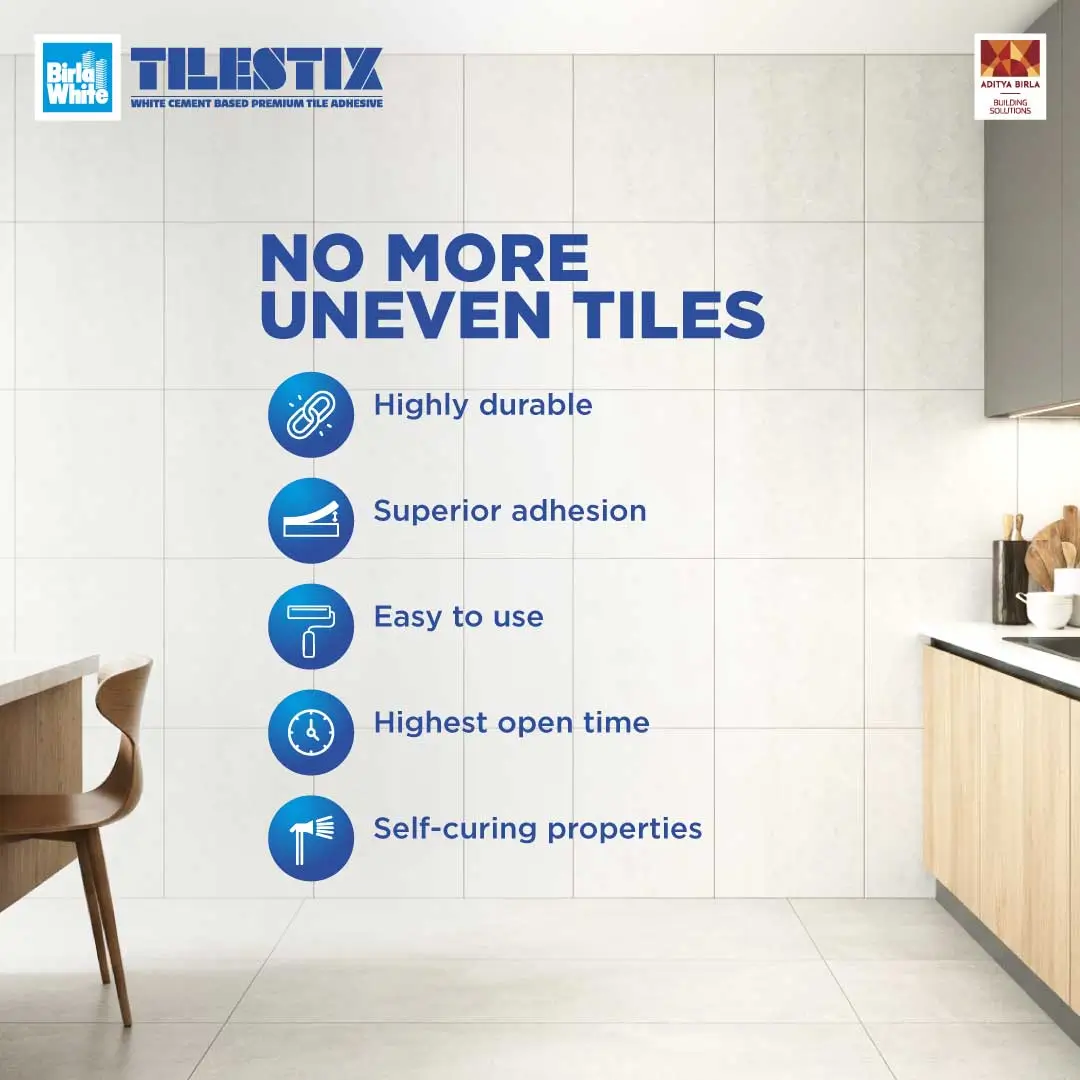
While saving water is the headline act, the supporting benefits of switching to a self-curing adhesive tile glue are just as impressive.
1. Highly Durable
Because there is no shrinkage (a common issue with sand-cement), the bond remains intact for years. The water and shock-resistant properties make it suitable for wet areas like bathrooms and commercial floors. You won’t see grout cracking or tiles loosening around the edges.
2. Superior Adhesion
Whether you are fixing ceramic, semi-vitreous, or vitrified tiles, the bond strength is unmatched. The brochure specifies it is also suitable for "tile-on-tile" applications. That means if you want to renovate your old bathroom, you can simply apply this adhesive for tiles over the existing old tiles, saving the cost and labor of breaking them—and saving tons of water and debris in the process.
3. Easy to Use
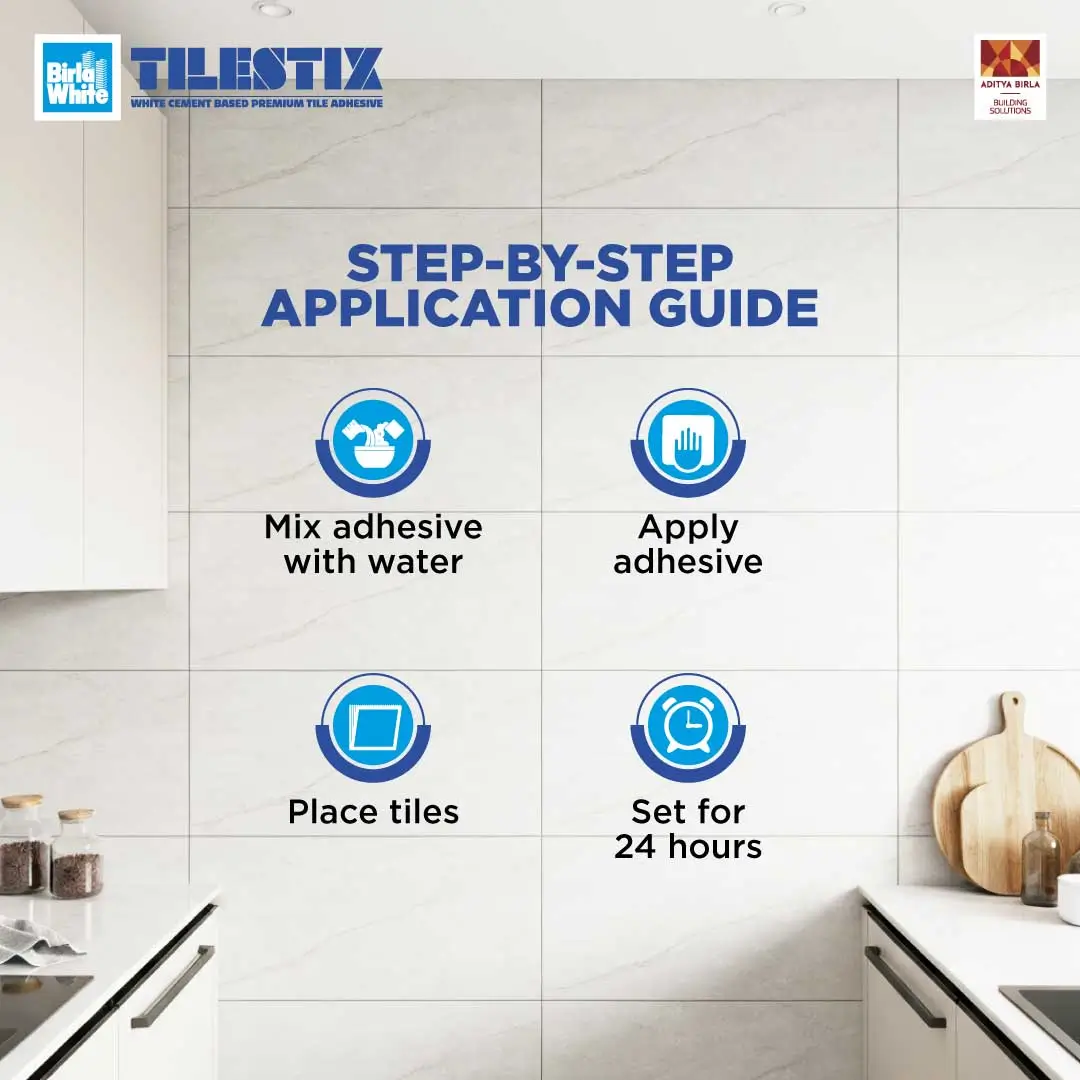
Gone are the days of messy sand piles in your living room. This is a ready-to-use product (just add water). The mixing ratio is precise—0.25 to 0.27 water per kg. A 20kg bag covers approximately 55-60 square feet at a 3mm thickness. It’s clean, it’s precise, and it respects your home.
4. Highest Open Time
One of the biggest frustrations with cheap adhesives is "skin formation"—where the glue dries out before you can place the tile. With a pot life of 2 hours and an open time of approximately 20 minutes, Vitribind gives you the flexibility to work without rushing. You have time to adjust the tile placement perfectly without the adhesive setting prematurely.
For those who care about aesthetics, using a white cement-based adhesive like this is a game-changer. If you are using translucent stones, glass mosaics, or light-colored marble, the white base ensures that the colors of your stone pop out vibrantly. You won’t have the grey bleed-through that often ruins the look of expensive paint work.
Moreover, because it is a tile adhesive that requires no watering post-application, you don’t have to worry about water seeping into adjacent walls and damaging your freshly done paint. It keeps the renovation site dry, clean, and efficient.
The way we build our homes must evolve. We can no longer afford the luxury of washing gallons of water down the drain just to cure a floor. Birla White Tile Vitribind represents the convergence of strength, convenience, and environmental responsibility.
By choosing a self-curing adhesive tile glue, you are not just ensuring that your tiles stay put for decades; you are actively participating in water conservation. You are reducing the labor needed for curing, cutting down the time to heavy traffic (just 24 hours), and ensuring a superior finish that traditional sand-cement simply cannot match.
It’s time to leave the buckets of water behind. It’s time to upgrade to the smarter way—where technology meets sustainability, and where your floors are as strong as they are beautiful.
For more information, visit https://www.birlawhite.com/en/products/tile-adhesives-and-grouts/tilestix-vitribind
Fill out this form to talk to our experts.
Our team typically replies in 24 hours.