
Walls are more than just boundaries—they are the canvas of your home. Yet cracks, damp patches and uneven finishes can turn that canvas into a frustrating mess. The good news is that many plastering problems have practical solutions, and gypsum plaster can help transform dull, damaged walls into smooth and durable surfaces.
Gypsum plaster is a modern solution to several common plastering challenges. It offers smoother finishes, faster application and fewer surface defects compared with traditional cement plaster. Let’s explore seven common wall plastering problems and how gypsum plaster can help address them.
Walls deserve more than patchwork fixes. With Birla White Gypsum Plaster , you get a quick-setting, curing-free solution designed to help create smooth and durable interior surfaces.
Begin your journey towards better walls with a plastering solution that can help reduce common issues such as cracks, uneven surfaces and prolonged curing requirements.
Gypsum plaster, especially products such as Birla White Gypsum Plaster , is designed to deliver smooth walls and ceilings with minimal effort.
Unlike conventional cement-sand plaster, gypsum plaster is lightweight, easy to apply and requires no water curing. This can help save time and reduce water usage during construction.
Its shrinkage- and crack-resistant properties can make it suitable for addressing common plastering concerns such as cracks, efflorescence and uneven surfaces, when applied according to the manufacturer's instructions.
Gypsum plaster is generally used for interior wall and ceiling applications. Always check the product specifications and recommended application areas before use.
The key benefits of gypsum plaster include:
Ready to transform your walls? Switch to gypsum plaster for a hassle-free, smooth and durable wall-finishing solution.
| Benefit | Description |
|---|---|
| No curing required | Saves approximately 7–14 days of water curing, reducing construction time and water usage. |
| Smooth finish | Provides a fine, aesthetic surface suitable for painting or wallpapering. |
| Crack resistance | Helps reduce shrinkage cracks when applied correctly. |
| Moisture-related protection | Can help reduce moisture-related plastering concerns when used on suitable surfaces and under recommended conditions. |
| Eco-friendly | Requires less water, is low in VOCs and supports more sustainable construction practices. |
| Fast application | Lightweight and easy to apply, helping speed up construction timelines. |
| Strong adhesion | Bonds well to suitable brick, block and concrete surfaces, helping minimise detachment issues. |
| Fire resistance | Gypsum contains water molecules that provide natural fire-resistance properties. |
By integrating gypsum plaster into wall finishing, homeowners and builders can help reduce recurring plastering issues while achieving durable and attractive interiors.
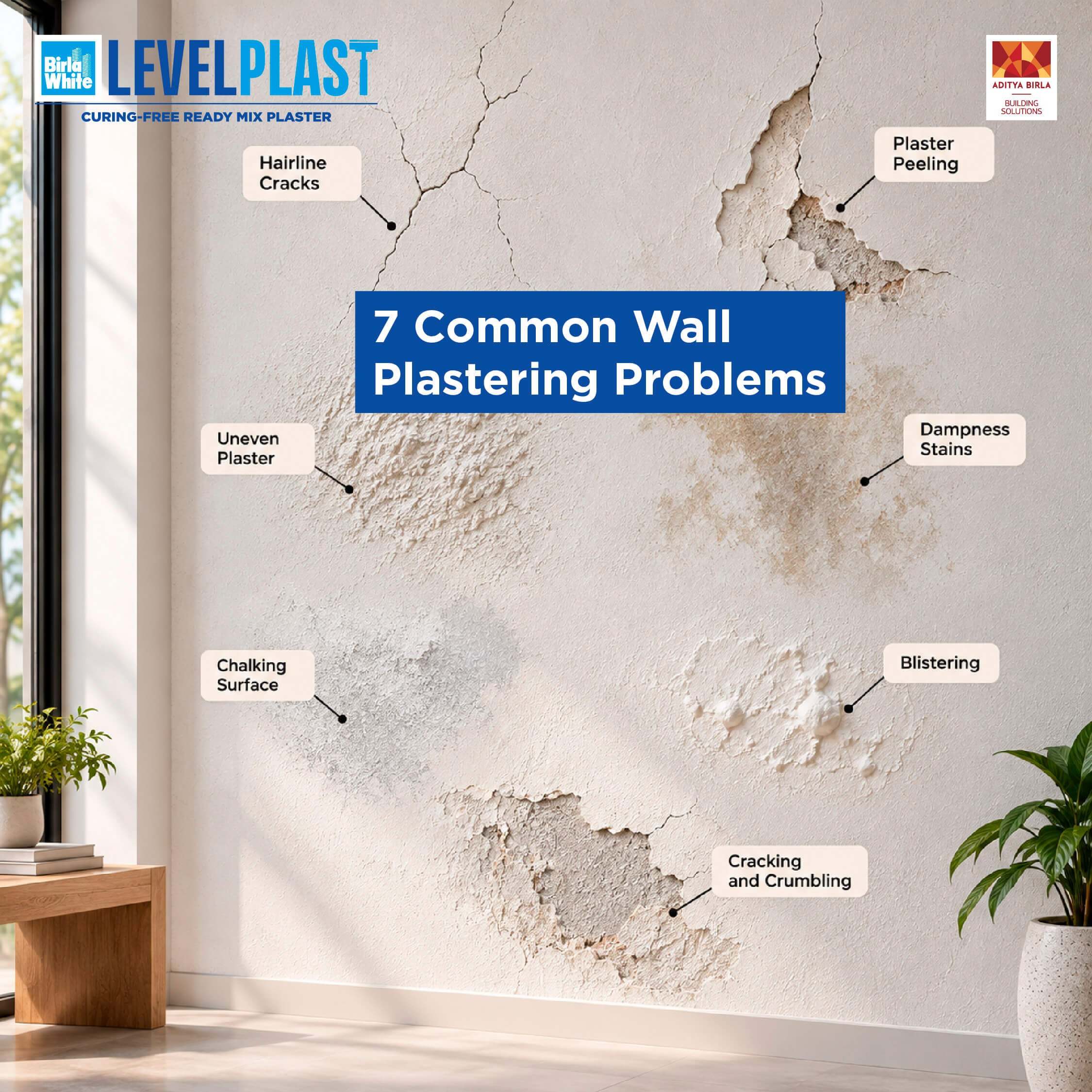
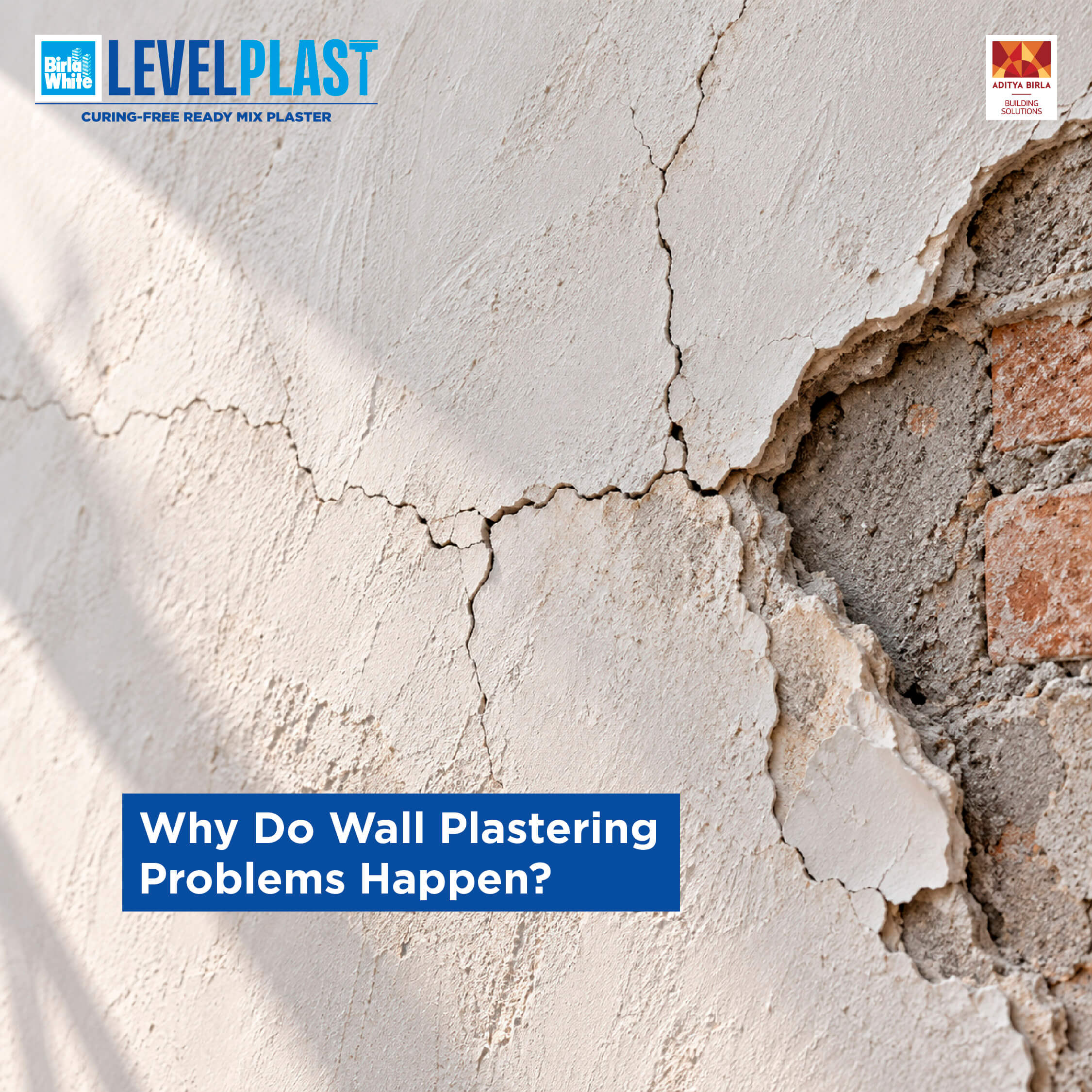
Cause: Rapid drying, structural movement or incorrect mix ratios can contribute to cracks in plaster.
Fix: Gypsum plaster has a controlled setting time and can help reduce shrinkage-related cracks when mixed and applied correctly. Significant structural cracks should be assessed and repaired separately before plastering.
Cause: Trapped air, surface contamination or moisture beneath the plaster can cause blistering and bubbling.
Fix: Proper surface preparation and strong bonding are essential. Gypsum plaster can help create a more uniform finish when applied to a clean, suitable substrate without trapped air or active moisture.
Cause: Efflorescence occurs when soluble salts migrate to the surface due to moisture movement through the wall.
Fix: Gypsum plaster requires no water curing, which can help reduce moisture introduced during the plastering process. However, the underlying source of moisture must be identified and treated before application.
Cause: Poor adhesion between the plaster and the substrate can cause the plaster layer to detach or peel away.
Fix: Gypsum plaster can bond strongly to suitable brick, block or concrete surfaces when the substrate is properly prepared. Remove dust, loose material and other contaminants before application.
Cause: A weak plaster mix, poor-quality materials or improper curing can lead to surface dusting, crumbling and powdering.
Fix: Gypsum plaster can provide a stronger and more durable surface when mixed and applied as recommended. A weak or unstable substrate should be repaired before plastering.
Cause: Poor workmanship, inconsistent mix quality or uneven application can result in an irregular wall finish.
Fix: Gypsum plaster spreads easily and can help achieve a smoother, more polished surface. Proper levelling, application technique and final finishing remain essential for the best result.
Cause: Conventional cement plaster may require prolonged curing and drying, which can extend construction timelines and contribute to moisture-related delays.
Fix: Birla White Gypsum Plaster sets quickly, typically within approximately 25–30 minutes depending on site conditions and product guidance, and requires no water curing. This can help reduce construction time and minimise curing-related dampness.
Always follow the product manufacturer's technical instructions for mixing, application, setting time and drying requirements.
Gypsum plaster offers practical advantages that make it a preferred choice for many modern construction projects. Its quick-setting property can save valuable time, allowing work to progress faster without compromising the quality of the finish.
Since gypsum plaster requires no water curing, it can significantly reduce water usage and minimise curing-related delays. The smooth finish it provides may also reduce the need for additional putty before painting, depending on the selected paint system and the final surface condition.
Gypsum plaster is also suitable for a range of residential and commercial interior applications. It can provide durable, aesthetic and more sustainable results when applied to suitable surfaces by following the manufacturer's instructions.
After plastering, proper surface preparation remains important before applying wall putty or paint. Explore the correct wall finishing and putty application process for the next stage of your project.
For walls affected by dampness or seepage, identify and address the source before starting the plastering work. You can also explore these wall dampness solutions for additional guidance.
Tired of recurring plastering problems? Gypsum plaster is designed to help resist shrinkage cracks, deliver a smooth finish and support more efficient construction.
Say goodbye to plastering headaches and choose Birla White Gypsum Plaster —a smarter, faster and more efficient way to build interiors that last.
Your walls deserve a smooth, durable and well-prepared foundation.
Gypsum plaster is used for finishing suitable interior walls and ceilings. It provides a smooth surface and can help reduce the need for prolonged water curing compared with conventional cement plaster.
Gypsum plaster generally does not require water curing. This can help save water and reduce the time required for wall-finishing work. Always follow the specific product instructions.
Gypsum plaster can help reduce shrinkage-related cracking when the substrate is suitable and the product is mixed and applied correctly. Structural movement, major cracks and unstable surfaces require separate assessment and repair.
Gypsum plaster should not be applied over actively damp, leaking or unstable surfaces. The source of moisture should be treated and the substrate should be prepared according to the product manufacturer's instructions.
Birla White Gypsum Plaster may set within approximately 25–30 minutes, depending on site conditions and the product guidance. Always check the technical information before application.
The plastered surface should be completely set, dry, clean and properly finished before primer or paint is applied. Follow the recommended paint system and manufacturer instructions.
The better option depends on the application. Gypsum plaster can offer faster application, a smooth finish and no water curing for suitable interior applications, while cement plaster may be selected for areas and conditions recommended by the project or product specifications.
Gypsum plaster can help reduce moisture introduced through water curing, but it cannot fix the underlying cause of efflorescence. Moisture movement and salt deposits should be addressed before plaster application.
Gypsum plaster can help address several common plastering problems, including cracking, blistering, efflorescence, delamination, powdery surfaces, uneven finishes and slow drying.
By choosing a suitable gypsum plaster system and applying it correctly, homeowners and builders can achieve smoother, more durable and easier-to-finish interior walls.
However, proper surface preparation is essential. Major cracks, active leakage, dampness and structural defects should always be treated before plastering.
Choose Birla White Gypsum Plaster for a smooth, efficient and curing-free wall-finishing solution designed for modern interiors.
Fill out this form to talk to our experts.
Our team typically replies in 24 hours.