
Strong walls begin with smart choices. The right exterior plaster can help transform your home’s façade into a durable, weather-resistant and visually appealing surface.
For exterior walls, the best plaster choice depends on balancing durability, weather resistance, application requirements and finish quality. Cement plaster remains a practical option for strength and affordability, while lime plaster offers breathability and a more traditional appearance. Heritage finishes such as Araish or Venetian lime can add a luxurious look, while gypsum plaster is generally better suited to interior applications because of its sensitivity to moisture.
Exterior plastering is more than a protective coat. It helps create a smooth finish that can enhance durability and appearance. Whether you are planning wall-to-wall plastering or adding decorative details such as an exterior wall plaster groove texture, the right material and application method are important for long-lasting results.
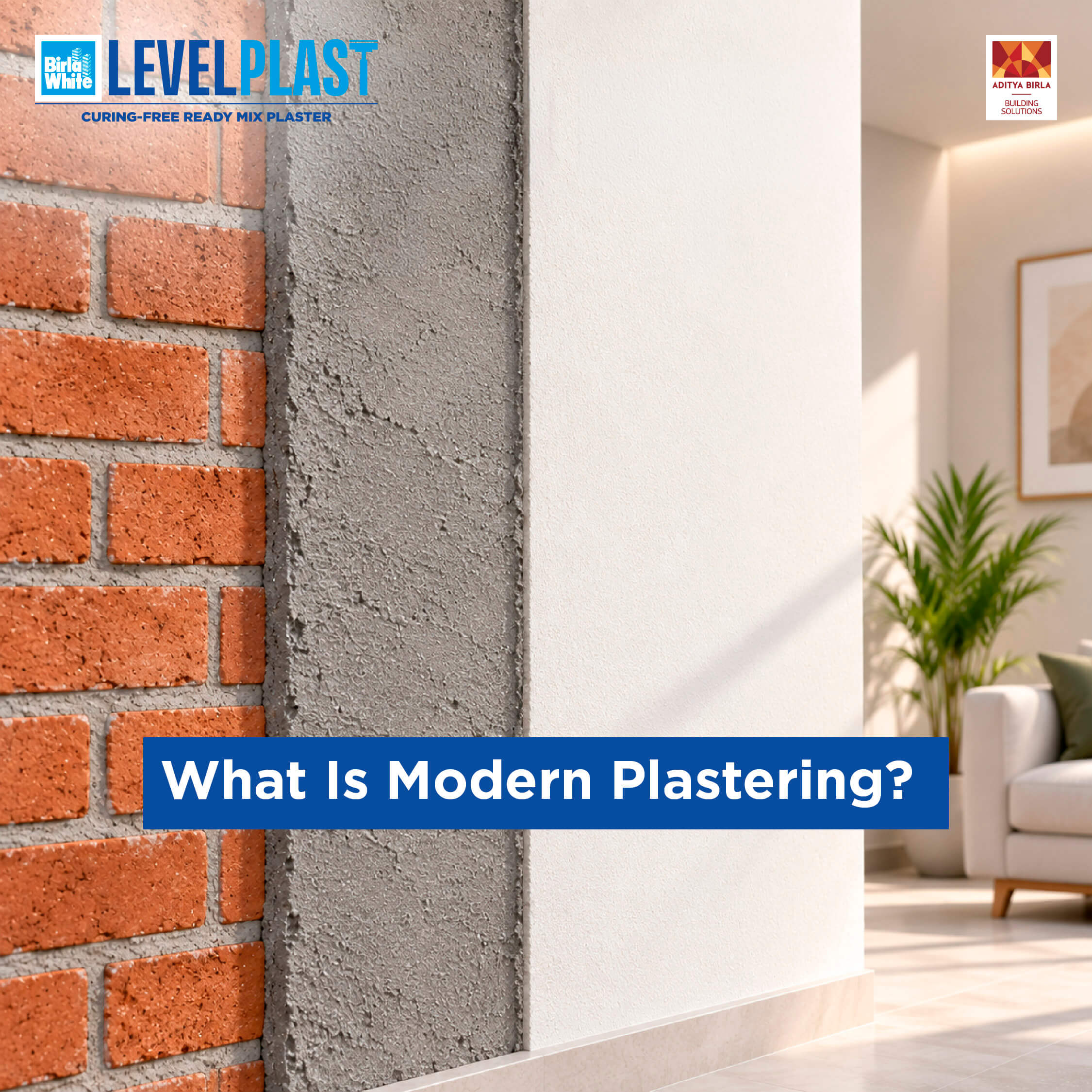
Choose a plastering material according to your climate, wall condition, budget, desired finish and maintenance expectations. A suitable exterior plaster should provide adequate adhesion, weather resistance and a consistent surface for the next stage of finishing.
Build smarter with a plastering solution designed to support smooth and durable exterior surfaces. Explore Birla White Levelplast for suitable plastering applications and a consistent finish.
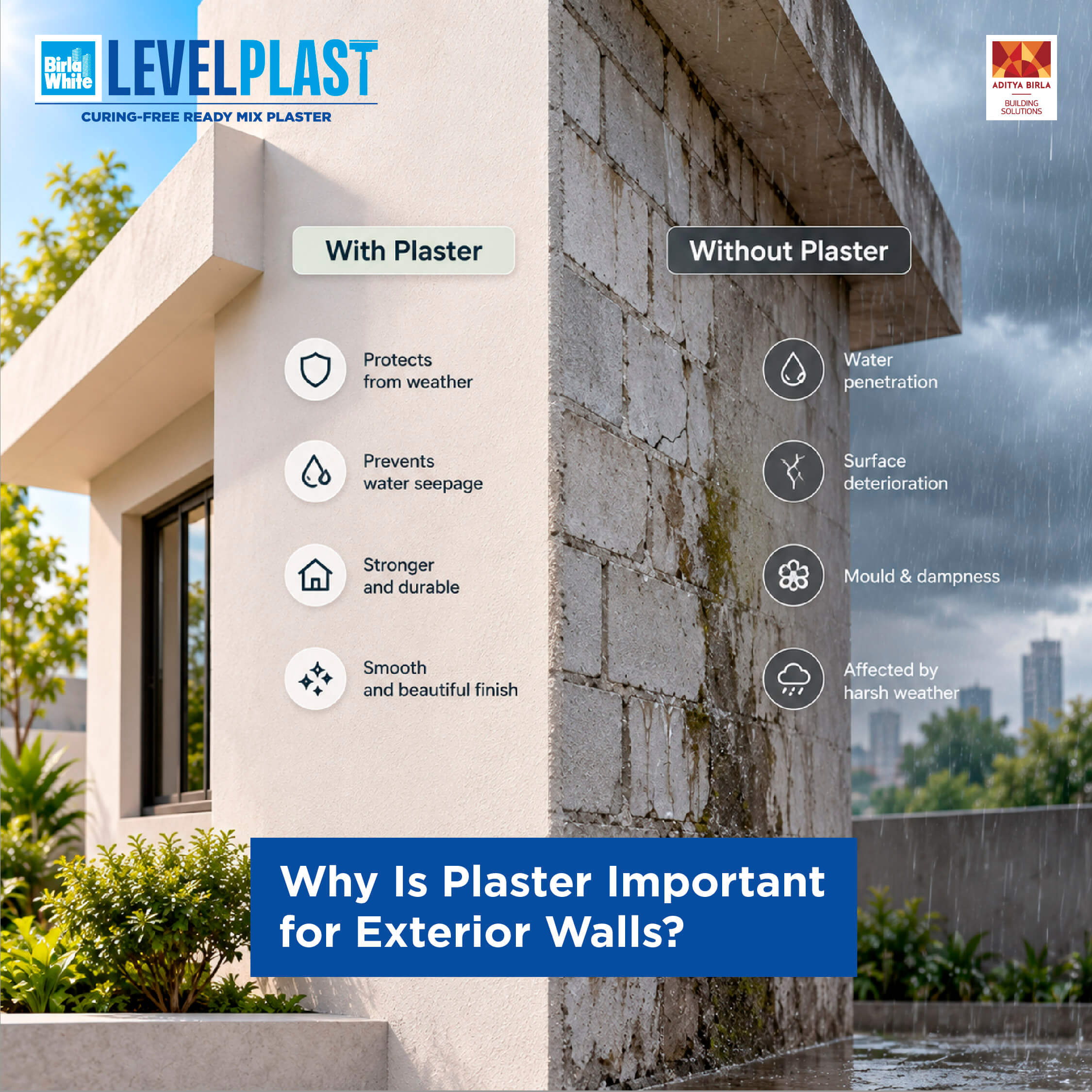
Exterior plaster is more than a cosmetic layer. It can help protect walls from rain, heat, wind and pollution while creating a more uniform surface for painting or decorative finishing.
Proper exterior plastering can help:
However, plaster should not be treated as a complete solution for active leakage, structural cracks or severe dampness. These problems should be assessed and repaired before plastering.
Cement plaster is one of the most widely used choices for exterior walls because it offers a practical balance of strength, affordability and versatility. It can withstand normal knocks, scrapes and outdoor exposure when the surface is properly prepared and the plaster is mixed and applied correctly.
Cement plaster remains a commonly selected solution for façades, utility areas and walls exposed to regular wear and changing weather conditions. Its raw materials are generally accessible, making it a cost-effective option for many construction projects.
However, cement plaster can develop shrinkage cracks or trap moisture if it is incorrectly mixed, applied too thickly, poorly cured or used over an unsuitable surface. Correct surface preparation, cement-sand proportion, application thickness and curing are essential for achieving better performance.
Before selecting a cement plaster system, learn more about the recommended cement plaster thickness for internal and external walls .
Lime plaster is a traditional option for exterior walls and is valued for its breathability and natural appearance. It can help regulate moisture movement through suitable wall systems and may be useful in heritage homes, restoration projects and certain eco-friendly designs.
Lime plaster can provide a softer, more natural appearance and may age gracefully when properly formulated and applied. Its use should be based on the substrate, local climate, design requirements and the expertise available for application.
When used for wall-to-wall plastering, lime plaster can create a seamless finish. It can also support decorative detailing, including an exterior wall plaster groove texture, when the selected system and application method are suitable.
Lime plaster is not automatically suitable for every exterior wall. It requires proper preparation, correct curing and protection during application. Consult a qualified professional before selecting it for a specific project.
Araish and Venetian lime finishes are associated with polished, decorative and heritage-inspired surfaces. They can add depth, variation and a refined appearance to selected exterior walls and feature areas.
Araish is a traditional decorative technique associated with a smooth, marble-like appearance. It can bring a handcrafted character to heritage homes, luxury residences and feature façades.
Venetian lime plaster can create a polished, multi-toned appearance with visual depth. It is often selected for feature surfaces where aesthetics and decorative appeal are major priorities.
These finishes require skilled application and suitable weather protection. Their performance depends on the formulation, substrate, craftsmanship and maintenance conditions.
Gypsum plaster is known for its smooth finish and quick application in interior spaces. However, it is generally sensitive to prolonged moisture exposure and is therefore not usually recommended for exterior walls exposed to rain, humidity and changing weather.
Gypsum plaster is better suited to recommended interior applications where a smooth finish and faster installation are priorities. For exterior walls, cement plaster, lime plaster or a suitable ready-mix plaster may be more appropriate, depending on the project requirements.
Learn more about the suitable applications and benefits of gypsum plaster before selecting it for your construction project.
Ready-mix plaster is a modern plastering option designed to improve consistency and convenience. It is factory-blended using selected materials and may include additives designed to support workability, adhesion and performance.
Its key advantages can include:
Ready-mix plaster can be suitable for modern construction projects, including large residential developments and high-rise applications. The product should always be selected according to the substrate, external exposure and manufacturer's technical recommendations.
| Plaster Type | Strength | Moisture Suitability | Finish Quality | Best Use |
|---|---|---|---|---|
| Cement plaster | High when correctly applied | Suitable for exterior use with proper detailing | Smooth and plain | Façades, utility walls and general exterior applications |
| Lime plaster | Medium | Breathable and suitable for selected climates | Natural and textured | Heritage homes and eco-conscious projects |
| Araish or Venetian lime | Medium | Depends on formulation and protection | Polished and luxurious | Feature walls and premium decorative surfaces |
| Gypsum plaster | Suitable for recommended interior applications | Generally unsuitable for exposed exterior walls | Smooth and quick to apply | Interior walls and ceilings |
| Ready-mix plaster | High when correctly specified and applied | Depends on formulation and application | Consistent and uniform | Modern residential and large-scale construction projects |
Choosing the right plaster for exterior walls is not a one-size-fits-all decision. It depends on your climate, budget, wall condition, design goals and the level of maintenance you are prepared to undertake.
In humid or coastal regions, select a plaster system that is suitable for moisture exposure and allows the wall assembly to perform as intended. For budget-friendly strength, cement plaster remains a practical choice. For decorative luxury, Araish or Venetian lime can create a distinctive finish.
Wall-to-wall plastering means applying plaster continuously across the relevant wall surface to create a consistent and seamless appearance.
It can help:
Wall-to-wall plastering requires correct joint treatment, consistent thickness and proper control of curing and drying. Large wall surfaces should be divided and detailed according to the project requirements to reduce the risk of uncontrolled cracking.
An exterior wall plaster groove texture is a decorative detail created by forming planned grooves or lines in the plaster surface. It can add depth, rhythm and visual interest to a plain façade.
Groove textures can be used to:
Grooves should be planned carefully to avoid creating areas where water can collect. The selected plaster system, groove depth, drainage detailing and weather exposure should be considered before application.
You can also explore these modern exterior wall texture designs for additional façade inspiration.
A good exterior finish begins with suitable materials and proper surface preparation. Birla White construction solutions can support smooth, consistent and durable finishing for suitable applications.
Explore Birla White Levelplast for a plastering solution designed to support smooth application and a consistent finish.
Before applying the final exterior paint or texture, ensure that the plastered surface is properly set, dry and free from dust. The complete finishing system should follow the product manufacturer's recommendations.
The best plaster depends on the climate, substrate, budget and desired finish. Cement plaster is a practical choice for strength and affordability, while suitable lime or ready-mix plaster systems may be preferred for breathability, consistency or specific project requirements.
Yes. Cement plaster is widely used for exterior walls because it can provide a strong and cost-effective base when the surface is prepared correctly and the plaster is mixed, applied and cured according to the recommended process.
Lime plaster can be used for selected exterior applications, particularly heritage, restoration and eco-conscious projects. Its suitability depends on the substrate, climate, formulation and application expertise.
Gypsum plaster is sensitive to prolonged moisture exposure and may deteriorate when exposed to rain and humidity. It is generally better suited to recommended interior applications.
Ready-mix plaster is a factory-blended plastering material designed to provide more consistent composition and application compared with manual on-site mixing. Always check whether the selected product is suitable for exterior use.
Wall-to-wall plastering refers to applying plaster continuously across the relevant wall surface to create a uniform and seamless finish. Consistent thickness, joint detailing and proper curing are important for larger surfaces.
An exterior wall plaster groove texture is a decorative design created by forming planned lines or grooves in the plaster surface. It can add depth and visual interest to a façade when designed with suitable drainage and weather details.
Clean and prepare the substrate, use a suitable plastering material, maintain consistent thickness, follow the recommended mixing ratio, cure or dry the surface correctly and complete the finishing process according to the product guidance.
Exterior plaster can help protect the wall surface, but it is not a complete waterproofing system. Active leakage, plumbing defects, roof problems and structural cracks should be identified and treated separately.
Selecting the right plaster for exterior walls is about more than appearance. It is about balancing durability, moisture resistance, application requirements and long-term performance.
For strength and affordability, cement plaster remains a practical option, particularly for wall-to-wall plastering in modern homes. If breathability and sustainability are priorities, lime plaster may be suitable for selected projects. For luxury designs, Araish and Venetian lime finishes can provide polished elegance, while ready-mix plaster can offer consistency and efficiency for modern construction.
The right plaster can help protect your walls, improve their appearance and create a strong base for paint or decorative texture. Always select a product and system according to the climate, wall condition, design goals and manufacturer's recommendations.
Build walls that last with Birla White Levelplast and select the plaster that matches your climate, design requirements and budget.
Fill out this form to talk to our experts.
Our team typically replies in 24 hours.