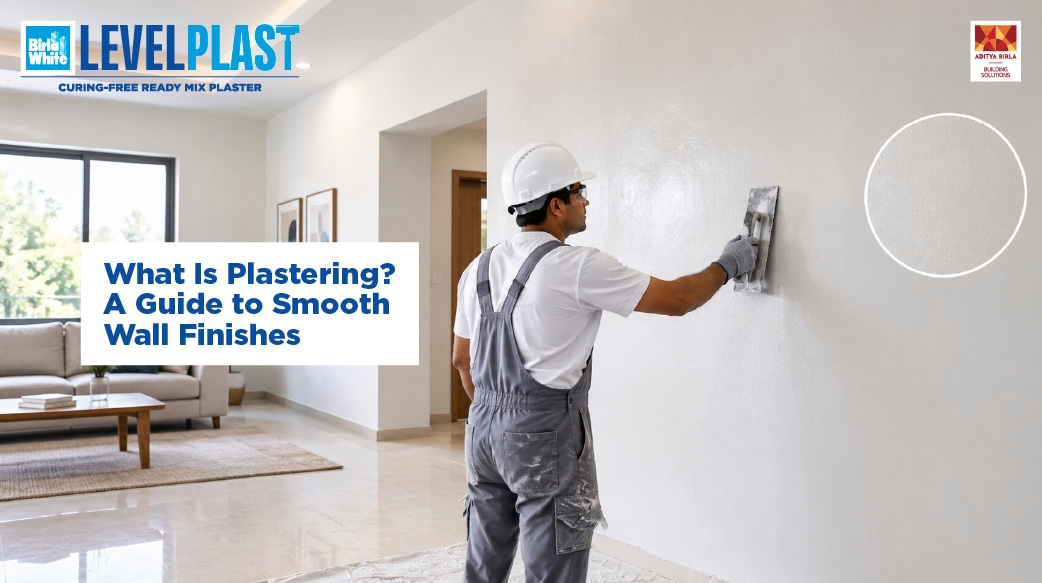
Plastering is the process of applying a layer of gypsum, cement, lime or mud to create a smooth base for painting or wallpapering. Different types of plaster are used for different purposes, and each delivers its own finish. Plastering also helps strengthen walls and protect bricks or masonry from different weather conditions.
Walls that are left bare can face wear and tear easily. They need a protective layer that helps strengthen the surface and creates a smooth base for further painting or finishing. That is where plastering comes in.
Once dried, a coat of plaster acts as a protective layer and creates a smooth foundation. Depending on its composition and application, it can help protect walls against moisture, dampness and surface deterioration. It also reduces chipping and wear and tear on exposed masonry blocks.
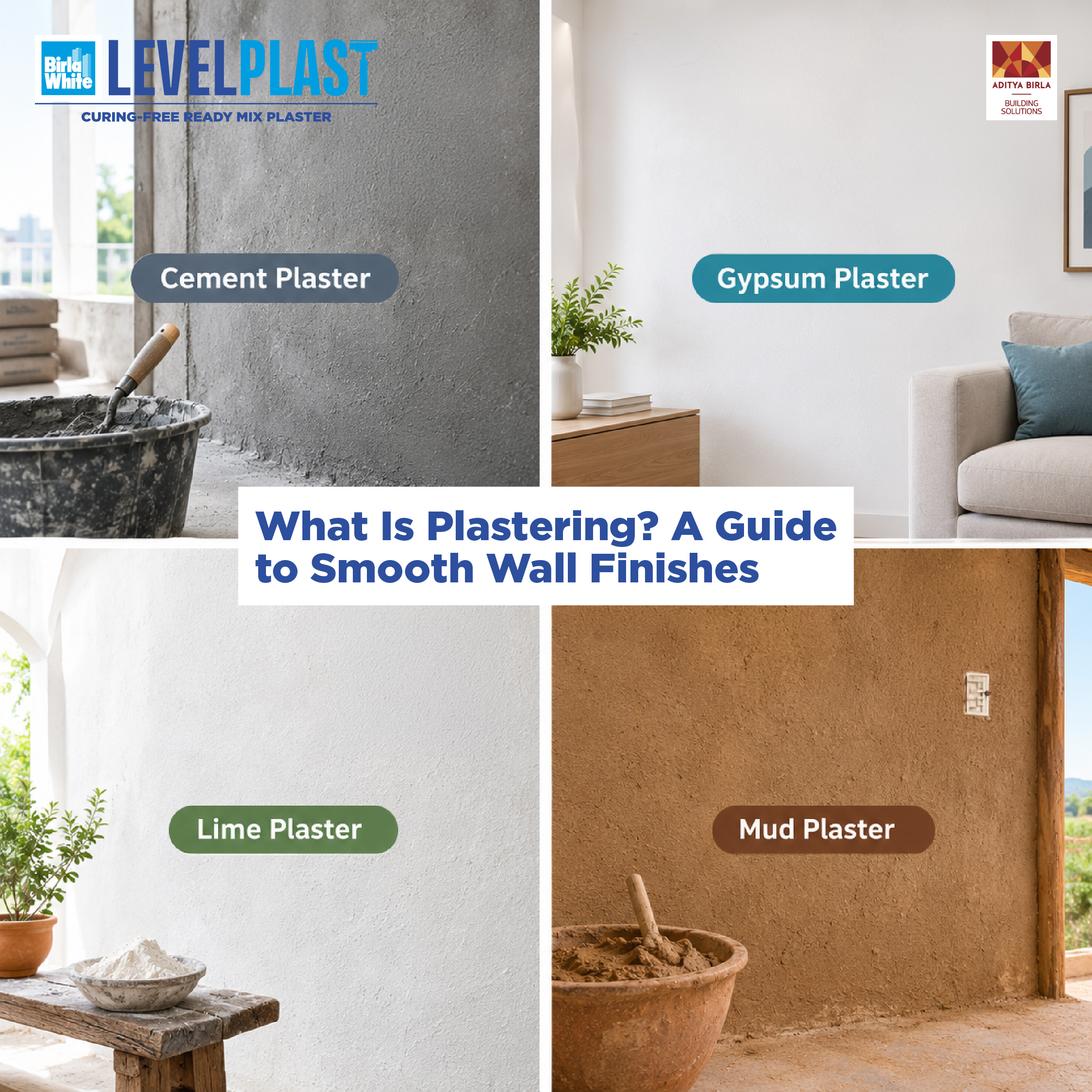
Gypsum plaster is a thin-coat plaster made from natural gypsum. It forms a durable, crack-resistant surface and is commonly used for interior walls, false ceilings and decorative details. It is made using calcium sulphate hemihydrate, commonly known as plaster of Paris.
Cement plaster is a traditional mixture of cement, sand and water. It is commonly used on interior and exterior building walls. It is popular in construction because of its durability, fire resistance and ability to provide a suitable base for further wall finishing.
Ready-mix plaster is a factory-blended mixture that may contain cement or gypsum, sand and polymer additives. It is convenient to use because it requires only the addition of water. Its formulation can also help improve bonding strength and reduce shrinkage-related cracks when applied as recommended.
| Comparison Factor | Gypsum Plaster | Cement Plaster | Ready-Mix Plaster |
|---|---|---|---|
| Main Material | Gypsum powder (calcium sulphate) mixed with water | Cement, sand and water mixed on-site | Factory-made dry mix of cement, sand and additives; only water needs to be added |
| Finish Quality | Very smooth and generally ready for painting, depending on the required finish | Rougher surface that may require putty before painting | Fairly smooth and uniform; a thin putty coat may still be required |
| Drying and Curing Time | Sets in hours and generally does not require water curing | Typically requires 7–10 days of water curing, as specified | Typically requires 3–7 days of curing, depending on the product |
| Cost | Moderate to higher per sq. ft., but may save on putty and labour | Lower material cost, but labour and curing add to the overall cost | Higher material cost than site-mixed cement plaster, but can reduce wastage |
| Best Used For | Interior dry walls and ceilings | Exterior walls, bathrooms, kitchens and wet areas | Interior and exterior applications, depending on product specifications |
The right type of plaster depends on the location and exposure of the wall. Factors such as weather conditions, wall condition, budget, desired finish and maintenance requirements should be considered before making a decision.
Cement plaster remains a popular choice for exterior walls because of its durability and affordability. Lime plaster can offer breathability and a traditional appearance when properly formulated and applied. Gypsum plaster is generally avoided outdoors because it is sensitive to prolonged moisture exposure.
Gypsum plaster is a popular choice for modern interior walls because it is lightweight, provides a smooth finish and generally does not require water curing. For bathrooms and toilets exposed to moisture, cement plaster can also be considered.
Ready-mix plasters such as Birla White Levelplast are another option for interior walls, offering convenience, consistent quality and ease of application.
In short: Choose gypsum plaster for dry rooms such as bedrooms and living areas, ready-mix plaster when consistency and application speed matter, and cement plaster for wet areas such as bathrooms and kitchens, subject to product recommendations.
A high-quality plaster product and proper application techniques are essential for achieving a smooth wall finish. Traditional cement plastering often involves multiple layers, each requiring its own curing and drying time. This can increase the overall construction timeline.
Modern alternatives, such as ready-mix plasters, are designed for consistency, ease of use and durability. These products generally require only the addition of water before application, making the process more convenient.
It is equally important to follow the manufacturer's recommended mixing ratios, application thickness and instructions to achieve the desired finish.
Choosing the right plaster can make a difference to the quality and durability of your walls. Birla White Levelplast, powered by the white cement advantage, offers a convenient ready-mix solution for modern construction. Here are some of its key features:
Levelplast does not require curing after application, helping save time and effort. However, the surface should be pre-wetted before application to improve bonding with the substrate. Its ready-mix composition also makes preparation easier, as it only requires the addition of water.
Levelplast offers water resistance, helping protect walls against moisture exposure and supporting a strong, durable surface.
Birla White Levelplast is suitable for different surfaces, including:
Birla White Levelplast is a ready-mix, curing-free plaster designed for convenient application. Following the recommended preparation and application steps helps achieve a smooth and uniform finish.
Remove dirt, grease, loose material and curing compounds using a chisel, wire brush or emery stone. Wash the surface with clean water.
Moisten the surface with clean water before applying Levelplast to help improve bonding with the substrate.
Mix Levelplast with water according to the required application thickness:
Use a mechanical stirrer to mix Levelplast for 5–7 minutes until a uniform paste is formed. The prepared mixture should be used within 1–2 hours.
Repair cracks, holes and masonry joints using Levelplast with a trowel or putty knife before proceeding with the application.
Apply Levelplast according to the recommended layer thickness and application guidelines. Refer to the product brochure for detailed instructions on achieving different thickness levels.
Once the final coat has dried, rub the surface using No. 320 emery paper to achieve a smooth finish.
Finish the surface with one or two coats of suitable wall putty. The wall is now ready for painting.
Modern construction offers several innovative wall-finishing solutions, with ready-mix plaster being a convenient alternative to traditional plastering methods. It helps improve application efficiency and supports consistent results.
Birla White Levelplast takes this convenience further with its white cement advantage, helping create a smooth finish and a strong base for your walls.
Explore Birla White Levelplast for a convenient wall plastering solution.
Fill out this form to talk to our experts.
Our team typically replies in 24 hours.