
Most tile failures are not about tile quality; they are about the invisible layer that bonds the tile to the substrate. When this bond fails, tiles may sound hollow, loosen, or pop off long before the surface shows visible damage.
Traditional cement–sand mortar was never engineered as a true adhesive. It offers bulk and bedding, but limited bonding strength, higher shrinkage, and poor flexibility, especially with modern low‑porosity and large‑format tiles. As tiles have evolved, substrates have become lighter and design more demanding. This gap between what mortar can do and what modern tiling needs has widened.
Polymer‑modified thin‑set tile adhesives bridge this gap. They are designed to grip tightly to both tile and substrate, accommodate minor movements, and maintain bonds even under moisture, temperature changes, and vibration. This is what turns tile fixing from a gamble into a predictable, high‑performance system for homes, commercial spaces, and demanding exterior applications.
Most tiles don’t fail because they crack. They fail because the invisible bond behind them gives up long before the surface shows it.
Tile adhesive is an engineered, factory‑blended powder based on cement, graded fillers, and performance‑enhancing polymers. When mixed with water, it becomes a high‑performance bonding layer between the tile and the substrate, with carefully controlled properties like open time, adjustability, slip resistance, and tensile adhesion. Unlike site‑mixed mortar, every bag is formulated to behave consistently.
Polymer modification is the key differentiator. Flexible polymer chains improve wetting of dense tile backs, increase bond strength, reduce shrinkage, and enhance adhesive waterproofing. This is what allows adhesives to work reliably with vitrified tiles, porcelain, glass mosaics, natural stone, and large‑format slabs in both interiors and exteriors.
Thin‑set application—typically 3–6 mm instead of thick mortar beds—reduces dead load, speeds up work, and ensures uniform contact under the tile. The result is a flatter finish, better durability, and fewer failures caused by voids or excessive thickness. Modern construction, with its mix of substrates and formats, effectively demands this kind of engineered adhesive rather than basic tile cement–sand mixes.
Tile adhesive is not ‘fancy cement’—it’s a precision‑engineered material designed around how modern tiles, substrates, and buildings behave.
Hollow sounds, loose corners, cracked grout lines, and tiles popping off are all symptoms of one root problem: loss or weakness of the bond between tile and substrate. In many cases, the tile itself remains intact; it is the bond layer that has failed silently behind it. These issues are common, especially where premium tiles have been installed with basic materials or rushed site practices.
Moisture ingress, thermal expansion, shrinkage of screeds, and vibration from foot traffic or equipment are normal realities in buildings. When the adhesive layer is too rigid, too thin, improperly mixed, or simply the wrong type for the tile and location, these stresses concentrate on the bond line. Over time, that leads to debonding, hairline cracks, and costly rework.
Shortcuts magnify the problem: using mortar instead of adhesive for vitrified tiles, skipping surface preparation, over‑watering mixes, or ignoring manufacturer‑specified open times. Each shortcut may save a few minutes today but quietly seeds failures that show up months or years later, often when spaces are occupied and disruption is most expensive.
Tile failures rarely happen overnight; they are slow‑motion bond breakdowns that start the day the wrong adhesive or method is chosen.
Different tile types, substrates, and exposure conditions demand different adhesive characteristics. A single “universal” product is rarely the safest choice when the spectrum runs from small ceramic wall tiles to vitrified façades or very large‑format slabs on balconies.
Below is a simplified mapping of typical tile and area types to adhesive behaviour
| Tile / Area Type | What kind of Adhesive Do You Need | Typical Use Cases |
|---|---|---|
| High‑porosity ceramic, clay, terracotta | Standard polymer‑modified thin‑set; suitable for entry‑level interior types | Interior floors/walls, dry and normal wet areas |
| Semi‑vitrified / vitrified tiles | Higher bond strength, better wetting of dense backs, low slip | Living rooms, corridors, light commercial |
| Porcelain tiles | Improved performance, extended open time, enhanced flexibility | Large‑format interior and exterior surfaces |
| Natural stone (granite/marble) | High bond, controlled shrinkage, often white base to avoid staining | Premium floors, walls, façades |
| Interior dry areas | Standard deformability, normal open time | Bedrooms, living spaces |
| Wet areas (bathrooms, kitchens) | Water‑ and shock‑resistant, higher bonding under moisture | Bathrooms, kitchens, utility rooms |
| Exteriors, balconies, façades | High flexibility, extended open time, proven heat‑aging performance | Balconies, terraces, façades, podiums |
| High‑stress / high‑vibration zones | Highly deformable S2‑type adhesives, shock resistant | Commercial corridors, malls, transport hubs |
The right adhesive is not defined by price or colour—it’s defined by how closely its performance profile matches your tile, substrate, and environment.
Three parameters should drive adhesive selection: tile, substrate, and location. Tile size and porosity influence how easily bond can develop; substrates range from rigid screeds to flexible drywalls or existing tiles; locations span everything from dry bedrooms to submerged or sun‑exposed terraces. Matching these correctly to an adhesive class avoids most long‑term failures.
Tile‑on‑tile fixing, for example, works reliably only if the existing tiles are sound and properly cleaned, and if a suitable tile‑on‑tile compatible, polymer‑modified adhesive is used. Large‑format and very large‑format tiles demand better wetting, longer open time, and higher deformability to manage differential movement and internal stresses.
Below is a practical selection matrix
| Scenario (Where) | Which Adhesive to Choose | How Does it Benefit You |
|---|---|---|
| Small ceramic tile on internal screed | Standard thin‑set, basic interior classification | Adequate where movement and load are moderate |
| Vitrified tile on internal floor | Higher‑type polymer‑modified, improved bond | Better grip to low‑porosity tiles |
| Tile‑on‑tile in bathroom | Tile‑on‑tile compatible, water‑resistant adhesive | Existing tile must be firm and well‑prepared |
| Large‑format tile on façade/balcony | Highly deformable, extended open time, low slip | Handles temperature swings and substrate movement |
| Drywall (cement board/gypsum board) | Flexible, lightweight, higher deformability | Compensates for substrate flex |
| Heavy commercial traffic floor | High tensile and shear strength, shock resistant | Reduces debonding under repeated impact loads |
Don’t start from the bag; start from the tile, the substrate, and the room’s reality—and let those three choose your adhesive.
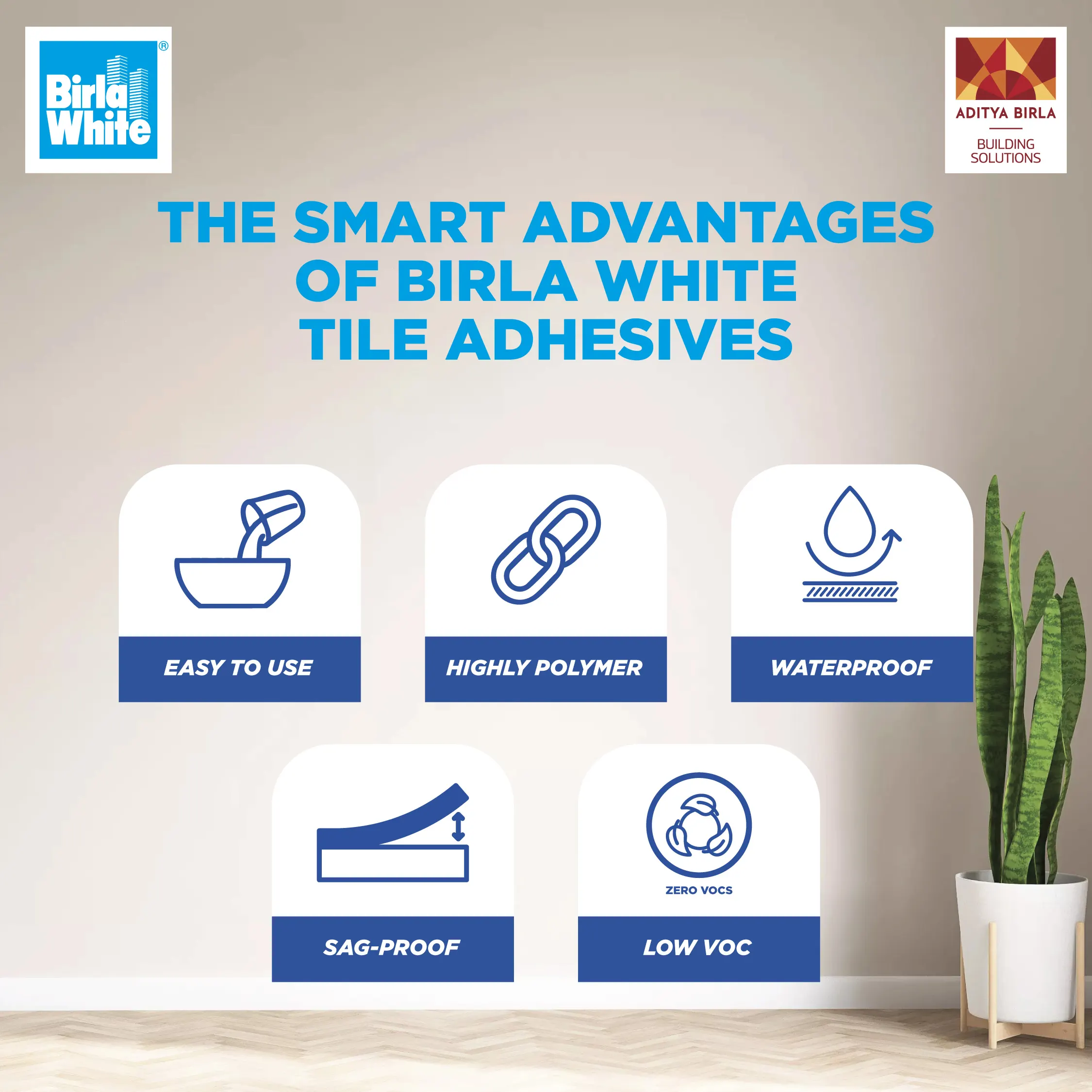
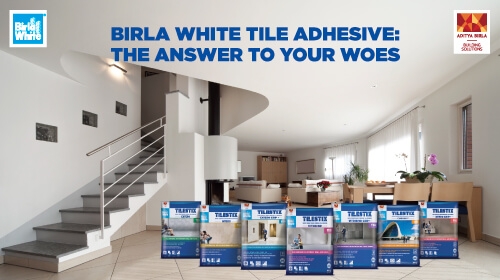
The Birla White TileStix range is structured to mirror real‑world tiling scenarios, from basic interior ceramic floors to high‑vibration commercial corridors and large‑format tiles on exposed façades. Built on a white cement base, each variant is optimised with polymers and additives for a specific band of applications and stress conditions.
TileStix Range at a Glance
| Product Variant | Use Case | Primary Benefit |
|---|---|---|
| TileStix Intero | Fixing high‑porosity ceramic, clay, and terracotta tiles on interior floors in dry and wet areas | Easy‑to‑use interior adhesive with better open time and adhesion for everyday high‑porosity tiles |
| TileStix Vitribind | Fixing ceramic, semi‑vitrified, vitrified tiles and small natural stones; interior floors/walls; tile‑on‑tile interiors | Tile‑on‑tile capable, higher bond and water/shock resistance for versatile interior applications |
| TileStix Extero | Fixing ceramic, vitrified, glass mosaic, terrazzo, and natural stones on interior/exterior floors and walls; tile‑on‑tile; commercial areas | High‑performance exterior and commercial adhesive with extended open time and strong water/shock resistance |
| TileStix Curvefit | Fixing large and very large format tiles on challenging substrates (including drywall), interiors/exteriors, high‑vibration and high‑temperature areas | Highly deformable, advanced‑class flexibility for movement, vibration, and severe temperature cycles |
TileStix Intero is a polymer‑modified, white cement‑based thin‑set adhesive specifically formulated for high‑porosity interior tiles. Typical applications include ceramic, clay, and terracotta tiles laid on interior screeds, in both dry rooms and standard wet areas such as kitchens and bathrooms. The formulation delivers improved open time for easier laying, good adhesion, and self‑curing behaviour that simplifies site work.
Because it is white‑cement based and low in VOCs, Intero supports clean finishes and healthier indoor environments. Its performance profile is ideal for small‑ and medium‑format tiles on interior floors where structural movement or thermal extremes are modest, making it the natural “go‑to” product for everyday residential interiors.
TileStix Vitribind is developed for tiles that are more demanding in terms of bonding: semi‑vitrified and vitrified tiles, as well as small‑format stones. It can be used on both floors and walls, in interiors, and is particularly valuable where tile‑on‑tile installation is needed, such as renovations that need speed and minimal demolition.
The adhesive offers higher bond strength, low slip characteristics, and resistance to water and shock, making it suitable for bathrooms, kitchens, and interior commercial areas that see regular foot traffic and tile cleaning cycles. Vitribind’s performance window and handling characteristics balance productivity for contractors with reliability for consultants and end‑users, especially where premium vitrified surfaces are on the line.
TileStix Extero extends the TileStix family into the tougher world of exteriors and high‑load commercial spaces. It is highly polymer‑modified and designed to fix a broad range of finishes: ceramic and vitrified tiles, glass mosaics, precast terrazzo, and natural stones on both interior and exterior walls and floors. The same adhesive can be used for tile‑on‑tile in these environments, reducing system complexity.
Extero is engineered to provide waterproofing and shock resistance, low sag on verticals, and strong performance when exposed to higher temperatures and thermal cycling. This makes it suitable for balconies, terraces, façades, and hot temperature locations like jacuzzis or saunas. For commercial corridors, lobbies, and shopping areas with heavy, repetitive traffic, Extero’s enhanced bond and mechanical resistance significantly reduce the risk of debonding and hollow tiles.
TileStix Curvefit sits at the top of the range as a multipurpose, highly polymer‑modified, very highly deformable adhesive. It is designed for very large‑format tiles and slabs laid on a wide variety of substrates, including cementitious screeds, concrete, existing tiles, and drywalls such as cement boards or gypsum boards.
Curvefit combines extended open time, excellent handling, low slip, and the ability to be applied at slightly higher bed thicknesses when needed. Most importantly, its high deformability allows it to absorb movement and vibration without transferring destructive stresses to the tile. This makes it a strategic choice for high‑vibration zones (e.g., near elevators, in transport hubs, or machinery areas), external areas with strong thermal swings, and high‑value façades or feature walls clad with large‑format tiles.
Birla White Tile Adhesive vs Ordinary Grey Cement Mix
| Aspect | Birla White Cement‑Based Tile Adhesive | Ordinary Grey Cement–Sand Mix |
|---|---|---|
| Composition | Factory‑blended white cement, graded fillers, polymers, additives | Site‑mixed grey cement and sand, with variable ratios |
| Consistency & Quality Control | Uniform performance; batch‑wise quality checks and standard‑driven design | Highly variable; depends on on‑site measurement and sand quality |
| Adhesion Strength | Engineered tensile and shear strengths, strong bond to dense tiles | Limited adhesion; designed more as bulk binder than adhesive |
| Flexibility / Deformability | Polymer‑modified; higher‑end variants offer S2‑class deformability | Rigid and brittle; poor movement accommodation |
| Water & Shock Resistance | Formulated for wet, submerged, and shock‑prone areas | Sensitive to long‑term moisture and dynamic loads |
| Sag Resistance (Walls) | Low‑slip/sag for accurate vertical tiling | Tiles tend to slide, demanding thicker beds and supports |
| Thickness / Dead Load | Used in thin‑set layers, reducing dead load and material consumption | Requires thick beds, adding weight to the structure |
| Application Speed & Coverage | Higher coverage per bag, smoother trowelling, easier leveling | Slower application, higher material consumption |
| Aesthetics & Staining | White base reduces show‑through and staining of light stones | Grey colour can shadow or stain translucent/light stones |
| Standards Compliance | Classified and labelled as per relevant IS and EN standards | No direct compliance with tile adhesive classifications |
| VOC & Indoor Air Quality | Formulated for low VOC and healthier interiors | Not optimised for emissions or indoor air quality |
| Curing | Birla White cement-based Tile Adhesive is self-curing | Cement-sand mixture takes 28 days |
“The biggest upgrade from mortar to Birla White TileStix isn’t just strength—it’s predictability: you know exactly how your adhesive will behave before the first tile is laid.”
Standards such as IS 15477:2019 (for adhesives used with ceramic, mosaic, and stone tiles) and EN 12004 (for cementitious tile adhesives globally) provide a shared technical language for product performance. They detail classifications, test methods, and minimum values for properties like tensile adhesion, open time, slip resistance, shear strength, and deformability.
By choosing adhesives that clearly declare their type or class against these standards, specifiers gain measurable assurance that the product can handle the tile type, exposure condition, and stress profile expected on site. This is especially critical in public spaces, exteriors, wet areas, and premium interiors, where failure is both disruptive and reputationally damaging.
In practical terms, data on tensile strength, shear strength, water immersion performance, and heat‑aging tells you how the bond will behave over years of use. When those numbers are backed by third‑party test reports and certification, adhesive choice moves from intuition to evidence‑based decision‑making.
A compliant adhesive doesn’t just tick a box—it gives you measurable, audited proof that your tiles are built to last in the real world.
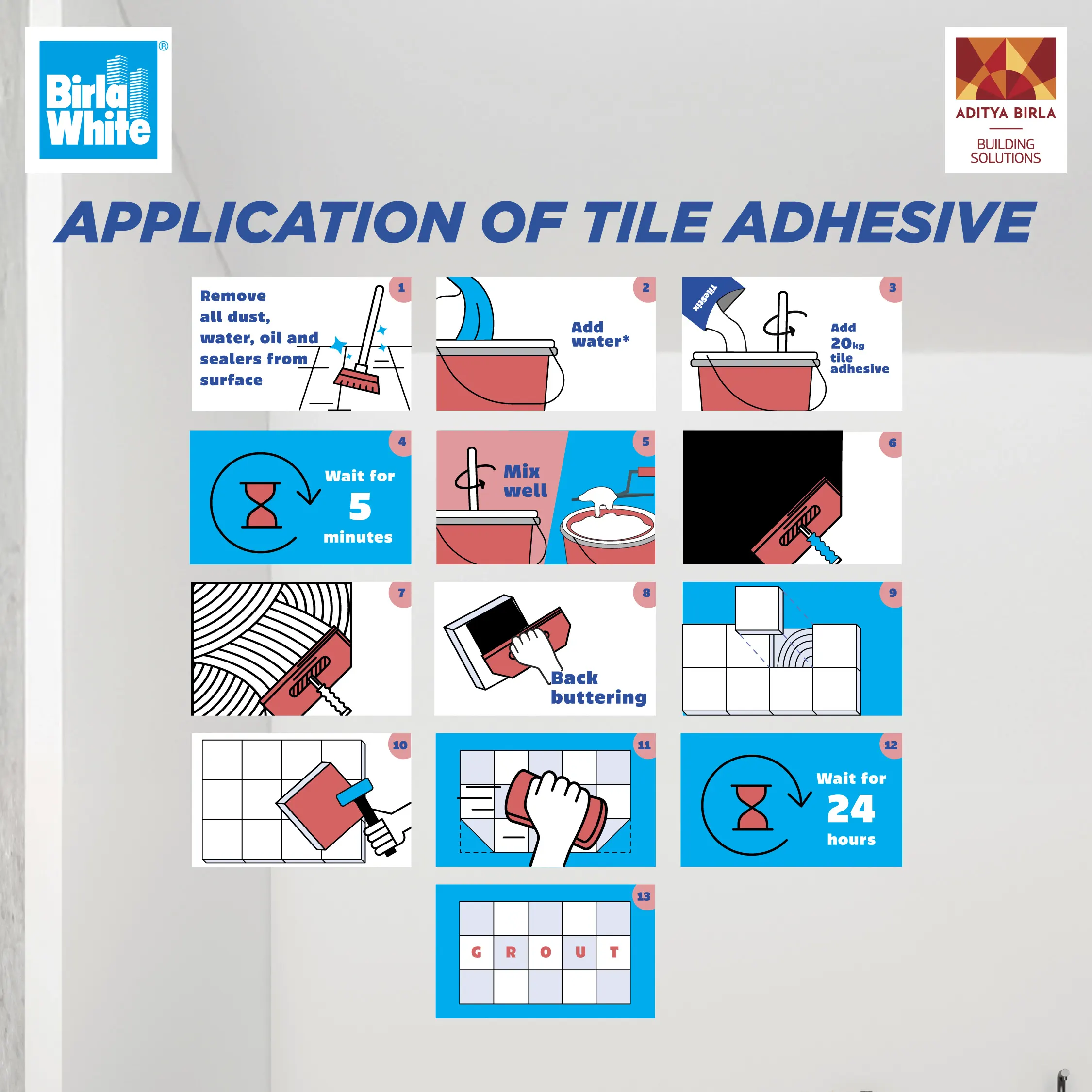
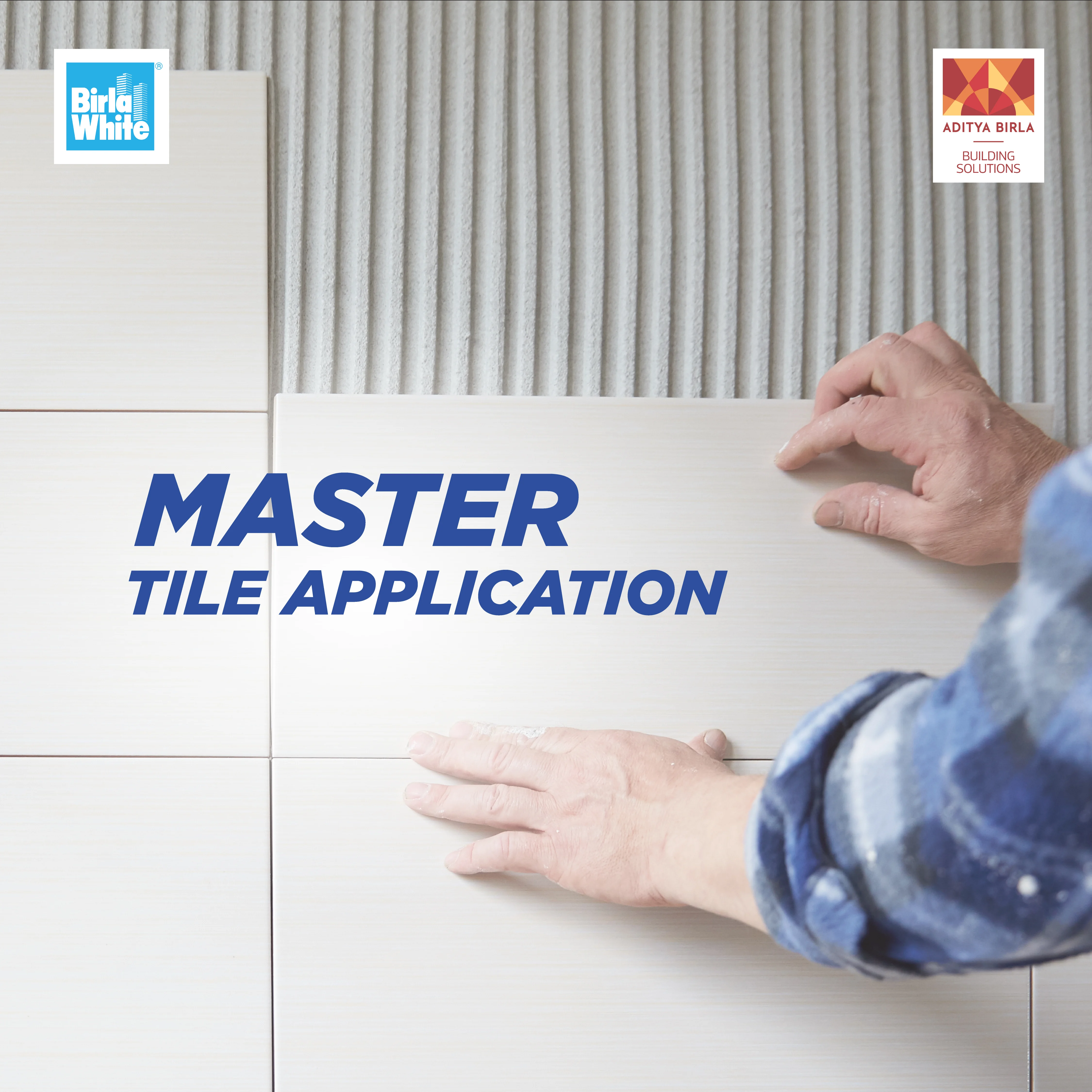
The above issues are avoided by using the right adhesive and following correct mixing and application practices with site discipline.
Get everything you need for flawless tile fixing in one place. From detailed videos to clear, on‑site style application guides, this section equips you with expert support for correct mixing, substrate preparation, trowel selection, and tile placement.
Download Brochures here.
Why Tile Experts Like Adarsh Singh Use Birla White TileStix
Durable tiling is never about a single product; it is about the system. The condition of the substrate, the choice and installation of waterproofing, the selection of adhesive class, the type of tile grout, and the placement of movement joints all work together to decide whether tiles stay secure and attractive over the long term.
By approaching tile fixing as a system and using purpose‑designed adhesives like the Birla White TileStix range, specifiers and homeowners can align aesthetic ambition with technical reliability. Each variant in the range answers a specific set of needs—from simple interiors to exteriors, large‑format applications, and high‑vibration zones—making it easier to choose with confidence and build tiled surfaces that truly stay put for years.
“Tiles don’t fail in the showroom—they fail on the wall or floor months later. TileStix exists to make sure that never happens to your project.”
There is no particular Tile Adhesives for single application as Tiles come in diverse types, sizes, and materials, each requiring specific adhesive properties for optimal bonding. Rest assured, Birla White has launched best tile adhesives for fixing tiles anywhere with its white cement advantage.
Birla White Uses State of art technology and German modified polymer technology, which provides best in class and industry outstanding Tile Adhesives with the help of White Cement Advantage which provides strong bonding with substrate and long lasting elegance to the floor and wall.
Yes, Birla White TileStix tile adhesive is a better choice than cement for tile installation. Tile adhesives have specific properties that offer improved bonding, flexibility, and resistance to the tile installation that secures tile application. Birla White TileStix tile adhesives also ensure easy workability and provide a seamless result compared to traditional cement mortar.
TileStix Curvefit is a high-polymer, cement-based adhesive for tile and stone installation. It is suitable for both internal and external applications at any height. Works effectively for Tile-on-Tile installations as well. Offers strong bonding, highest flexibility, and lasting durability.
TileStix Curvefit is a high-performance adhesive for ceramic, vitrified, and glass mosaic tiles. Suitable for internal, external, and submerged areas like swimming pools tiles adhesion. Can be used on walls and floors, even at heights, in residential or commercial spaces. Ideal for vibration-prone zones like escalators and lifts due to its strong flexibility.
For more, visit https://www.birlawhite.com/en/tile-adhesives-and-grouts
Fill out this form to talk to our experts.
Our team typically replies in 24 hours.