
Plastering isn’t just a construction step—it is the process of transforming bare walls into durable and elegant surfaces that can support the final interior or exterior finish. The thickness of cement plaster plays an important role in achieving a smooth plaster finish that enhances both appearance and performance.
If the plaster layer is too thin, the surface may not adequately cover imperfections. If it is too thick, it may affect material consumption, drying and overall wall performance. Therefore, selecting the right cement plaster thickness for the surface is essential.
In this guide, learn about the ideal plaster thickness for internal walls, external walls, ceilings and RCC surfaces, along with the factors that influence cement plaster thickness and best practices for achieving a smooth finish.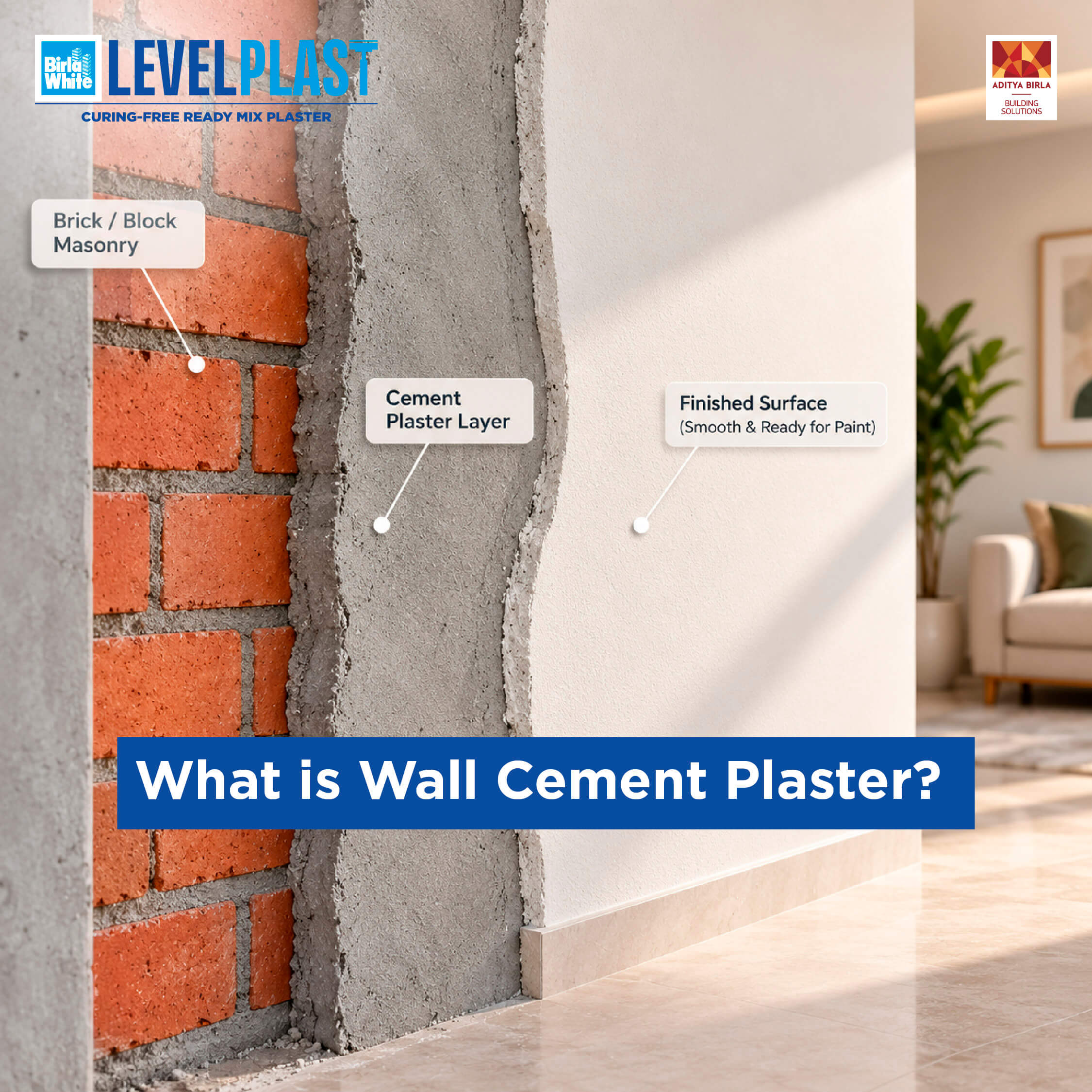
Plaster thickness is more than a construction detail. It can influence the strength, durability, appearance and finish quality of a wall.
Correct plaster thickness helps cover surface irregularities, supports better paint adhesion and creates a smoother base for subsequent finishing. Inconsistent thickness, unsuitable application methods or excessive plastering can contribute to cracking, uneven drying and surface defects.
With suitable plastering materials and proper application, walls can achieve a more consistent finish and better long-term performance.
Upgrade your interiors with Birla White Levelplast for a smooth plaster finish, consistent application and durable wall surfaces.
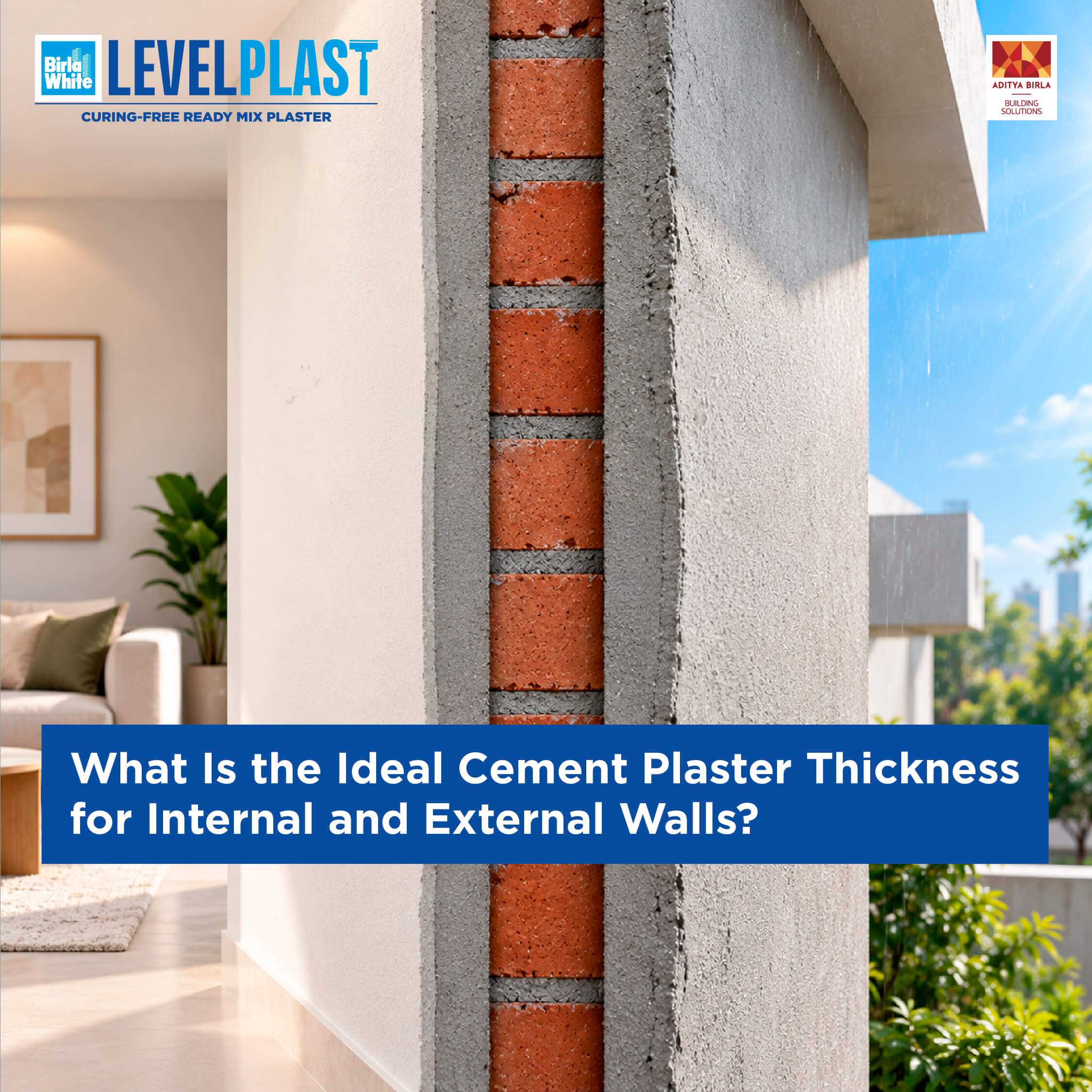
The recommended plaster thickness depends on the surface, wall material, level of unevenness and the intended application. The following ranges provide a general guide.
| Surface Type | Recommended Thickness | Purpose and Benefits |
|---|---|---|
| Internal walls | 10–15 mm | Creates a smooth base suitable for painting and interior finishes. |
| External walls | 15–25 mm | Provides a more substantial protective layer against outdoor exposure. |
| Ceilings | 6–10 mm | Provides lightweight coverage and a smooth finish for suitable ceiling surfaces. |
| RCC surfaces | 6–8 mm | Requires appropriate surface preparation and bonding for adhesion and smoothness. |
These are general reference ranges. Actual plaster thickness should be determined according to the substrate, site conditions, project requirements and manufacturer's recommendations.
The ideal cement plaster thickness for internal walls is generally between 10 and 15 mm. The exact thickness depends on the wall material, surface evenness and the level of finish required.
A coat of around 10 mm may be suitable for relatively smooth brick or block walls. It can help create a uniform base for painting and interior finishing.
Uneven surfaces may require a thickness closer to 15 mm to cover minor variations and achieve a more consistent appearance. However, excessive thickness should be avoided because it can increase material consumption and may affect drying and finishing.
A properly prepared internal wall with consistent plaster thickness can provide a smoother base for paint and may reduce the need for extensive additional surface correction.
Before applying a finishing material, follow the correct wall preparation and plastering process for the selected surface and product system.
External walls generally require a cement plaster thickness of approximately 15–25 mm because they are exposed to rain, heat, wind and changing weather conditions.
A base coat of approximately 12–15 mm can provide coverage and adhesion, while a finish coat of around 8–10 mm may be used where a two-layer system is recommended. The actual application method depends on the wall condition and the manufacturer's instructions.
A suitable external plastering system can help create a stronger base and support a smooth finish while protecting the wall surface from environmental exposure.
External plaster should not be used as a substitute for repairing active leakage, structural cracks or major seepage. Any underlying moisture problem should be addressed before plastering.
Cement plaster thickness for ceilings is generally around 6–10 mm, depending on the ceiling surface, substrate condition and finish requirements.
Ceiling plaster should be applied carefully and evenly to avoid excessive weight, unevenness and detachment. RCC ceilings may require suitable bonding preparation before plaster application.
RCC surfaces commonly require approximately 6–8 mm of plaster, although the final thickness depends on the surface condition and the recommended bonding system.
RCC surfaces are relatively smooth and may require appropriate surface preparation or a bonding agent to help the plaster adhere properly. Dust, laitance, oil and other contaminants should be removed before application.
Brick, concrete, block and RCC surfaces can have different absorption, texture and bonding characteristics. The substrate should be assessed before selecting the plaster thickness.
Uneven walls may require a thicker plaster coat to achieve a uniform finish. However, major undulations should be corrected through suitable repair or levelling methods instead of applying excessive plaster.
External walls exposed to rain, heat, wind and humidity may require a suitable plastering system and thickness based on the environmental conditions.
A decorative interior finish may have different requirements from a protective exterior finish. The desired appearance, paint system and level of surface correction can influence the thickness.
Proper cleaning, dampening and preparation can improve plaster adhesion and help maintain a more uniform thickness across the wall.
Different cement and plaster products may have specific recommendations for mixing, thickness, application and finishing. Always follow the product's technical guidance.
Maintaining consistent plaster thickness across a wall helps create a more even and visually appealing surface. It can also reduce the risk of uneven drying and localised cracking.
Excessively thick areas may take longer to dry and can increase material consumption. Very thin areas may fail to adequately cover the substrate or provide the required finish.
Marking level points, using appropriate tools and checking the surface during application can help achieve more consistent thickness.
A suitable plastering product can help improve consistency and reduce manual variation during application. Explore Birla White Levelplast for a plastering solution designed to support smooth and durable finishes.
Birla White Levelplast is designed to deliver consistent performance during plastering applications. Its smoothness can help create a better surface finish and support the next stage of interior or exterior wall finishing.
A suitable plastering solution can help provide:
Birla White Levelplast is engineered to deliver performance at different stages of construction. Maintaining the recommended cement plaster thickness can help improve uniformity, surface quality and finishing results.
Build walls that are strong, smooth and durable with Birla White Levelplast .
The final appearance of a wall depends on more than plaster thickness alone. Surface preparation, application technique, material consistency, drying and finishing all influence the result.
A properly applied plaster layer can provide a smooth base for primer, paint, texture or other decorative finishes. If required, minor surface irregularities may be addressed through a suitable wall-finishing system after the plaster has dried.
Explore this wall putty guide to understand how surface preparation and finishing can support a better paint-ready wall.
| Wall Type | Typical Thickness | Main Purpose |
|---|---|---|
| Internal walls | 10–15 mm | Smooth base for interior finishes and paint |
| External walls | 15–25 mm | Protection from weather exposure and surface levelling |
| Ceilings | 6–10 mm | Lightweight coverage and smooth ceiling finish |
| RCC surfaces | 6–8 mm | Suitable coverage with appropriate bonding preparation |
These ranges are indicative. Always confirm the required thickness with the project engineer, site professional or product manufacturer before beginning plastering work.
Internal walls generally require approximately 10–15 mm of cement plaster. The exact thickness depends on the wall material, surface evenness, preparation and product recommendations.
External walls typically require approximately 15–25 mm of cement plaster to provide suitable coverage and support protection against outdoor exposure. The actual requirement depends on the wall condition and application system.
Ceiling plaster is generally applied at approximately 6–10 mm, depending on the substrate, surface condition and finish requirements.
RCC surfaces commonly require approximately 6–8 mm of plaster, along with suitable surface preparation or bonding treatment where recommended.
Plaster thickness varies according to the wall material, surface unevenness, climate, exposure, finishing requirements and the selected plastering product.
A suitable plastering material, correct application thickness, proper surface preparation and skilled finishing all contribute to a smooth plaster finish. Birla White Levelplast is designed to support smooth and consistent plastering results.
Birla White Levelplast should be used according to its product specifications and recommended application areas. Check the manufacturer's technical guidance before applying it to internal or external surfaces.
Proper plaster thickness can support better coverage, bonding and surface durability. Excessively thin or thick areas may contribute to unevenness, cracking or inconsistent drying.
Traditional cement plaster generally requires curing according to the project and material recommendations. Follow the manufacturer's instructions and site professional's guidance for the appropriate curing process.
The need for wall putty depends on the plaster finish, paint system and desired surface appearance. A smooth and properly finished plaster surface may require less additional correction, but the final paint system should be followed as recommended.
Whether it is an internal wall requiring approximately 10–15 mm of cement plaster for a smooth paint base or an external wall requiring approximately 15–25 mm for coverage and weather exposure, the right thickness is important for achieving a durable and attractive finish.
Consistent plaster thickness, correct surface preparation, suitable material and proper application can help improve wall performance and appearance.
Choose Birla White Levelplast to support smooth, consistent and durable plastering results for suitable construction applications.
Build walls that last longer, look better and stand stronger with Birla White.
Fill out this form to talk to our experts.
Our team typically replies in 24 hours.